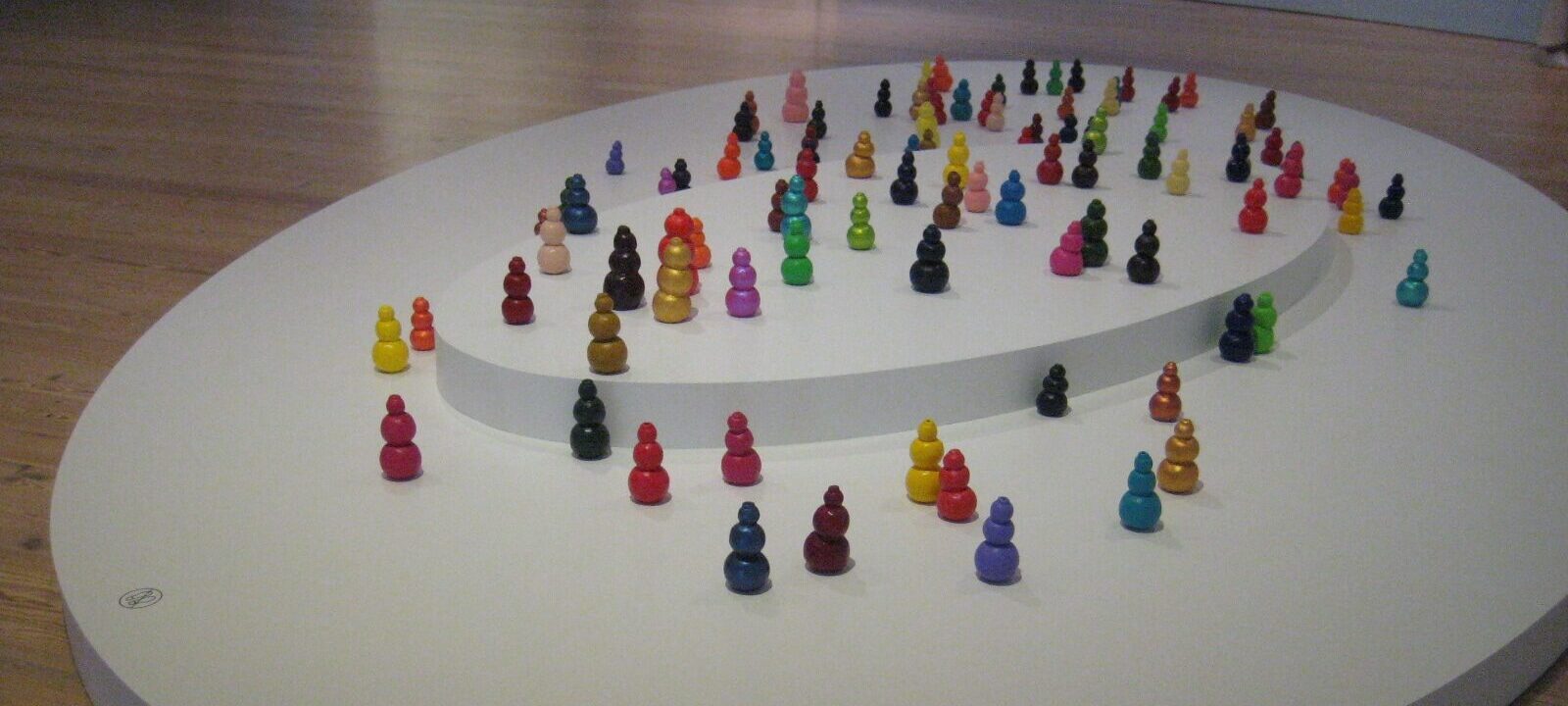
Emilie Louise Gossiaux’s “Kong Play” (2025), a sculptural installation in the Whitney Biennial 2026 (visited July 2026) that took the artist roughly seven months to complete, translates her guide dog London’s chew toys into ceramic form, commemorating their bond after London’s death. Photo by Sarah Chen.
A $6.2 MILLION BANANA, TWO BEWILDERING SHOWS AT THE WHITNEY AND NEW MUSEUM, AND A CENTURY-OLD PHILOSOPHICAL DEBATE ALL CIRCLE THE SAME QUESTION. THREE ARTISTS HELP ANSWER IT.
*Sarah Chen was a student in the College Now Introduction to Journalism class at the City College of New York.
In 2019, Italian artist Maurizio Cattelan duct-taped a banana to a wall at Art Basel Miami, titled it “Comedian,” and watched it become one of the most memed artworks in history before selling at Sotheby’s for $6.2 million in 2024. The reaction split: outrage, ridicule, and a chorus of ‘I could do that,’ against critics calling it a joke about art-market absurdity. A 2023 YouGov poll found a similar split: nearly half of Americans wouldn’t call an abstract Sam Gilliam painting “art,” and a third said they could probably recreate a Mondrian.
“A lot of people don’t really look into the work they’re criticizing,” said Alina Zhang, a 15-year-old New York City artist who explores contemporary art through museum programs and studio visits. “You kind of have to make sense of the nonsense.”
This fight isn’t new, and it isn’t settling anytime soon. Paris’s official Salon rejected Manet, Cézanne, and Pissarro as unfinished-looking scribbles in 1863. The Society of Independent Artists voted to hide Marcel Duchamp’s urinal-turned-sculpture behind a partition in 1917. Two of New York’s biggest institutions are having the same argument right now: Jed Perl, a leading critic, says the 2026 Whitney Biennial and the New Museum’s “New Humans: Memories of the Future” prize message and wall text over what the work actually looks like.
Three artists—a teenager, a working New York painter, and an artist who builds her practice around what most people throw away—plus a century of philosophy help explain why the public keeps asking the same question, and why it might actually have an answer.
Today’s Artists See Past What Came Before
Derek Lerner, a New York City artist whose ink-based work explores the tension between spontaneity and control, has heard the “is this art?” argument aimed at his own field for decades, and doesn’t think Cattelan invented anything new.
“From Duchamp’s Fountain to Warhol’s Brillo Boxes, these debates shape art’s evolution,” Lerner said in an email interview, tracing the same pattern through LeWitt, Rauschenberg, and Beuys. “From 1917 to today, the question of what art is—and why it’s valuable—continues. This is just the latest chapter.” He thinks contemporary work draws sharper dismissal than painting or sculpture from earlier centuries specifically because it hasn’t had time to settle into “classic” status the way earlier art has.
“In a post-postmodern world, we’re constantly re-examining the meaning of authenticity,” he said, pointing to intertextuality, or the way newer work references and layers on top of older work, as part of what makes contemporary art function “as an unsettling mirror.”
That lineage runs directly through this year’s headlines.
Perl, the critic, writing in the New York Review of Books, argued the Whitney Biennial and “New Humans” don’t cohere into any single visual style or approach, and that curators no longer seem to mind. What counts, in his critique, is the message a work carries rather than what it actually looks like.
As evidence, he pointed to two specific works he believes lean on wall text to do the work the object itself doesn’t: Sarah M. Rodriguez’s aluminum sculpture “Cover/Cross” (2025), an abstract, openwork assemblage that reads, in Perl’s view, as formally unmoored until a caption explains that Rodriguez also works as an animal trainer and based her compositional choices on patterns of animal behavior; and Teresa Baker’s hanging AstroTurf banners, whose plain color-block shapes, Perl argues, only gain meaning once a catalog interview lays out Baker’s own attachment to the material, discovered by chance at a Texas Home Depot, as something unpretentious and approachable.
For Perl, that’s the problem: art depending on text to function is, in his view, art failing to communicate on its own terms. He closes his review by reaching back to a 19th-century critic, Théophile Thoré, who leveled the same complaint at the Paris Salon of 1844—a line Perl quotes directly: “Where is art? Instead of art we find only industry.”
Lerner, the New York City artist, sees social media less as the cause of that reaction than its amplifier. “But more voices also mean more dialogue,” he said, adding, “social platforms just make both more visible.” Skepticism, in his view, is just one half of that. Curiosity is the other. Asked what art is for, if not immediate understanding, he replied, “it gives us new ways to feel, reflect, and converse. It’s less about immediate understanding and more about creating space for exploration.”
Katherine Keltner, an artist whose work incorporates natural materials and the leftover fragments of her own process, thinks the ‘I could do that’ reaction usually traces back to a narrow assumption about what art requires.
“There is still some sense that art is about talent and ability to represent or copy,” she wrote in an email, calling that view reductive. “Art, ideally, transcends and can affect a person on a more perceptual level.” She doesn’t think an explanation should carry a piece on its own, either. For Keltner, a work has to land visually first, before any process notes or artist statement come in as enrichment rather than substitute. That philosophy shapes what she makes, too. She preserves discarded fragments of her own process as finished works in their own right, saying they reveal “the thinking behind the work: color choices, marks attempted, stencils used” in a way a completed painting alone never could.
Maybe There’s More Than Meets the Eye
So what actually makes something art, formally speaking? Dada, the early 20th-century art movement that gave the world Duchamp’s urinal and grew directly out of the trauma of World War I, arose as a direct challenge to established social values and artistic norms of its moment.
Philosopher Arthur Danto tried to formalize the same question in his 1964 essay “The Artworld,” written after he saw Andy Warhol’s Brillo Boxes: perceptually identical to the boxes sitting in any grocery store, yet one was art and the other wasn’t. Danto’s answer was that seeing something as art requires “an atmosphere of artistic theory, a knowledge of the history of art.” Philosopher George Dickie later built that idea into a fuller framework, arguing that an object becomes art when someone acting on behalf of that world confers the status onto it, not through skill or beauty. The Spanish philosopher José Ortega y Gasset made a related point decades earlier: modern art isn’t unpopular because people dislike it, he held, but because people feel excluded from it.
That exclusion often starts with a lack of exposure. Art museum attendance was already sliding well before the pandemic could take the blame. National Endowment for the Arts survey data shows the share of US adults attending an art museum or gallery slipped from 26 percent in 1992 and 2002 to 23 percent by 2008, and researchers who’ve tracked four decades of the same survey find the erosion predates COVID by decades and hasn’t reversed since. Separate NEA data shows childhood museum visits strongly predict adult engagement: 70 percent of college graduates visited a museum as children, compared with 42 percent of adults with only a high school diploma. Keltner, the artist who works with natural materials, sees that gap firsthand. When asked why people sometimes dismiss abstract work, she said it is “probably from not having exposure to contemporary art.”
This doesn’t mean that every criticism of Cattelan’s banana is useless.
Several critics argue the piece’s value has less to do with the object itself than with Cattelan’s own market standing. His other work sells at a level most working artists never approach. His sculpture “Him” set his auction record at $17.2 million at Christie’s in 2016, and Emmanuel Perrotin, one of the art world’s major blue-chip dealers, has represented him for more than 25 years.
Critics contend displaying the banana at Art Basel lent it a prestige a banana and duct tape wouldn’t otherwise carry, and that its record sale reflects an art market detached from ordinary economic life as much as it does about the work itself. One retrospective of his career describes Cattelan as frequently criticized within art circles for embodying “a kind of privileged carelessness” that shapes how forgivingly his word gets read within those same circles. That critique is specific to Cattelan’s fame and the speculative art market around him—it doesn’t extend to contemporary or modern art as a whole, where plenty of the same “not art” reactions land on artists with no comparable prestige or market leverage at all.
Seeing it for Yourself
Perl’s argument is far from the only lens to bring into these two shows. Keltner’s standard offers a simpler way in: does the work hold up visually, before any wall text gets involved? Visiting “New Humans: Memories of the Future” makes that question physically walkable.
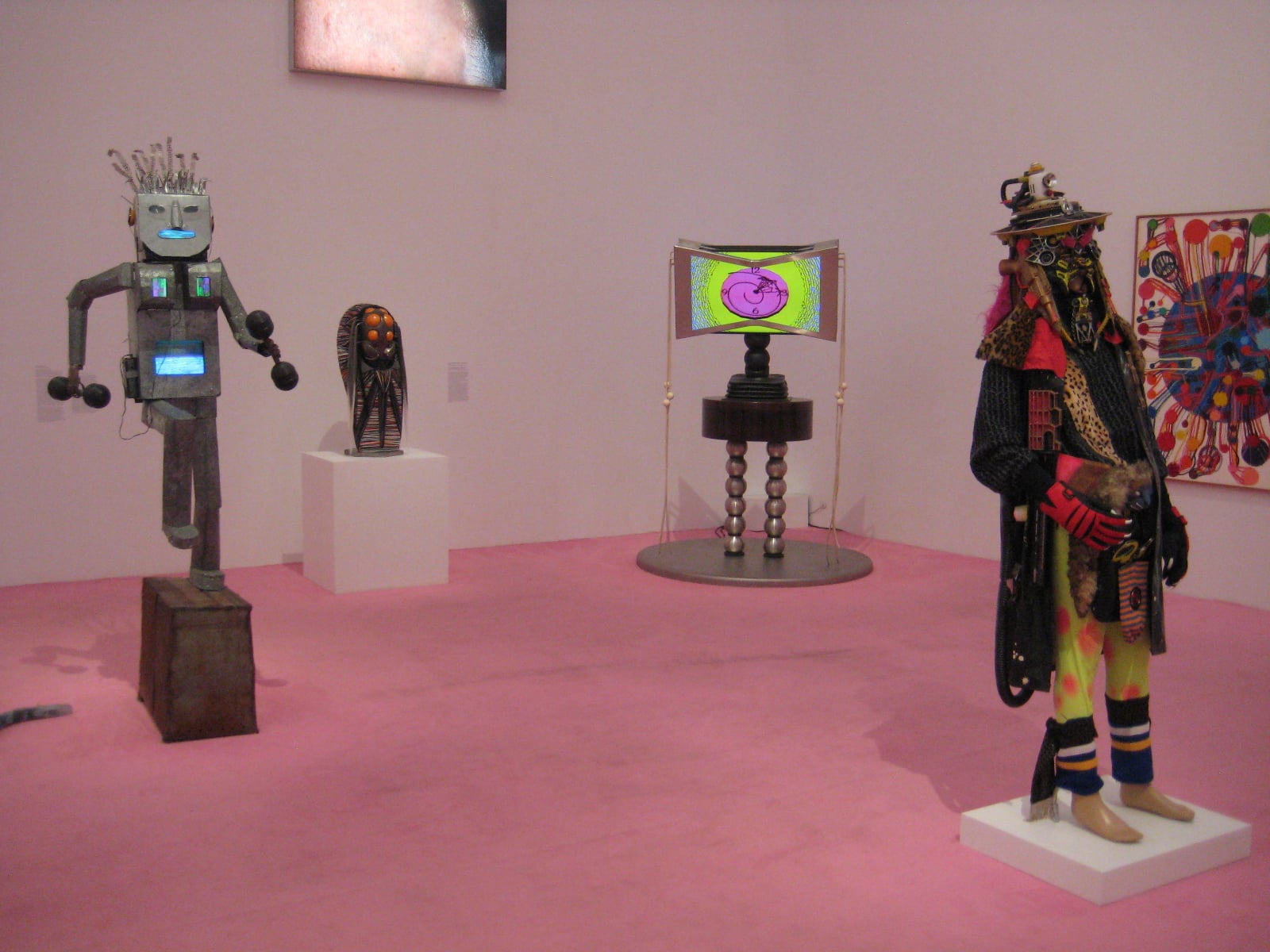
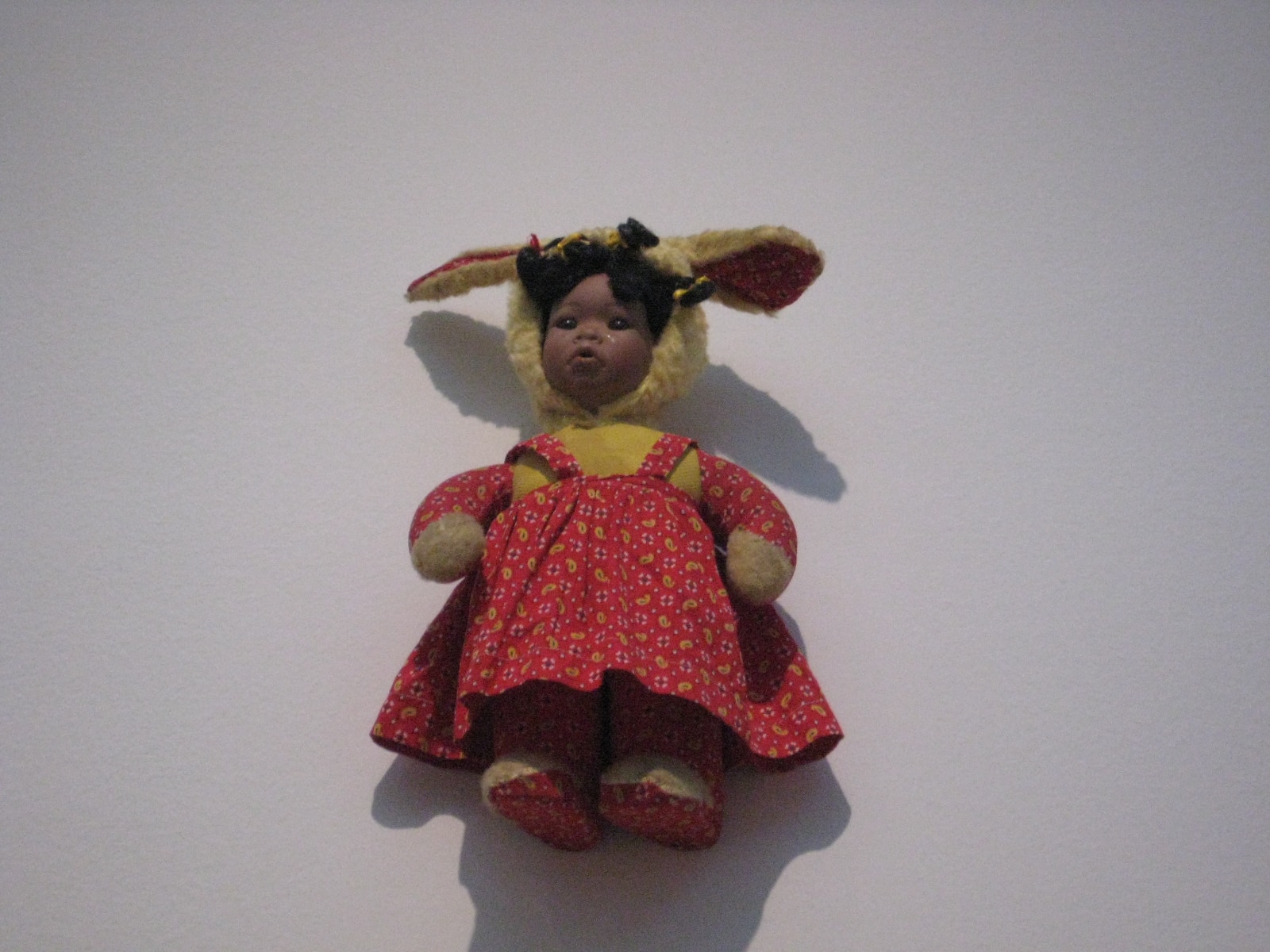
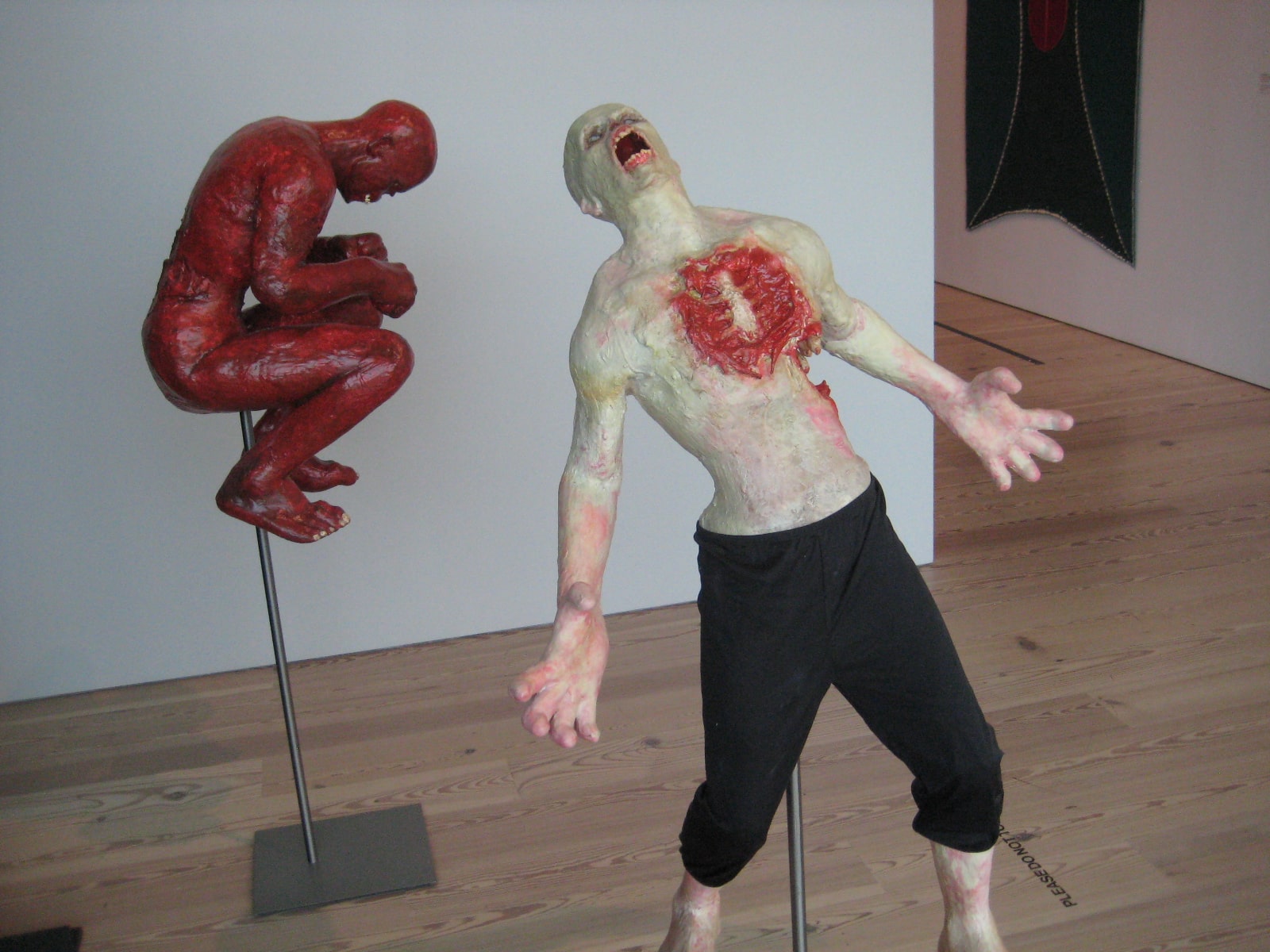
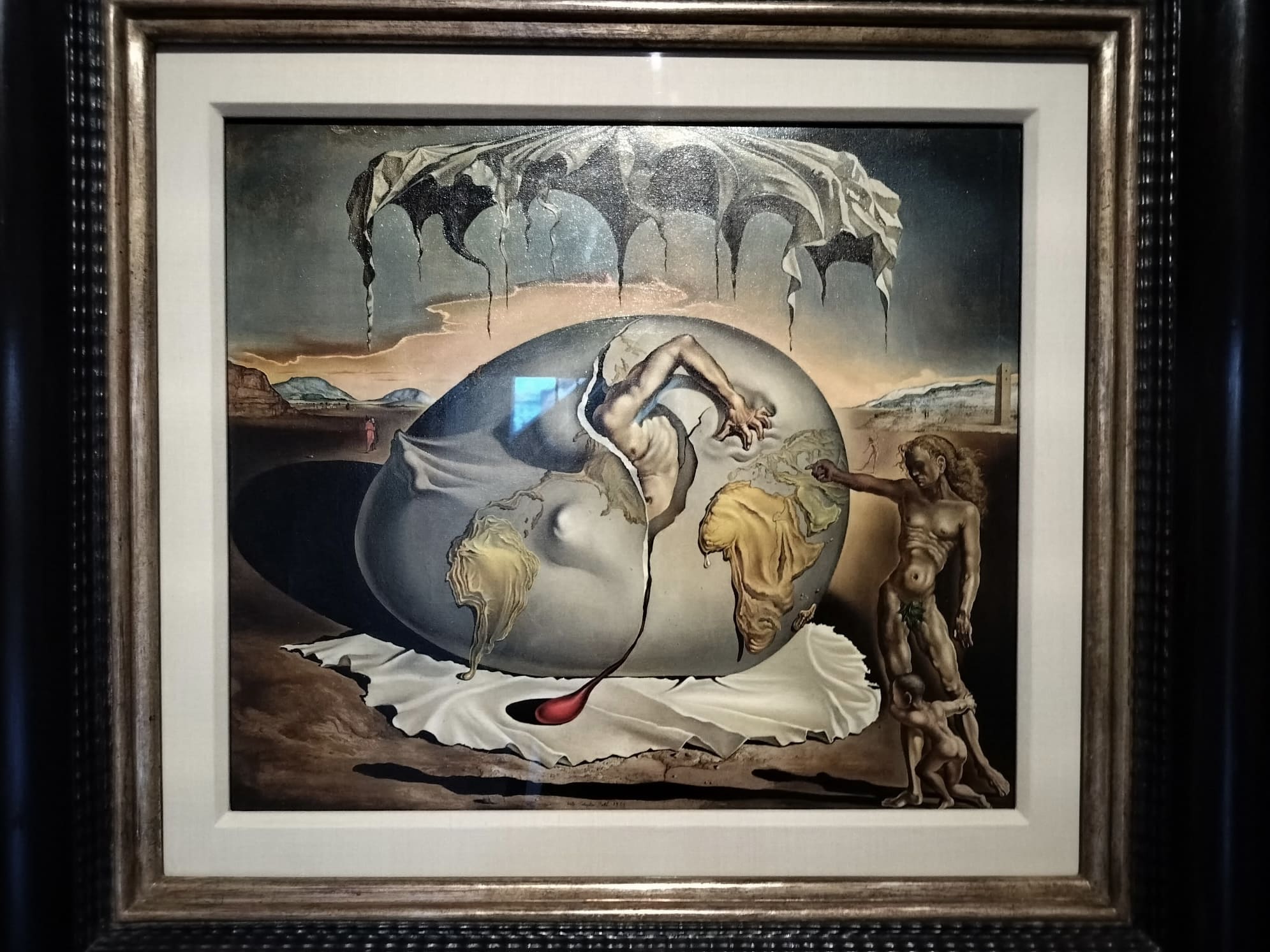
The New Museum organized the show into 13 sections, spanning more than 700 objects by over 200 artists, tracing what it calls “a diagonal history of the twentieth and twenty-first centuries.” The sections have titles like Automatic Women, Postapocalyptic Creatures, Hall of Robots, and Dream Machines. Much of the show draws on art made after World War I, including work by Duchamp and Salvador Dalí, mapping an often uncontrollable relationship with technology. Taking it all in seriously, rather than skimming it, can easily fill an entire day.
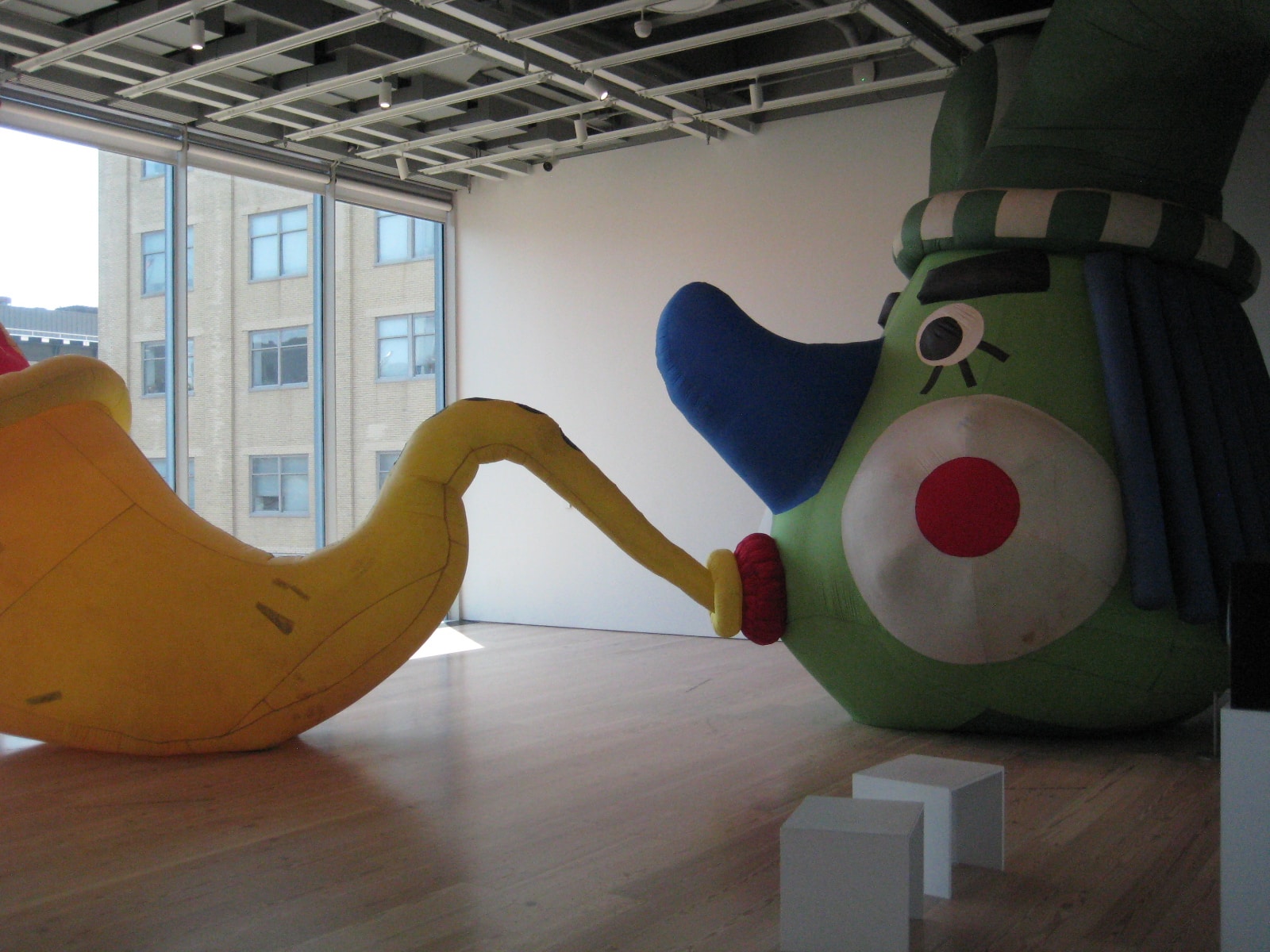
The Whitney Biennial, running concurrently through August 23, describes its own approach as one that “foregrounds mood and texture” rather than offering “a definitive answer to life today.” The range on view backs that up: Pat Oleszko’s fire-breathing inflatable “Blowhard,” which won the show’s Bucksbaum Award, sits in the same exhibition as Maia Chao’s vinyl wall text instructing visitors how to behave, and Young Joon Kwak’s “Divine Dance of Soft Revolt (Anna, Travis, Me),” a mirror- and glitter-covered sculpture cast from the bodies of the artist’s queer and trans friends. It’s the specific claim that Perl’s review pushes back on: that range, without a shared visual thread tying it together, is what makes the show read as message-first rather than form-first.
Both shows are still open this summer, for anyone who wants to test that claim in person rather than take a critic’s word for it.
Zhang and Keltner, without ever speaking to each other, arrived at nearly the same advice for viewers. “You really have to look at art and forget about trying to explain everything,” Zhang said. “Just look.” Keltner’s instruction to a skeptical viewer is almost identical: “I would advise someone to simply look,” she said. “If they feel anything or find a moment in the work that they enjoy looking at or that gives them a moment of pause, that is the reward.”
Click on the photo below to see more images of the art:
Series: High School Journalists