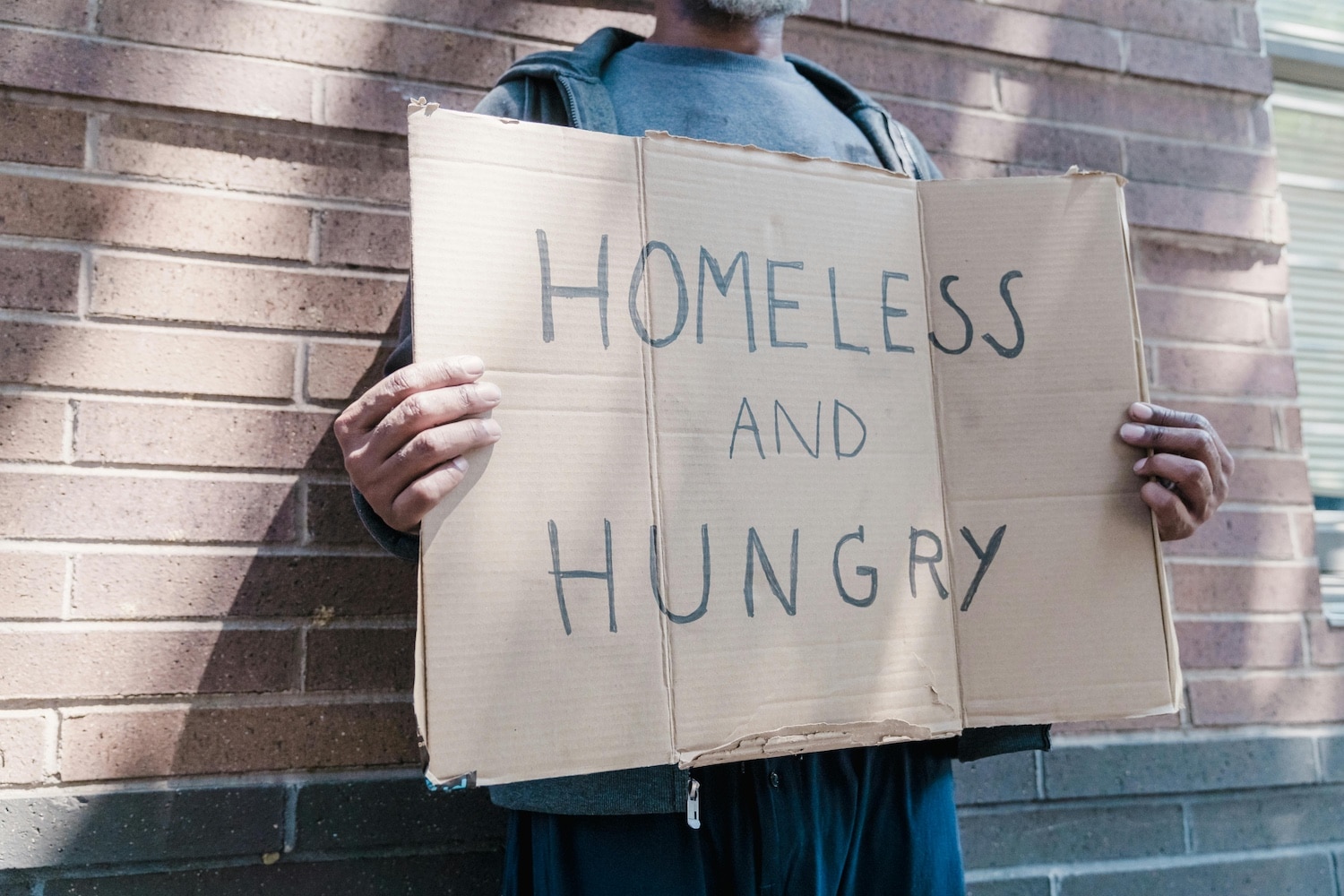
We see these signs often. Photo by Timur Weber via Pexels. Creative Commons License.
OPINION
I visited villages in Bangladesh with my parents when I was nine years old. I saw people living in extreme poverty, and it made me realize that poverty was not about laziness at all. I witnessed how families worked hard every day. Farmers labored under the sun. Women ran small roadside stalls, and children helped their parents from dawn until night. They still struggled to survive because of unfair systems, low wages, and lack of opportunity. Stepping into their world, even briefly, opened my eyes to the inequality they faced and made me rethink how I understood poverty. It was one of the first times I realized that hard work alone does not guarantee success. The people I met had strength, resilience, and determination, but they were trapped in conditions shaped by factors outside their control.
What people believe about poverty changes how they see fairness. If someone thinks poor people are poor because they are lazy, they are less likely to care about inequality or support policies that help. But if people think poverty comes from unfair pay, discrimination, or lack of opportunity, they are more open to supporting equality.
In a 2020 study published in Nature Human Behaviour, researchers found that simple activities like writing about another person’s life in poverty or doing a poverty simulation can make people more understanding. These changes can last for months and make people more supportive of fairness. The research shows that shifting people’s thinking from blaming individuals to understanding the structural causes of poverty can lead to greater empathy and support for social change.
The researchers conducted five studies with more than 34,000 participants in over thirty countries, They discovered that when people attribute poverty to situational factors, such as unemployment, discrimination, or stagnant wages, they are more likely to oppose inequality and support redistributive policies.
One experiment asked participants to play an online poverty simulation game called SPENT, which required them to make difficult financial choices faced by people living in poverty. After completing the game, participants showed more empathy toward those struggling economically. These findings reveal that even small, low-cost interventions can meaningfully shift public attitudes toward fairness. But the researchers also found that these belief changes may fade over time and that some people, especially those with who believe in individual achievement and success resist seeing poverty as a structural issue.
After reading the research, I learned that the way we explain poverty affects how we act and what kind of society we support. Taking a moment to step into someone else’s shoes can make people more caring and willing to help. But the study also shows limits. People’s views are often shaped by ideology, upbringing, and cultural beliefs that are hard to change. Still, this research highlights something powerful, which shows how empathy and understanding can serve as starting points for greater social mobility and fairness. When people understand that poverty often results from barriers beyond individual control, they are more open to supporting systems that help level the playing field.
This connects deeply with my experiences in Bangladesh. What I saw stayed with me and continue to shape how I see the world today. It made me want to advocate for people in poverty and to help create fairer opportunities for others. Reading this study made me realize that my own perspective aligns with what researchers found: when we witness poverty up close, our understanding deepens, and empathy grows. While the study shows that people’s attitudes can fade without reminders, I believe that direct experiences, like mine leave lasting impressions that change how we think about justice.
This essay was supported and written in collaboration with the Social Mobility Lab in the Colin Powell School for Civic and Global Leadership.
Photo via Pexels. Creative Commons License.
Tags: empathy for the poor helping those in need poverty Rifah Hussein study n Nature and Human Behavior understand poor people
Series: Social Mobility Lab