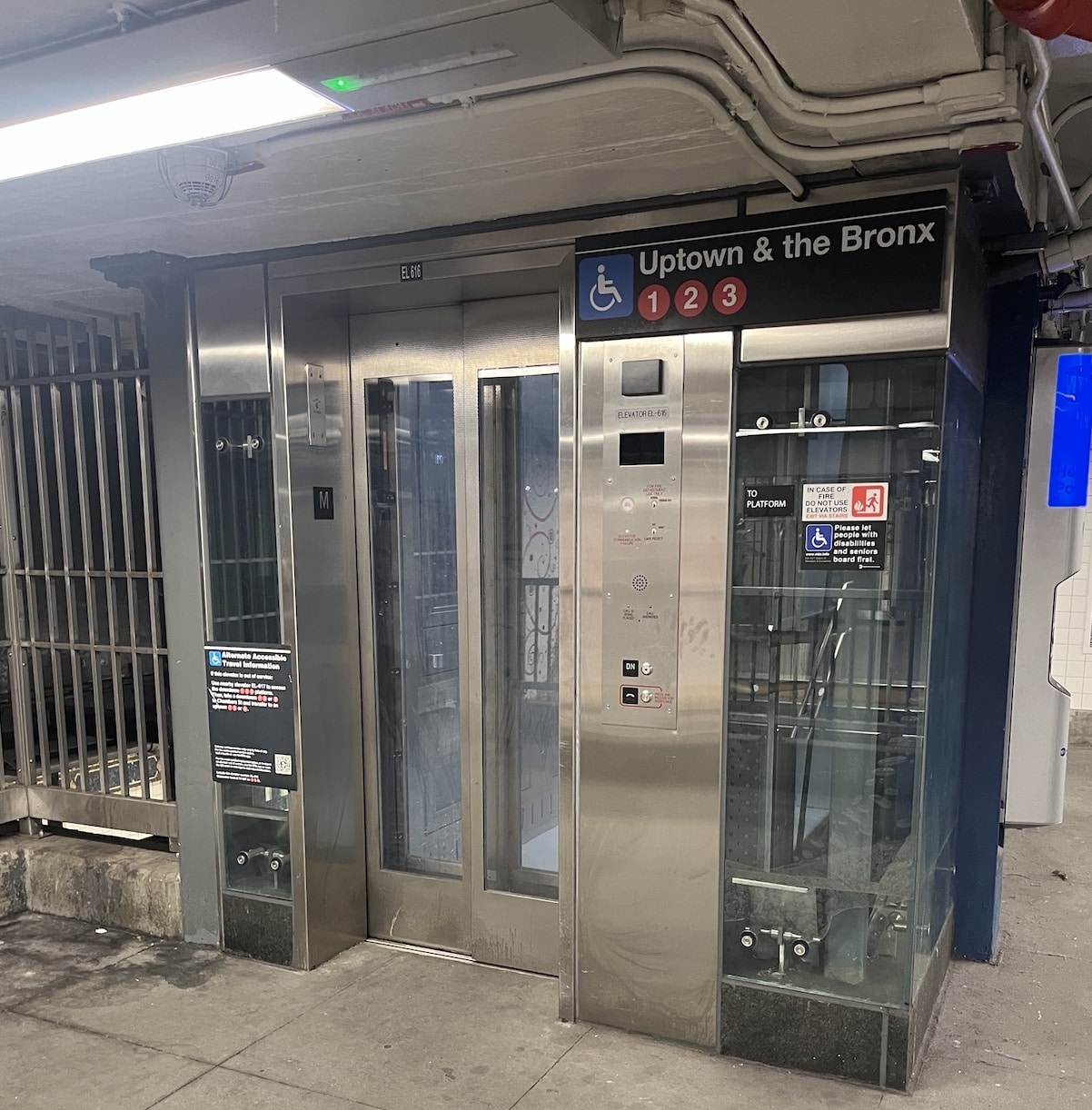
Many subway stations still don't have elevators. Photo by Francisca Lorca.
updated May 14, 2026*
updated May 15, 2026*
New York City can seem like an obstacle course to people who use wheelchairs or have other disabilities. The MTA lists more than 150 accessible subway stations and continues to add elevators, but there are still issues.
Disability advocates sued the MTA because many stations were inaccessible. A 2022 settlement requires the MTA to make all of its subway stations accessible by 2055. Right now problems persist and recently New York Lawyers for Public Interest (NYLPI) wrote a letter asking the City Council to do more. Other disability advocates also wrote to the City Council asking for more help.
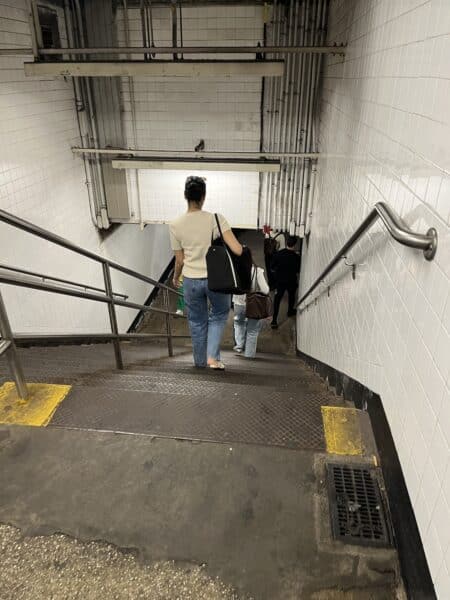
Steep subway steps make it impossible for some to use a station that doesn’t have an elevator. Photo by Francisca Lorca.
For some people with disabilities, it is a tale of two cities. Julia Taylor has a difficult time. The 22-year-old suffers from a connective tissue disorder called Ehlers-Danlos Syndrome that affects her joints and makes it difficult to walk. She uses a wheelchair and has found that challenging in New York City’s subway system
But 59-year-old Gregory Taylor (not related to Julia Taylor) became disabled as an adult after he broke his neck. He likes to take the bus and the train to get around the city. He has managed to find a way. “I would honestly say it’s sufficient for right now,” he said.
Taylor on the other hand doesn’t find subways helpful. “I ended up dropping out of college trying to figure out what to do.” She moved away and then came back to live on the Upper West Side.
The neighborhood is accessible. The area is mostly flat which easier because she can walk short distances and she works in a coffee shop near her apartment.
“I walk, but I have been at this job for a few years now. There was a point when I did have to take the subway or the bus, and that was definitely a little more taxing. So, hopefully I don’t have to move out of this neighborhood for the foreseeable future, because walking has been a lot easier,” she said.
Gregory Taylor moved to an accessible apartment in Queens in 2025. It has extra room that makes it easier for him to move around. His new neighborhood is just a few blocks from the train station and bus stops nearby. “The buses are the best cause you can get on and all of them got the ramp,” he said.
Still, he and others with disabilities wish the MTA made it easier. “They could always do more. But right now, I can get around pretty good,” he said.
*This story was updated to clarify the NYLPI’s position.
Tags: Francisca Lorca