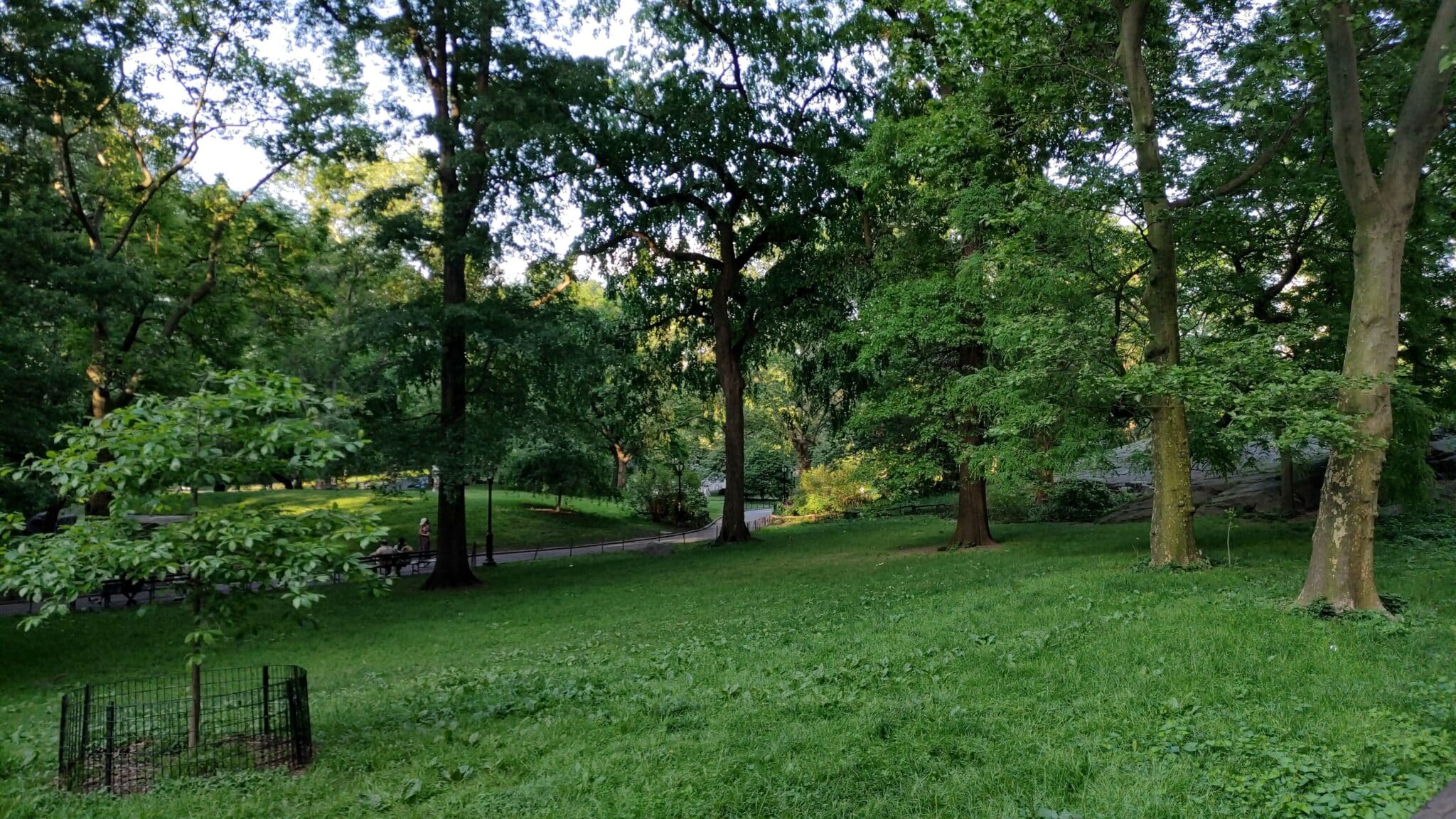
Nasim Kefir, a Harlem resident, enjoys walking through St. Nicholas Park to get fresh air, especially during quiet fall evenings. He says the park offers a sense of calm that helps him clear his mind.
“I’ve been walking around this park for several years” Kefir said. “I like it, sometimes I see joggers running with their dogs, kids playing, and families catching up. It tends to be peaceful around here.”
But Kefir has also noticed areas of the park that need urgent repairs. One major concern is a deteriorating stone staircase that has become a safety hazard.
“I sometimes get scared to walk up and down the stairs, especially when winter is coming,” he said. “One winter, ice formed all over the staircase, and I saw someone trip while walking up. When I went to check on them, I noticed part of the staircase had chipped off. Since then, I usually cut across the park to avoid it.”
New York City’s community parks are vital public spaces that improve urban quality of life, offering residents opportunities for recreation, exercise, and relief from the stresses of city living. Central Park, for example, receives more than 42 million visits annually, making it one of the most visited urban parks in the country. With its diverse ecosystems and wildlife, it provides daily access to nature for millions of people.
However, maintaining heavily used parks remains a persistent challenge. Issues such as rodent infestations, overflowing trash bins, and aging infrastructure undermine efforts to keep parks clean and safe. These problems are not limited to Central Park. Neighborhood parks such as Jackie Robinson Park, Morningside Park, and St. Nicholas Park face similar conditions. Pollution and sanitation issues near entrances and playgrounds pose health risks for adults and children and can discourage residents from returning.
Park maintenance challenges also highlight broader equity concerns. According to researchers Sunny Fleming and David LaShell, communities of color have approximately 33.5 percent less park space per person than predominantly white communities. Low-income communities have about 21.2 percent less park space per person. Climate change further intensifies these disparities, as under-resourced parks are less equipped to handle extreme weather and environmental stress.
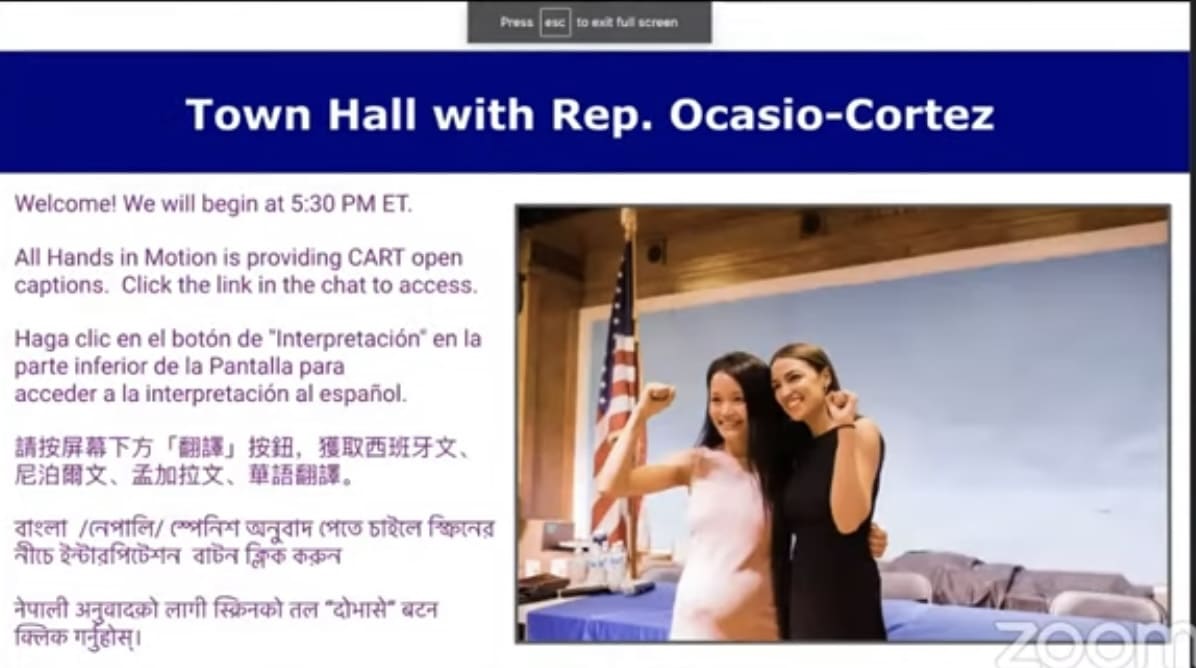
Despite these challenges, community boards and local organizations are working to address park conditions. Manhattan Community Board 10 regularly gathers community feedback and discusses park improvements. On the second Tuesday of every month, the board hosts virtual meetings attended by parks staff, residents, and occasionally elected officials. Discussions range from landscape upgrades to future community events.
During one recent meeting, Dr. Sheldon Applewhite, director of the Harlem Pickleball Association, raised concerns about conditions at Jackie Robinson Park. Founded in 2022, the association includes more than 100 Harlem residents and promotes health and community connection through pickleball.
Applewhite cited poor lighting, safety hazards, and the lack of storage space for equipment. He said repeated 311 requests over two years had not led to meaningful improvements, despite acknowledgment from the Parks Department. Community board members thanked him for raising awareness and said they would elevate the concerns to elected officials.
Local nonprofit groups have also played a key role in park advocacy. Friends of St. Nicholas Park, a volunteer-led organization, works alongside NYC Parks staff to support maintenance, beautification, and funding advocacy. Karen Asner, the organization’s president, said community pressure has helped secure major investments.
“We advocated with elected officials and the community board to rebuild the playground at 133rd Street and St. Nicholas Avenue,” Asner said. “That effort resulted in funding for a project that cost over $3 million.”
Asner noted that repairing staircases remains a top priority, but one that requires significant funding. “There are many stairs in need of repair,” she said. “Each staircase can cost between $1 million and $2 million to reconstruct.”
She explained that the approval process is lengthy. Proposed projects are first reviewed by NYC Parks staff, then presented to the community board, and finally placed on a list of annual funding priorities. Even high-priority projects can take years before funds are allocated.
Friends of Morningside Park faces similar challenges. Brigham Keehner, chair of the organization’s board, said sanitation conditions vary sharply between the east and west sides of the park.
“On the east side, where Parks vehicles have regular access, sanitation is generally very good,” Keehner said. “The west side experiences more challenges due to limited vehicle access and fewer trash receptacles.”
He added that wooded areas sometimes contain trash left behind from former encampments, requiring additional cleanup efforts. To address these issues, Friends of Morningside Park organizes weekly volunteer cleanups and partners with corporate and nonprofit groups while working closely with the Parks Department.
NYC Parks has also launched a Capital Project Tracker website that allows the public to monitor park improvement projects citywide. A staircase reconstruction project at St. Nicholas Park was assigned in February 2025 and is currently halfway through the design phase. Similar staircase reconstruction projects are underway in Morningside Park, with design completed and contracts under legal review.
Raising awareness about park conservation is critical for New York City, particularly in underserved communities that rely heavily on these spaces. Although rebuilding and restoration efforts can take years, volunteers, community organizations, and board members continue to advocate for safer, cleaner parks. Without sustained investment and attention, deteriorating parks risk further environmental damage and long-term consequences for the city’s communities.
Tags: Central Park Conservation Jayden Pantoja NYC Parks Park Reconstruction Public Parks underserved communities
Series: Community