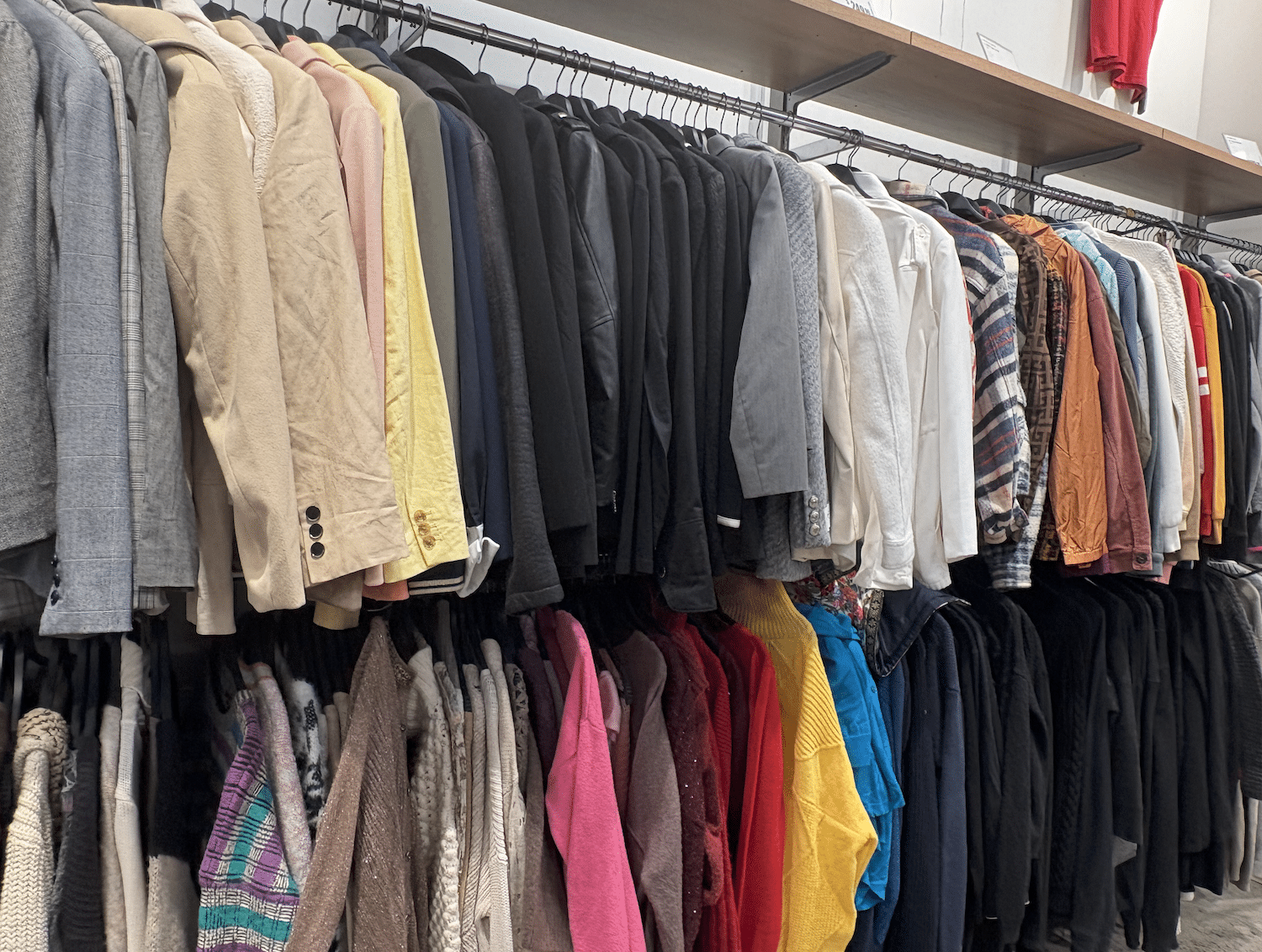
Shopping in retail thrift stores allows you to go through the racks. Photo by Zhieary Pedraza.
“I love the experience of thrifting, making a day out of it, going out, searching, and discovering pieces along the way.” said Ellisha Gardner. She is a thrifter who shares her second-hand shopping finds on TikTok.
Increasingly, second-hand stores are filled with people browsing through the racks for unique items and authentic styles for their closets. A report by Capital One projects that the U.S. secondhand market will reach $74 billion by 2029.
As popularity grew, thrifting shifted into an online business on platforms like Depop. Business Insider reported that Depop has three million customers in 147 countries. Users can scroll through listings and find vintage clothing from anywhere at affordable prices. Brick-and-mortar thrift stores struggle to match online pricing, but try to remain competitive.
Social media platforms like TikTok have also played a role, turning thrift hauls into viral content and influencing millions of viewers. On the app, hashtags like #thrifting have reached more than 3.2 million posts, featuring vlogs and users shopping finds. “Social media influencers have played a major role in that growth.” said Bette Shallbetter, a TikTok creator who shares thrifting videos every day.
This works because GenZ uses thrifting as a fashion statement, an environmental stance and to turn their backs on fast-fashion, those styles that are in one season and out the next. A report by USA Today found that, “In 2022, 85% of thrifters said they did so to save money, 42% said to save the environment and 40% said to find discounted high-end brands.”
Whether it is Depop, or another online shopping venue, Gen Z likes the ease. “I prefer more thrifting on online platforms because there are more deals.” said Ana Hernandez, a New York City thrifter.
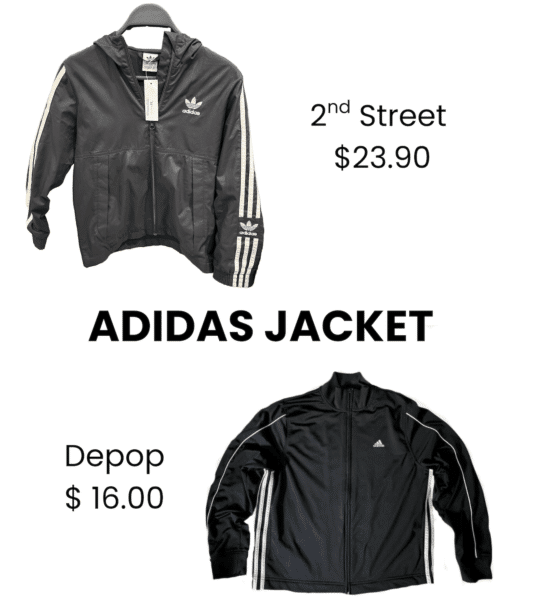
A screen shot from Depop shows the item and prices.
Depop has become a favorite place for her to find special prices or bargain with sellers. She explained that thrifting in stores requires time to search, which can be difficult with her busy schedule. Using the app lets her discover new-old things with a simple search while riding on the subway.
Longtime charity resellers like The Salvation Army have also seen an increase in shoppers and donations. According to USA Today, some regional thrift store websites reported up to a 55% increase in traffic and a 50% rise in online sales in certain areas.
While retail stores face online competition, they benefit from the trend. At a thrift shop in New York City, employee Keelo Lopez said donations arrive weekly in large quantities bringing in a wide variety of items. As more customers visit, Lopez noted a difference in how shoppers approach in-store versus online thrifting.
“In person, they get to try things on and check the condition,” Lopez said. “Online, it’s harder to tell from photos.”
While many shoppers prefer the in-store experience, pricing remains a key factor. Customers often compare prices to listings from online resellers.“People compare prices all the time, especially for shoes,” Lopez said. “We try to price them lower than what’s online so they sell.” He said they also offer discounts and coupons to attract buyers.
For many sellers online platforms like Depop are a good way to make money. They set their own prices based on condition, brand and demand. In the U.S. and U.K, the platform does not charge selling fees, though fees may apply in other regions.
Selling on Depop provides a good income for college students like Ryan Bright. She has noticed a big change for everyone. “Brands and specific pieces will blow up on TikTok and conversely the prices skyrocket,” she said. She added that the platform’s algorithm promotes listings based on user searches, helping sellers reach more buyers.
The process for sourcing and pricing varies depending on sellers. Bright explained sellers find clothes from local stores or other online sites. Bright’s Depop page includes styles like Y2K and the 90s with prices ranging from $20 to $100.
“I look at direct comps for the item if they exist and will list at 75-80% of that sold price. However if it is a rare coveted designer piece I will list at fair market value given the condition of the item.”
She said her most popular items are from brands like Betsey Johnson, Cache and Sue Wong. “Resale is an amazing way to have access to vintage and second hand items that may be lost to the back walls of the thrift stores and then ultimately to landfills.” said Bright.
Tags: Depop Ellisha Gardner Keelo Lopez online thrifting Ryan Bright Depop seller Salvation Army thrifting vintage shops vs. thrifting Zhieary Pedraza