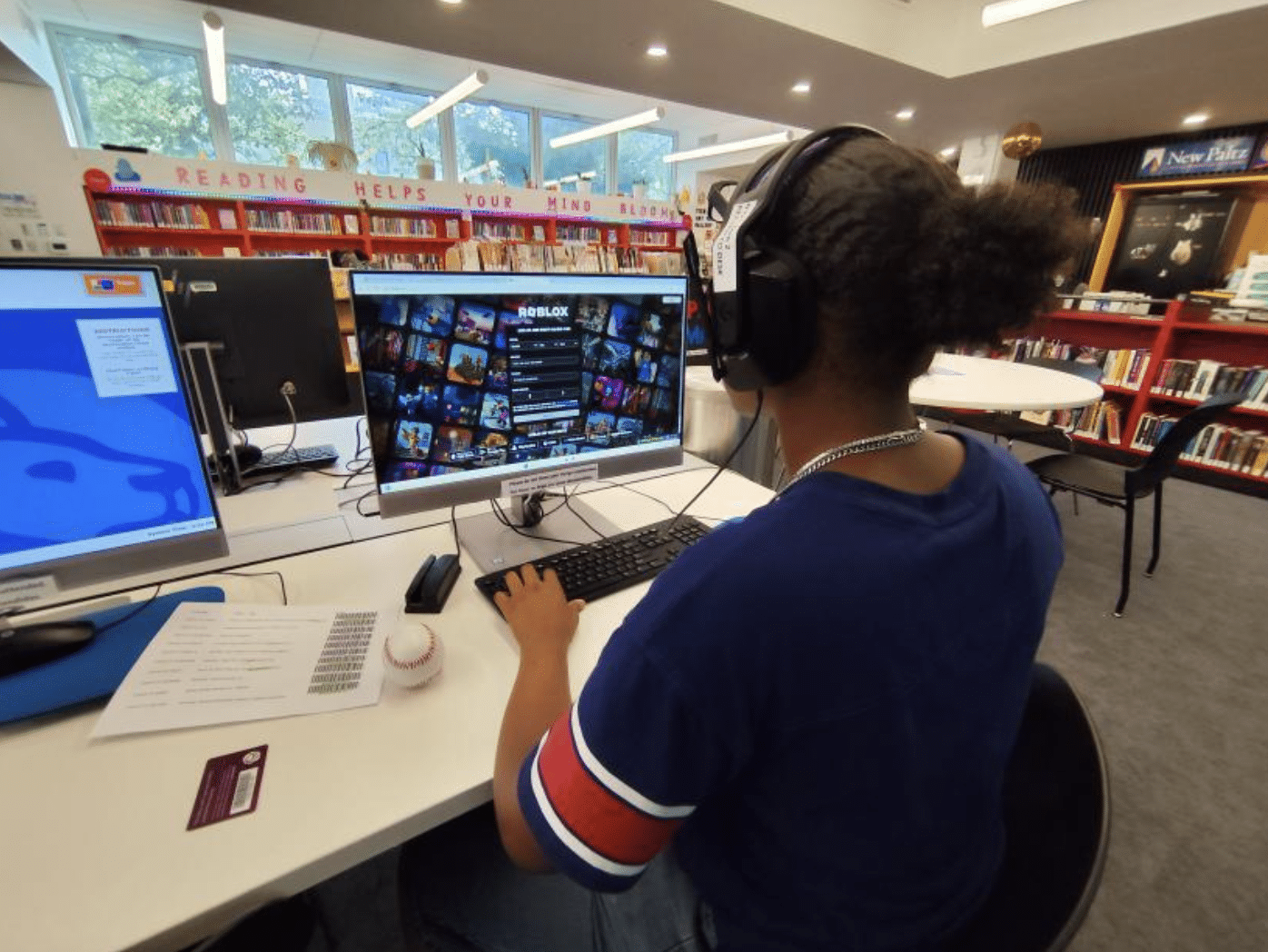
Easy to get absorbed in gaming. Photo by Abdulhakim Soumana .
*Abdulhakim Soumana was a student in College Now Introduction to Journalism class at CCNY
Roblox is more than just a way of playing games. Millions of teens play and connect, build new friendships, and unwind after a long day of dealing with stress. Roblox stands out as one of the most popular platforms, especially for teens. Sixty percent of users are over the age of 13, and users who started as kids stay with the game, according to takeaway reality Roblox affects people differently and interactions can range from very positive to very negative between users. Roblox has moderation help by providing a report issue button to help assess users needs when facing bullying or any conflict.
Jaiden, 13, plays Roblox once in a while, usually for about two hours a day, but he always makes sure the more important stuff like homework or chores comes first. “Honestly, I always get my chores, homework, or anything else done before I even start thinking about playing games,” Jaiden explained. He added that some days he just watches YouTube or does something else instead of gaming. “Gaming isn’t the only thing I do. It’s just when I feel like it.” For Jaiden, Roblox is a chill zone, a way to wind down and talk with friends after a long day at school.
“Playing Roblox is just fun for me. It actually helps me relax after school,” Jaiden said. He remembers being super into it a year ago, but now he’s more neutral, “I don’t feel addicted or anything. If I get bored, I log off and play something else.” While he once dealt with bullies on the platform, he shrugged it off, saying, “I didn’t pay those kids much attention and moved on. It didn’t really affect me.” Roblox even helped him build some social confidence: “It’s helped my communication skills because I talk with my friends there. Sometimes we just hang out and bond after school.”
Tanya Delgato’s experience is much more complex.
Delgato, 19, has been playing Roblox since 2020 during the start of the pandemic, when lockdowns and school closures kept everyone indoors. She explains, “With everything shut down, Roblox became a way to cure my boredom and escape all the stress of being stuck at home. It was really easy to lose track of time.”
This habit stuck even after things opened back up. Now, Delgato says she spends anywhere from five to eight hours a day on Roblox, especially on days when college isn’t keeping her busy. “I like playing because it helps me escape from the stress of college and life,” she says. When I ask about cutting back, she replies, “Honestly, I know I should try to quit or at least play less, but it’s really hard. The games are just there, and it makes life feel enjoyable and helps me escape reality for a little while.”
Delgato says there are some downsides though. “Some days,” she begins, “I say I’m only going to play for a little while, but before I know it, it’s midnight and I haven’t done my assignments.” She described how hard it is to stop: “It’s like I can’t put down the controller, even when I want to.” The cost isn’t just time. It’s also social.
A study by the American Academy of Pediatrics found, “While video games can offer social connection and ways to relieve stress, excessive screen time especially from immersive and addictive games can contribute to anxiety, disrupt sleep, and negatively affect young people’s ability to balance school and daily responsibilities.”
“I’ve been hanging out less with friends and going outside less. Some days, I just feel lazy and stuck in a loop,” Delgato says. The cycle leads to stress and sometimes even feeling worse. “It’s addicting. There’s always something new to do or achieve. It can make me feel more anxious sometimes.” When I ask Delgato if she has advice for anyone who feels the same way, she says,“if you feel like you’re losing control, try taking small steps. Set a timer for your gaming sessions and make sure to take breaks. Go outside or talk to someone you trust.” It’s tough, Delgato adds, “but taking breaks helps. Gaming is fun, but real life matters too. Because right now these are some things I’m trying to cut back on my gaming usage.”
The American Academy of Pediatrics study also points to the positive and negative aspects. “Gaming can give teens a way to connect with friends and manage stress, but excessive gaming may lead to emotional problems, sleep disruption, and social withdrawal.” Teens are encouraged to “set limits, pay attention to their feelings, and take regular breaks to avoid burnout,” the AAP study found.
For gamers Jaiden’s story and Delgato’s perspective show that balance and self awareness are essential. “It can be positive or negative, it all depends on how you use it,” Delgado said.
Series: High School Journalists