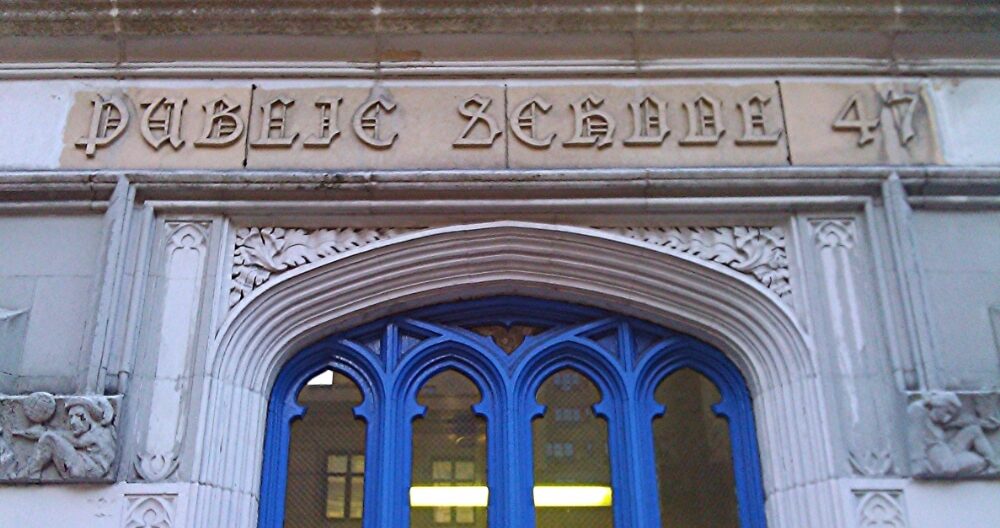
"PS 47, Manhattan" by Mike Licht via Creative Commons.
THE PRESSURE ON THE NEW YORK CITY DEPARTMENT OF EDUCATION CONTINUES AFTER THE DELAY OF AI USE IN SCHOOLS.
*Aliya Lucas was a student in the College Now Introduction to Journalism class at the City College of New York.
In early July, New York City schools Chancellor Kamar Samuels told principals to hold off on purchasing educational software until the NYC Department of Education completes its guidance on artificial intelligence later in the summer. This decision follows the education department’s March release of initial AI guidance, which drew criticism for doing too little to restrain AI use.
In May, Chancellor Samuels acknowledged that the city “missed the mark” with its initial guidance, saying that they “didn’t communicate in a way that really showed our community that we understood where we were, and that we were worthy of being trusted to protect young people.” The response to Samuels and the education department drew pushback from City Council members, who argued that families should have a bigger say in how children are exposed to AI.
In a letter signed by 29 of the city’s 51 council members, the letter urges Mayor Zohran Mamdani and Chancellor Samuels to “hold off and pause the use of AI in our schools except for education on the multiple risks in employing the technology until rigorous guardrails can be developed with public and expert input, to prevent serious damage to NYC children and their future.’’
The resistance against AI being in schools has been palpable in NYC’s public education communities. Parents, teachers, and students pack school board meetings to speak out and make their voices heard, even as the city is reanalysing its AI proposals. In late April, more than 100 New Yorkers testified at a Panel for Educational Policy meeting for almost 7 hours, arguing that the education department is introducing AI tools without proper guidelines, transparency, or clear explanations of how the software works. Students said that AI was already having an impact in classrooms and surveillance protocols, like the new digital hall passes, which were already in use in over 150 schools citywide in March.
At one of the meetings, a mother from Park Slope came up to the microphone with her toddlers alongside her, holding one in her arms while holding the other by the hand and spoke out about the education department’s handling of AI. “Gen Z is turning against AI. I’m turning against AI. The city is telling us that AI is inevitable, but won’t tell me what devices and applications my children are using,” she said, adding, “you tell us you are spending our money to give artificial intelligence to our children?’’
Leonie Haimson, who is a member of the Coalition for an AI Moratorium, shared the news of the delay on an email listserv she controls for teachers and advocates. Haimson said, according to the NY Daily News, that she hopes that the pause means the Mamdani administration is “seriously considering the pleas of thousands of parents and teachers to call a halt to the destructive impact of AI on their children’s minds and education – before it is too late to repair the damage.’’
Series: High School Journalists