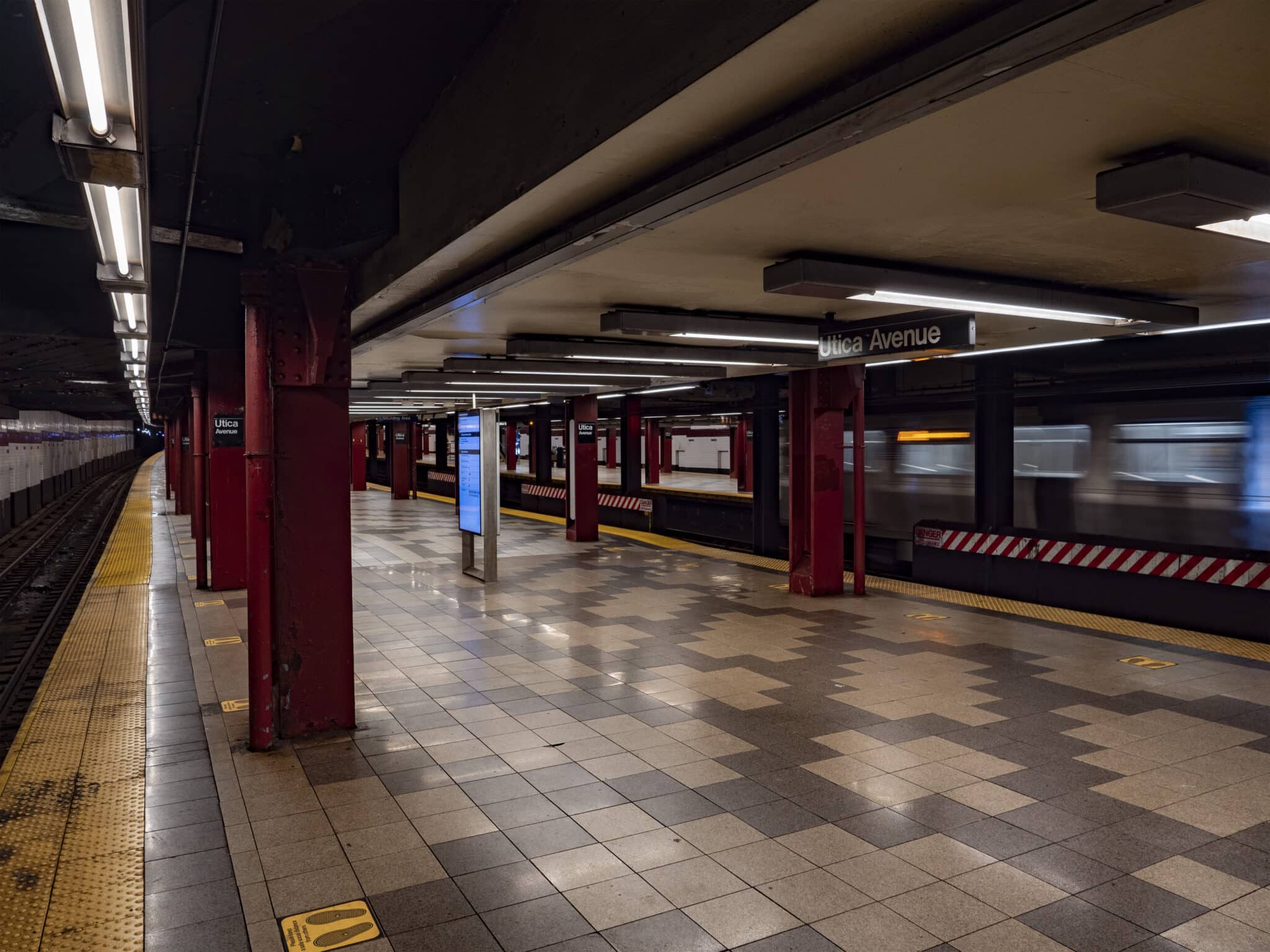
GeneralPunger, CC BY-SA 4.0, via Wikimedia Commons
For 17-year-old Gabriel Broadus, September 28 began like the “perfect day.” She had just finished spending time with friends and was making her way home when she heard people screaming at the in the Utica Avenue subway station. When she turned around, she saw a man being dragged alongside an A train. Broadus was among the people who witnessed the man struggling to get free. She called 911, while people on the platform yelled in an attempt to stop the train. But by the time she got through, the train had already left the station.
The man, later identified as 57-year-old Yaw Boahene, had been fatally injured in the Brooklyn station. Boahene was getting off the train while carrying a bag and using a cane when he was dragged toward the end of the platform and into the track area, according to a preliminary report released by the National Transportation Safety Board (NTSB). The train crew did not become aware of him until the train reached Jay Street–MetroTech, several stops later.
Gabriel Broadus, a high school student, hadn’t hesitated to make the call, and wished she could do more. “I was always told that when you panic and you just stand there, it doesn’t help the situation at all,” Broadus recalled. When she got home that evening, she went into her mother’s room and cried.
In the days following the accident, Broadus began speaking publicly about what she witnessed. She appeared in an interview with ABC7NY, which circulated on social media, and the attention was not entirely positive. Broadus, who is Black, said people made racist comments and criticized her looks and personality. It upset her so much that she didn’t want to return to her high school, where she is a cheerleader, is on the row team, and leads her school’s Black Alliance. She felt shocked and hurt that she became a target rather than the MTA and New York City Transit.
“We are blaming everybody but not the system that enables all of this to happen and doesn’t change a damn thing about it…. I had gotten really aggravated by that,” Broadus said.
She saw an opportunity to bring attention to the larger issue of subway safety. In early October, Broadus launched the Subway Emergency Response Action (SERA), advocating for safer subway stations and stronger emergency response procedures. Through SERA, she hopes to give commuters a platform to express their concerns, connect with others who have experienced similar situations, and follow efforts to improve subway safety.
She began an online petition to give the campaign a way to communicate riders’ demands to government officials. For Broadus, improving subway safety requires more than simply raising awareness. She has identified several areas where she believes the Metropolitan Transportation Authority (MTA) should make changes.
Broadus demands for the MTA to install platform barriers, screen doors, and other edge protections, to improve the hiring and training of transit personnel and to create more accessible ways for passengers to report emergencies.
While the safety concerns are real, the MTA does have some safety measures in place. Some subway platforms have safety metal barriers but these only provide partial protections and are not the same as full platform doors. The MTA says it has installed platform barriers at 115 stations as of January 2026 and plans to expand the program. It also points to Help Points and emergency intercoms as additional safety measures. The agency acknowledges that installing full platform screen doors across the system is difficult because of existing station and train designs.
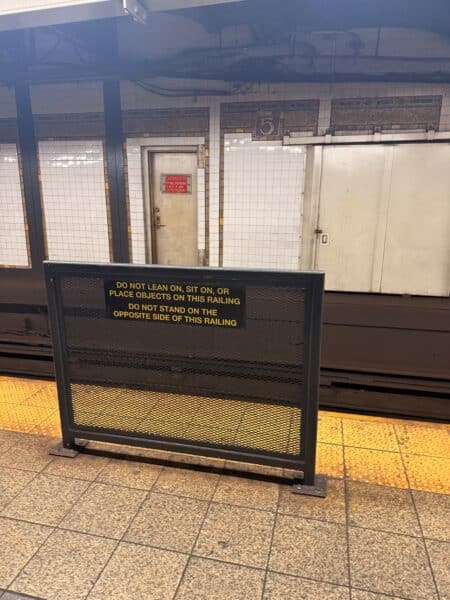
Subway barrier at 5-Ave and Bryant Park
Broadus also raised concerns about the responsibilities of train crews and the emergency procedures available to passengers during dangerous situations. She questioned why no one appeared to intervene in time during the September incident and why there were not more effective ways for people on the platform to alert train personnel.
She has already attempted to establish connections with transit workers and elected representatives, including Brooklyn City Council Member Chi Ossé. At the time of the interview, she had not yet received a response from his office.
For Broadus, SERA represents an effort to turn a traumatizing experience into something constructive. What began with a single evening on the subway has become an attempt to make the system safer for all the people who depend on it every day.
Tags: Chi Ossé Gabriel Broadus Mta National Transportation Safety Board New York City Transit NYC subway Subway Emergency Response Action Subway Safety Yaw Boahene Zeinab Bah