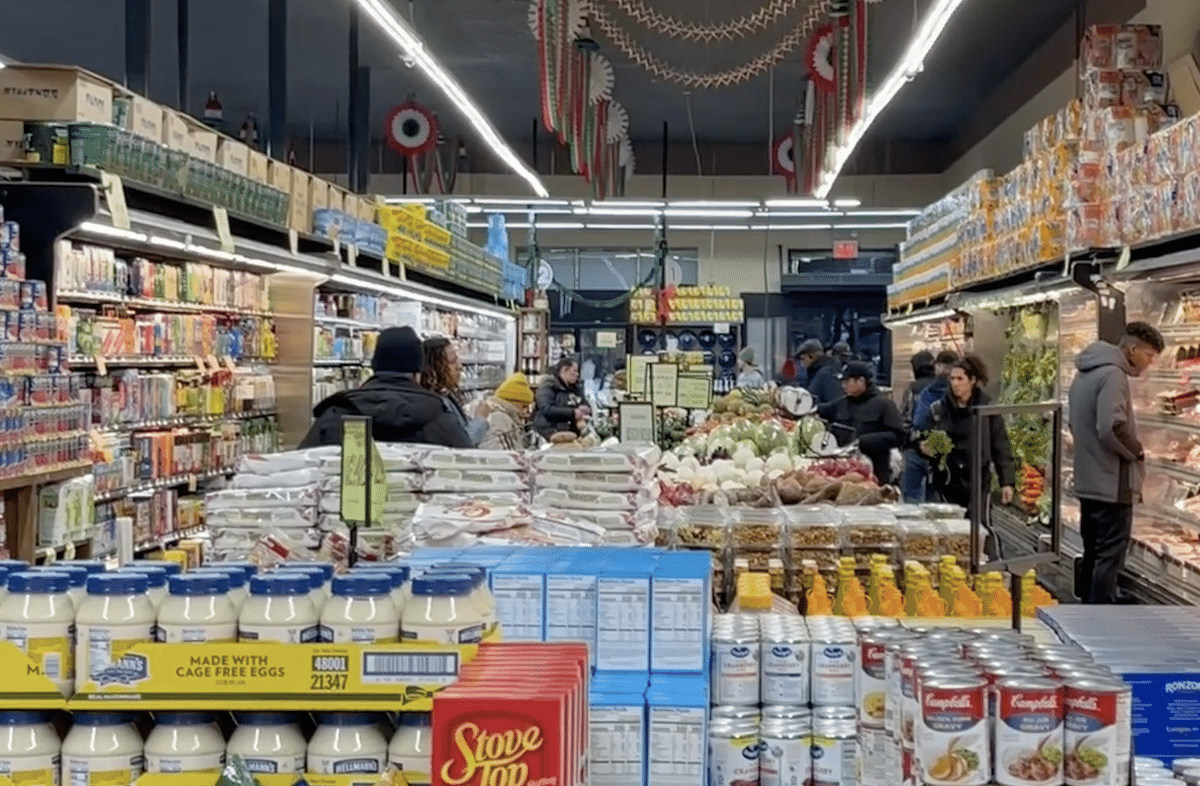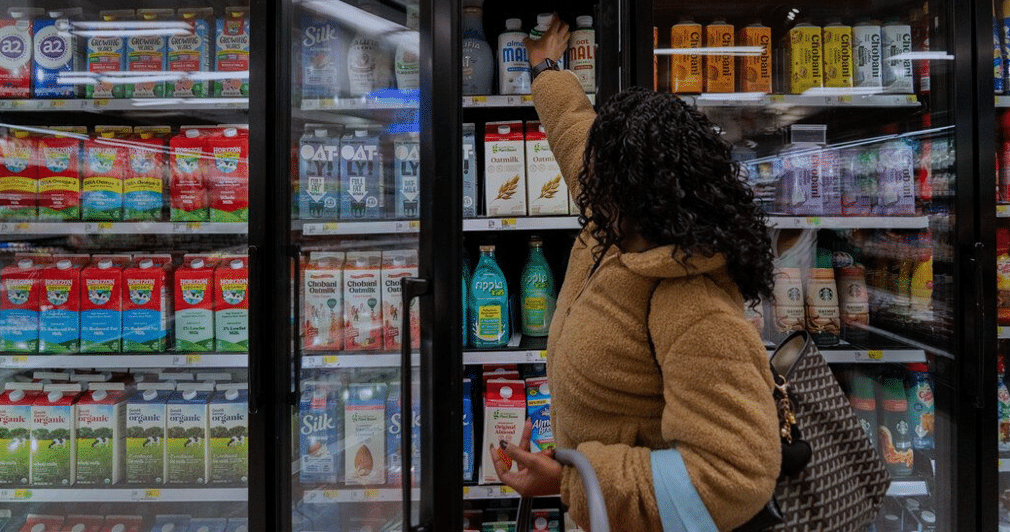
Skylar Ferreira shopping at C-Town Fresh Market on 135th Street and Broadway
On a recent afternoon at C‑Town Fresh Market on 135th Street and Broadway, a grocery store about a 10-minute walk from City College, sophomore Sofia Bulacia stood at the checkout counter watching the total rise higher than she expected. She had only a few basics in her cart: rice, eggs, milk, and frozen vegetables, yet the screen flashed more than $30.
“I used to be able to make this last almost the whole week,” says Bulacia, a psychology student who lives in West Harlem. “Now it’s gone in a few days.”
As grocery prices continue to rise across New York City, CCNY students say inflation is reshaping how they shop for food and how often they eat. A recent study suggests that 40 percent of the City’s families cannot afford weekly food costs. For students already juggling tuition, rent, transportation, and textbooks, the increasing cost of groceries has become another financial burden. “It’s not just annoying, it affects how often I eat and what I can afford,” Bulacia says.
“Food is something you need to function.” Many students say grocery inflation has forced them to change their eating habits. Fresh produce and name brand items often go first. “I mostly buy instant noodles or frozen meals now because that’s all I can afford,” says Skylar Ferreira, a sophomore majoring in engineering.
“Fresh food feels like a luxury.” Even local options that once seemed affordable, like the nearby C-Town Fresh Market or smaller bodegas, don’t always offer the low prices students need. Some choose to walk farther to find better deals or take the subway to stores like Whole Foods Market on West 125th Street when they can afford it, but that doesn’t always work out on a tight budget.
For commuting students, the problem can be even worse. Ferreira, who travels more than an hour to campus from Queens, says she often skips meals during the day. “Buying food near school is expensive, and carrying groceries on the train isn’t easy,” she says. “Sometimes I just wait until I get home to eat.”
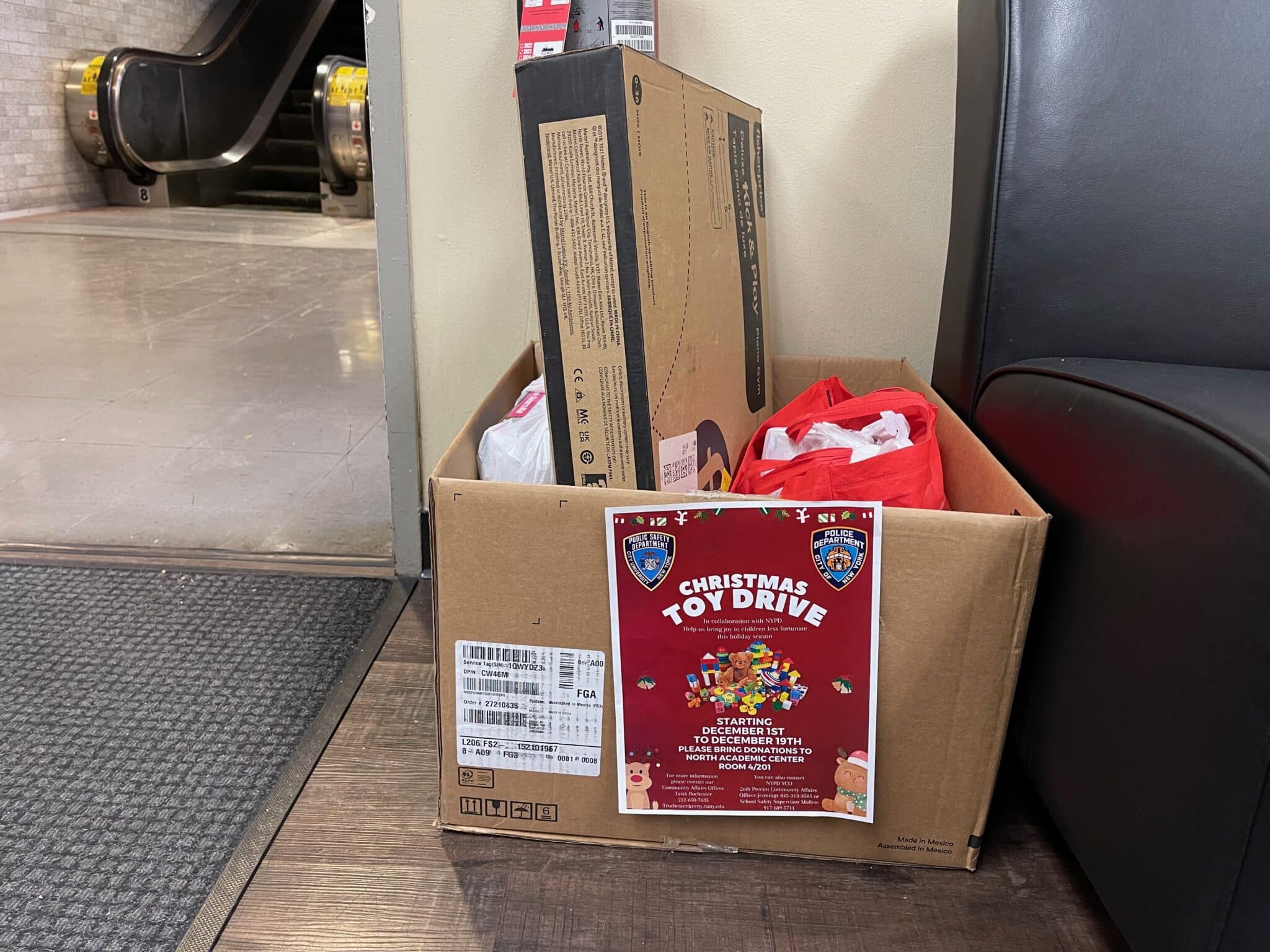
Campus staff have noticed the growing strain as well. Maria Santos, a coordinator involved with student support services at CCNY, explains that more students are turning to food assistance resources. “We’ve definitely seen an increase in students asking about food pantries and support programs,” she confirms. “Inflation has made it harder for students to afford basic necessities.” Students say the stress of affording groceries goes beyond hunger. It affects their concentration, energy, and overall college experience. “It’s hard to focus in class when you’re thinking about how much your next grocery trip is going to cost,” Bulacia says.
Despite these challenges, many CCNY students continue to adapt. Sharing groceries with roommates, meal prepping, or cutting back wherever possible. Still, the rising cost of food remains a constant worry.
“I’m doing what I can,” Bulacia says. “But it shouldn’t feel this hard to eat while going to college.
Series: Community