NEW YORK
When he originally applied for an international visa to study in the United States several years ago, A.H. imagined himself conducting groundbreaking medical research. He envisioned one day opening his own lab and contributing to research and innovations that will shape healthcare for generations to come.
“Before coming here, the American Dream meant my life would change drastically,” said A.H., now a researcher pursuing a career in medicine and science in the U.S. .
Now, as his days as a student dwindle, A.H. says strict visa regulations, growing uncertainty around employing international workers and an increasingly difficult job market have made it harder to build the future he once imagined for himself. Watching his peers, including a roommate who was recently let-go because of his visiting worker status, A.H. sees the education and job prospects he counted on to open the door to long-term success shrinking.
“It’s frustrating for everyone,” he said. “People feel uncertain about what’s going to happen to their careers.”
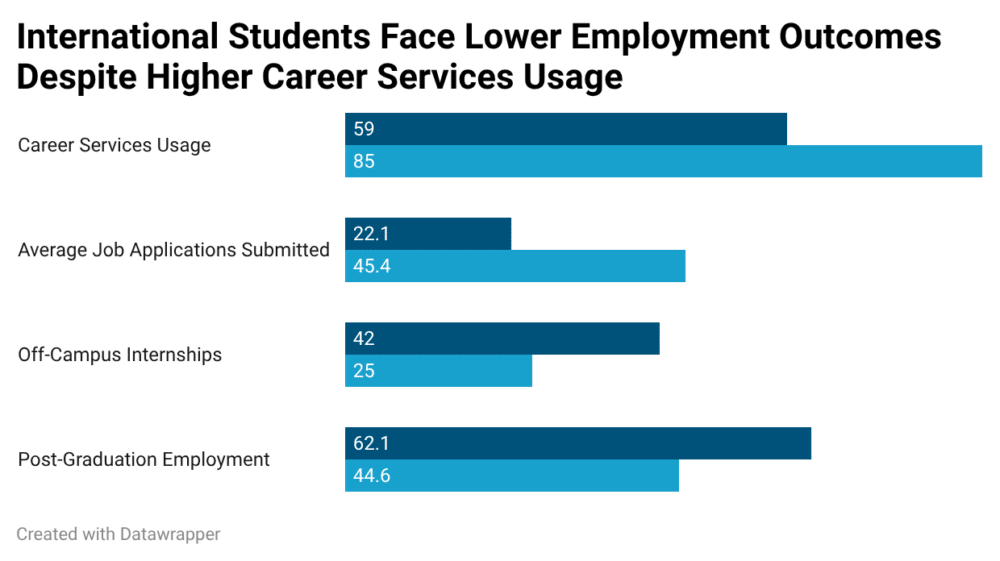
Many international students and immigration attorneys echo A.H., who asked that his school name not be mentioned to avoid potential targeting. Programs such as Curricular Practical Training (CPT) and Optional Practical Training (OPT) are available to international students after their first academic year, but many say emerging regulations around work remain murky.
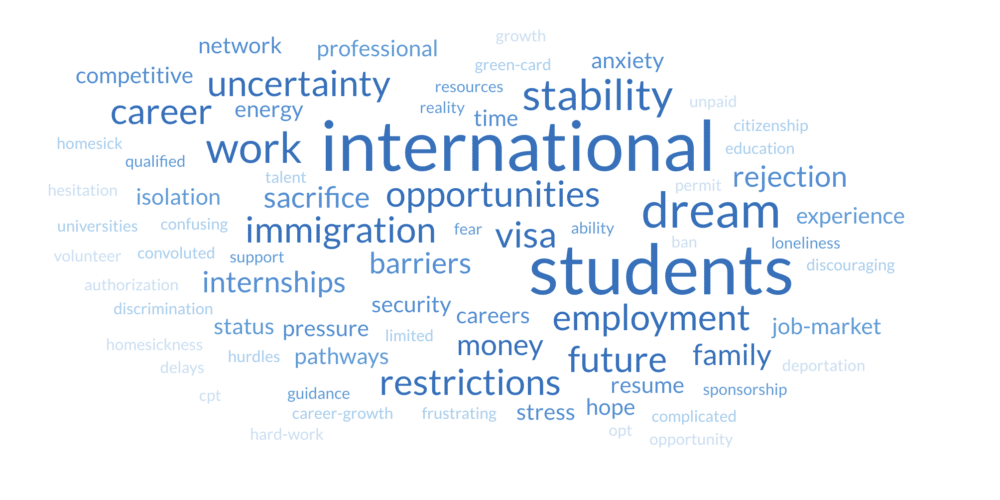
Between the unclear work limitations, sponsorship concerns and an increasingly competitive job market, unease surrounding their futures is also growing among this group.
L, an international student at the CUNY School of Public Health (SPH), said she wanted to participate in a research project but was unable to because of visa restrictions. Such restrictions about paid, unpaid and volunteer work make it difficult to gain experience. “We are supposed to be focusing on school, but what is the point of getting a degree but no work experience,” she wondered in a recent interview.
Legal hurdles abound
Immigration attorneys say confusion surrounding employment regulations is common among international students, especially about what legally counts as work.
Immigration attorney David Nachman said many students struggle to understand what legally counts as work, especially when it comes to unpaid, freelance or research roles.
“I find the biggest confusion to be on what is and what isn’t work,” Nachman said. “I get a lot of calls from students asking, ‘I’m investing in the stock market, is that considered work?’ Or, ‘I’m a day trader and I’m doing 10 trades a day, is that work?’”
Attorney Ludka Zimovcak emphasized students should regularly consult their international student offices for clarification about work restrictions and visa regulations. She explained that confusion about volunteer work also creates additional problems for students trying to gain experience. So are sponsorship concerns, which often discourage employers from considering international applicants.
“If the position is normally paid, then you can’t volunteer,” she said.
Noting that many students misunderstand how labor and immigration laws work in regards to unpaid work, she emphasized the importance of checking with the international student office for guidance “The biggest thing is [that] they need to turn back to the international student office and get information and clarity,” she said.
Beyond navigating complicated employment rules, many international students also face barriers when applying for jobs.
“What I hear from students is that when they are applying to jobs and answer ‘yes’ to needing sponsorship, some companies may not go for it,” Zimovcak said. “In the current environment, it may be a little more difficult.”
CCNY’s International Student Office did not reply to a request to comment for this story.
Obstacles at every turn?
Students say these concerns contribute to a growing sense that they are at a disadvantage compared to students who are U.S. citizens competing for the same opportunities. From misconceptions about their financial situations to transitioning into the workplace once their studies are completed.
“We have a label known as ‘you are rich and you have money,’” T.D., a Lehman College student, said. “Most international students don’t, and their parents sacrifice [a lot] for them.”
The uncertainty extends far beyond academics and work opportunities, A.H. says. Many international students he knows are constantly worried about whether they will be able to remain in the U.S. long enough to build stable careers and lives.
“They don’t know where they’ll be in the coming years,” he said. “Whether they’ll have to go back and start from scratch again or whether they’ll find a job and settle here.”
A.H. recalls his roommate, whose name was picked in the HB1 lottery, which provides work visas if an employer is willing to hire the job applicant under certain conditions.
“His American Dream is shattered,” A.H. said. “His family probably imagined so many things for him, but now he’s going back home because no company was willing to sponsor him.”
Top talent feeling pushed out
Numerous talented students are reconsidering futures in the U.S. as uncertainty surrounding immigration and work policies grows. On social media and other forums, students speak candidly about their struggles to land roles that would allow them to stay. They wonder if overcoming those barriers is still worth it and say they think about making the decision to leave.
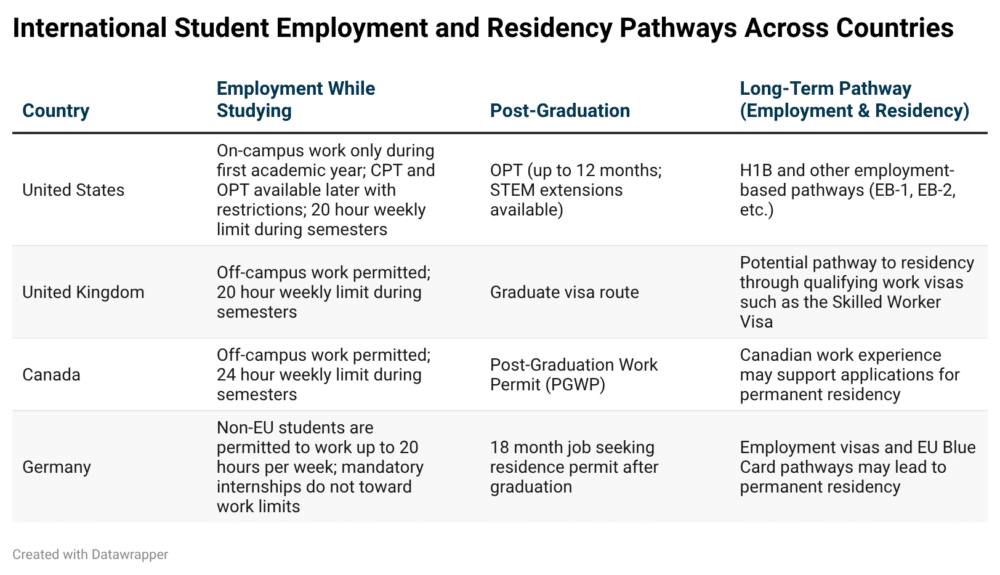
The barriers for international students could ultimately contribute to a long term brain drain in the U.S. Attorney Nachman points out that Canada, Germany, and the United Kingdom seem more attractive to international students because they have opened their doors with clearer employment and immigration systems.
“[Those] countries are going to prosper while we falter,” Nachman said. “We’re really hurting ourselves.”
Tags: Eman Mubarik international students and future in the U.S. International students fear ICE International students worry about the future The American dream and international students
Series: Community