Image courtesy Needpix.com
OPINION
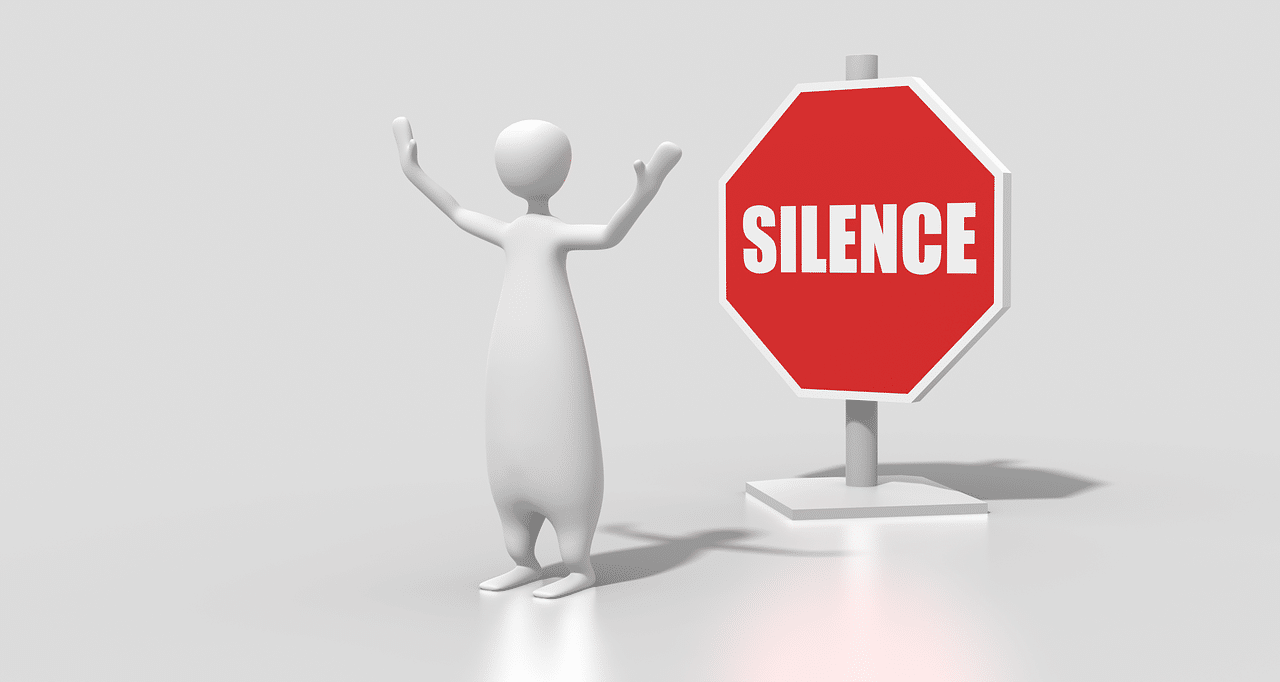
Back in my fourth semester at Tidewater Community College at the beginning of 2023, I was getting comfortable with college classes. But as the semester continued, there was one class became difficult to push through. “Before we move on to the next topic, does anyone have questions they’d like to ask?” Mario Scribner, the calculus professor asked. Hearing him ask a question like that always gave me a slight uneasy feeling. My thoughts ran to questions like, “What do I ask him? Would my question sound ridiculous to him or the class?” These thoughts gave me uncomfortable feelings since you are expected to participate or share an answer, even though you might feel unsure about what to say. So the best thing that I would do in this type of situation is remain silent. Or, as the psychologists called it self-silence. That’s a condition where you suppress your own thoughts and feelings to please others and avoid disturbing anyone around you.
While analyzing the research, Self-Silencing in School: Failures in Student Autonomy and Teacher-Student Relatedness, I realized that I experienced it, but never new what to call it. Researchers found that students’ lack of engagement, maladaptive strategies, and poor academic outcomes were caused by the quality of teacher-student relationships. In my first experience of calculus I, I felt a disconnection with the professor. He responded late to his emails when I sent them at appropriate times, and gave snarky responses when students asked questions that seemed easy for him to answer. Reflecting on this relationship made me feel that if I needed to understand the topics in class better, I was on my own and had to rely on either tutors or online sources to get through the assignments.
Around that time, I started thinking about my previous semesters to remember if I’d self-silenced practice before. Eventually, it hit me that not only was I doing this in college, but the problems stemmed from my elementary school, Our Lady Queen of Angels. Math in general wasn’t my strong subject, as I would constantly struggle to earn good grades. In 4th grade, I was required to take math tutoring classes so that my grades could improve. But even with that process, I’d still found ways to avoid answering questions despite my tutor encouraging me to do so. With other classes like English, history, and science, I wasn’t practicing self-silencing as much. These were subjects I was invested in and felt as if I belonged there more than in math classes.
Part of the researched published in the journal Social Psychology of Education highlighted an overall pattern where 4th graders shared these self-silence feelings and experiences. The pattern was similar to what was found in college students, too. Through these disconnected feelings I felt ever since 4th grade, math became a continuous battle to the point where I had no confidence. I felt uncomfortable sharing answers, even if I knew them. I felt as if not answering or participating in class discussions would help me get by. But the damage only got worse and affected my academic life.
Series: Social Mobility Lab