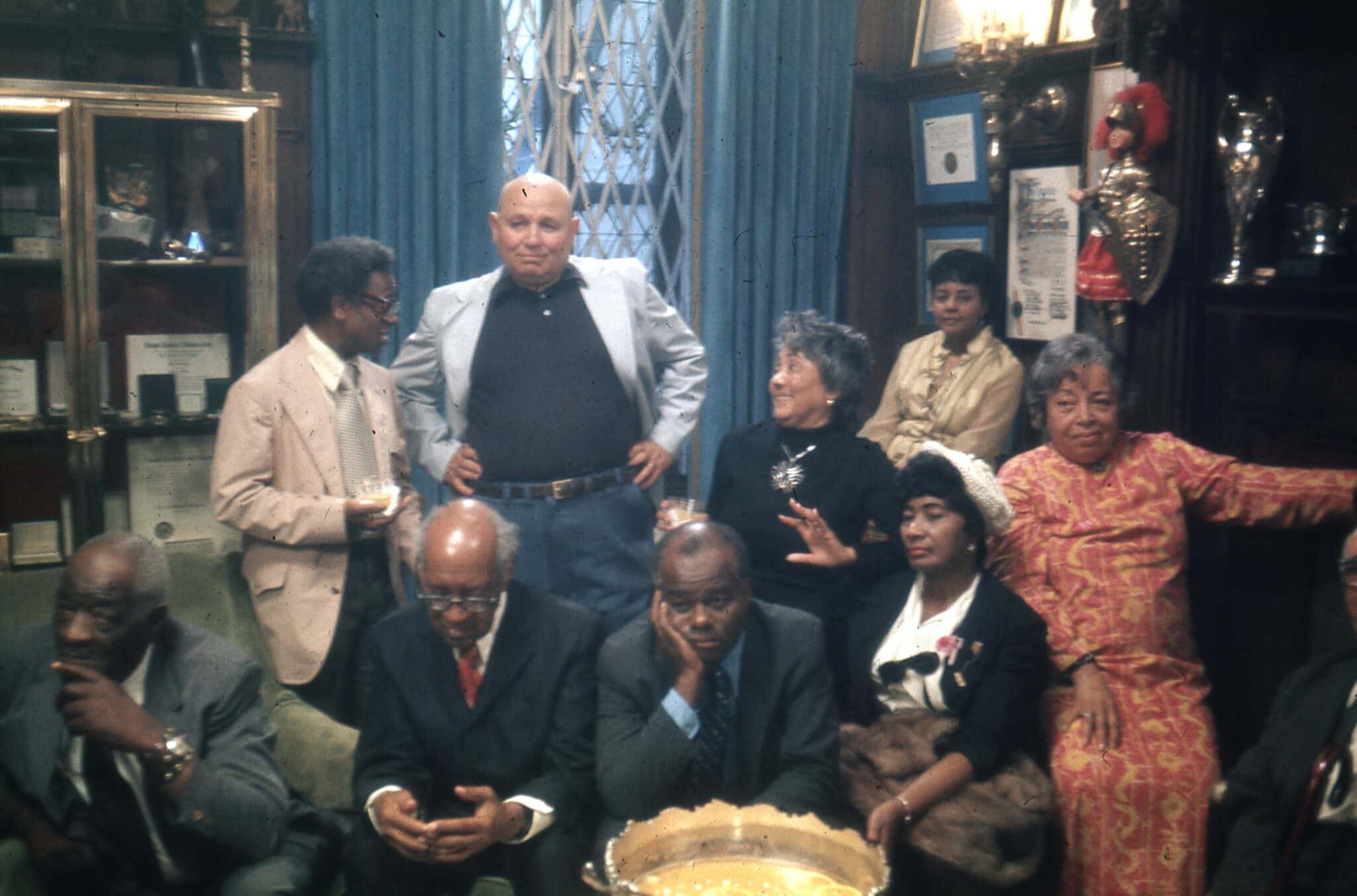
Still from Once Upon a Time in Harlem. Courtesy of NEON.
On a Sunday afternoon in 1972, the surviving architects of the Harlem Renaissance walked into Duke Ellington’s townhouse, poured themselves a drink and started arguing. Painters, poets, editors and actors who had helped invent modern Black American culture traded stories and teased each other loudly. Filmmaker William Greaves had four cameras running. Most of what they caught stayed in the can for more than half a century.
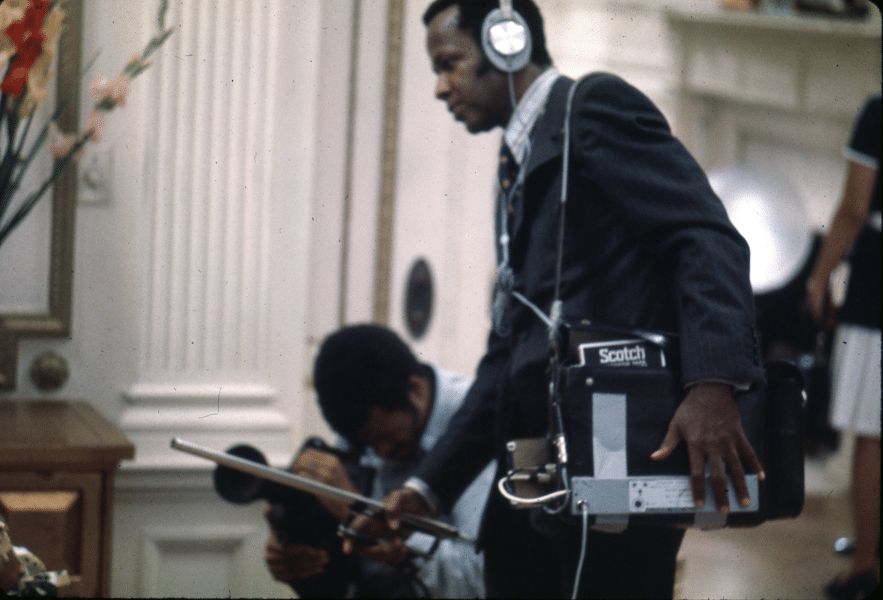
William Greaves on the set of Once Upon a Time in Harlem. Courtesy of NEON.
“Once Upon a Time in Harlem,” conceived and filmed by Greaves and directed by his son David Greaves, finally brings that afternoon to the screen. The 100 minute documentary seats the audience with painter Aaron Douglas, writer Arna Bontemps, artist Richard Bruce Nugent, photographer James Van Der Zee, actor Leigh Whipper, and other great talents and thinkers as they look back on a movement that, roughly between 1910s and 1930s, turned a few dozen Manhattan blocks into the intellectual capital of Black America. Greaves called it the most important footage he ever shot. He died in 2014 before finishing it. His son, granddaughter Liani Greaves and editor Anne de Mare completed the work.
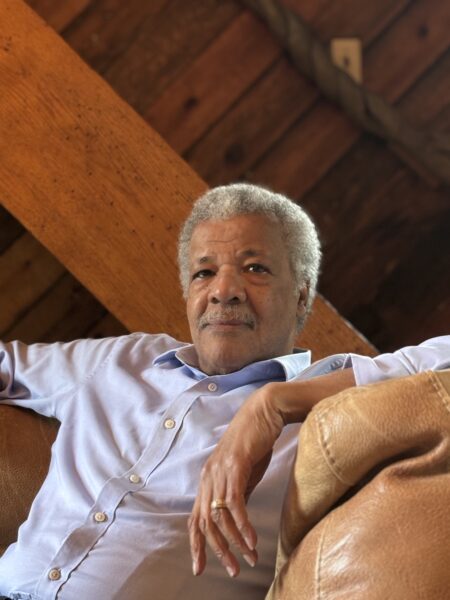
David Greaves, the son of William Greaves.
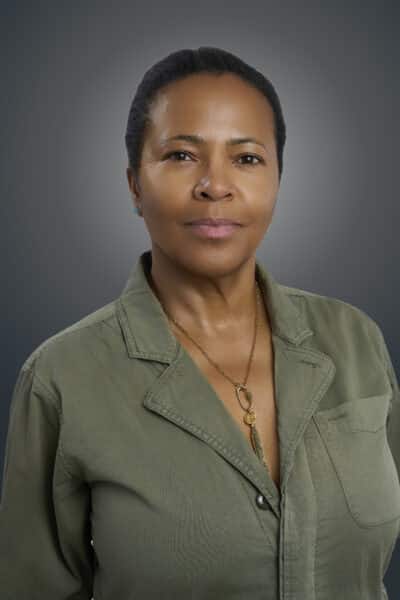
Liani Greaves, the granddaughter of William Greaves.

Anne de Mare, Editor.
What moved me most was the wisdom in that room, and how many of those people were self-made and self-taught. They became intellectuals and artists on their own terms. David Greaves said what his father wanted to convey to the world about Black artists and intellectuals in Harlem.
“He wanted them to know these kinds of folks existed,” Greaves said of his father. “He very much believed in the creative mind as being examples of the divine. This was a time in America that is kind of lost. People don’t understand the kind of people that were in the Harlem Renaissance. It wasn’t all doom and gloom. Harlem provided a sort of think tank for Black America.”
The film feels compelling because nobody in it is preaching. Guests clash over art, Vietnam and Marcus Garvey. The conservative journalist George Schuyler is outnumbered on nearly every point, yet he is plainly respected. Greaves kept those arguments in on purpose.
“They were natural,” he said. “Too often you have groups of people, and everybody says yes, that’s right. This wasn’t anything manufactured. You had to have the whole picture so that folks don’t think of it as a monolith.” Near the end of the film, a member of Garvey’s Universal Negro Improvement Association sums it up: they were on different roads, but they were going to the same place.
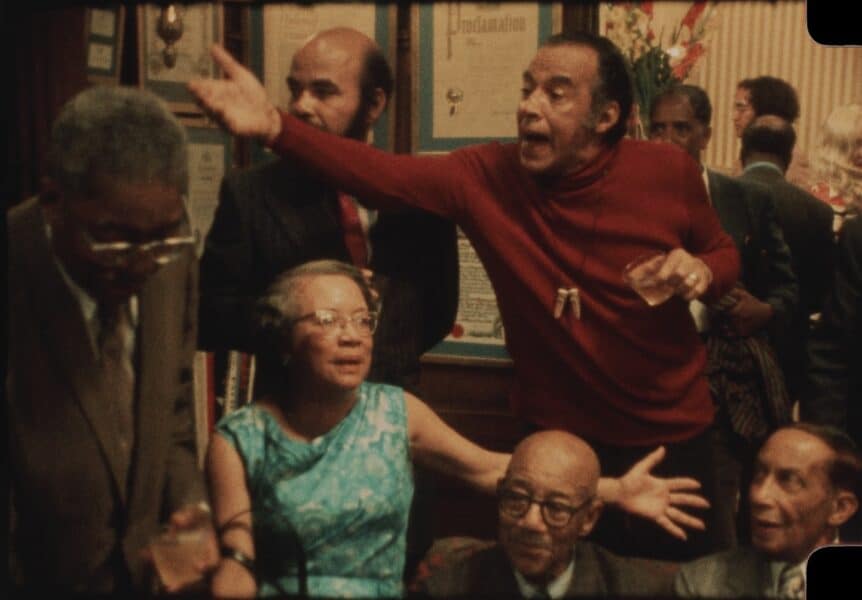
Aaron Douglas, Jean Blackwell Hutson, Richard Bruce Nugent, Eubie Blake, and Irvin C. Miller in Once Upon a Time in Harlem. Courtesy of NEON.
For all its heavy subject matter, the film is light. People in my theater laughed out loud. Because of how it was shot, you are not watching history from a distance. You are sitting on the couch, a fly on the wall. Greaves spent his career as a newspaper publisher, co-founding Our Time Press with his wife, Bernice Green, and the journalist in him shows. He made sure the small historical details landed. One of the stories told by theatrical producer Irvin Miller describes a Black businessman who lent him $5,000 in the 1920s.
“For one Black man loaning another $5,000 at that time is subject for a seminar on integration, segregation, class, economics,” David Greaves said. “History is written by those who are allowed to.”
That line explains why this film matters beyond Harlem. The Renaissance shaped jazz, American literature, the visual arts and the civil rights movement that followed. It is more than a neighborhood footnote. It is a chapter of the national story that many Americans were never taught. Director Greaves says screenings have drawn high school students, Black and White, who “had no idea this kind of thing was going on.”
He hopes viewers leave seeing their own potential on screen. “This was not only a special time, but it was also an example of what’s possible,” he said. “You also have the ability to express a creativity that can last through the ages.”
Greaves calls the documentary “almost a trailer for the archives.” All 60,000 feet of footage, including the full interviews and the whole party, will go into a public archive.
Asked if he had kept his promise to his father, he didn’t hesitate. “Absolutely,” he said. “He wanted to bring these people into the future. He would be happy with what we’ve done.”
“Once Upon a Time in Harlem” is the only film this year to screen at Sundance, Cannes, Telluride, Toronto and the New York Film Festival. It won the 2026 Library of Congress Lavine/Ken Burns Film Prize and is nominated for five Critics Choice Documentary Awards, including Best Documentary. It is one of the great documentaries of the year, and one that inspires, teaches and touches something deep in the human soul.
“Once Upon a Time in Harlem” opened at AMC Magic Johnson Harlem on Oct. 30 and continues its runs at Film Forum and Film at Lincoln Center. Film Forum is also showing a retrospective of William Greaves’ work, which began Oct. 23, to mark his 100th birthday
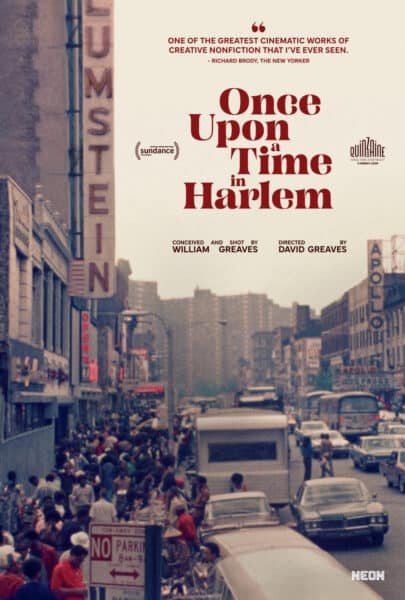
Teaser Poster for Once Upon a Time in Harlem. Courtesy of NEON.
Tags: Anne de Mare David Greaves Harlem Renaissance Liani Greaves Once Upon a Time in Harlem Victoria Kulikova William Greaves
Series: Harlem