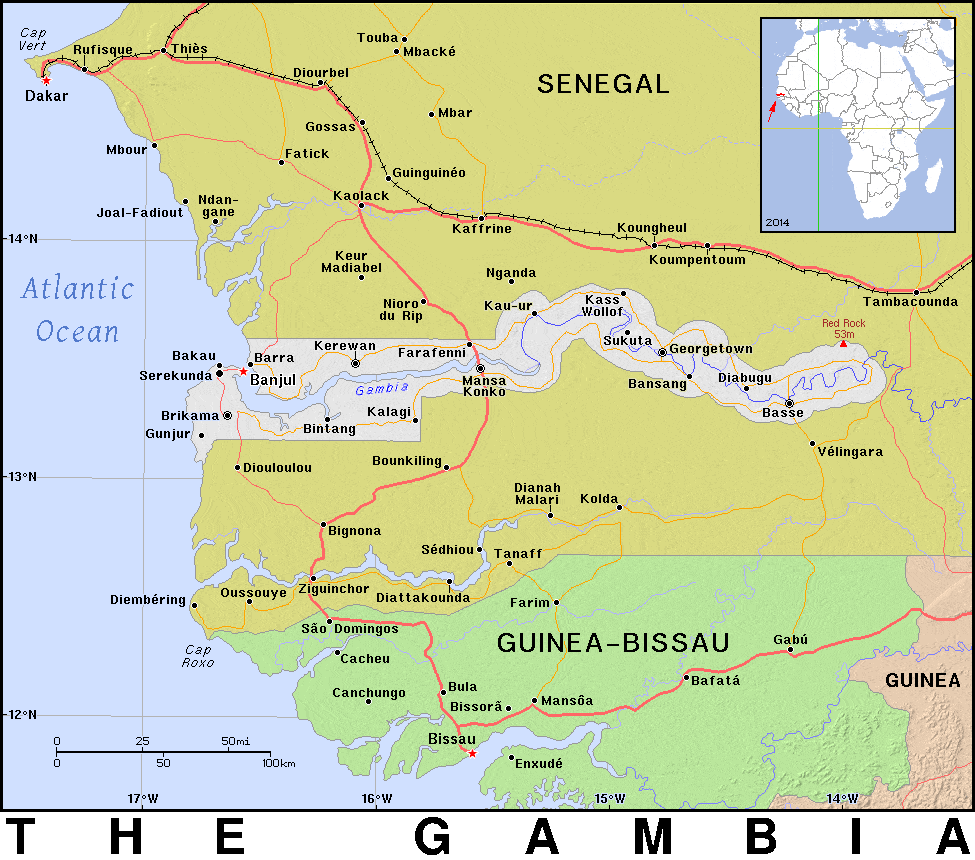
The Gambia. Public Domain map.
Imagine being ten years old, rubbing the sleep from your eyes as the sun slips between your blinds. You hear the quick, decisive zip of a suitcase closing. But it’s not for a family vacation or a weekend trip. It’s for you, and you’re not coming back for a long time. They are sending you to The Gambia, the “Smiling Coast” of West Africa.
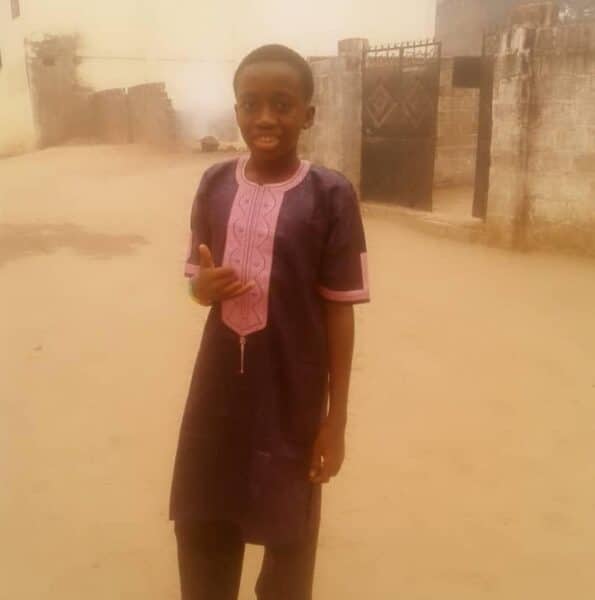
Abubakary Bokum Jallow in The Gambia after he was shipped.
For many children of African immigrants living in New York City, this moment is not a threat whispered in frustration or a myth told in jest. It is real. One ordinary morning, they wake up to find their lives quietly, abruptly uprooted-shipped across an ocean to the place their parents once left behind. “My parents wanted me to learn the religion and culture,” said Khadeeja Thiam, whose parents sent her to the home country of Senegal. “They felt like if I stayed in America, I would turn out bad.”
For many African parents, the homeland represents more than geography. It represents a set of values they fear their children may lose in America.
Parents, like Khadeeja’s, fear the pace of Western life, the pull of peer pressure, or the potential for trouble in neighborhoods. They hope the homeland will shape a child into someone grounded, respectful, and responsible. Kahadeeja Thiam was gone for 14 years. When she finally returned, she came back changed, caught between two places, two identities, two versions of who she might have been. “I honestly didn’t have a close relationship with my parents nor my siblings. When I was young my mother was my only friend but, after living all these years without her made me detach. She wants us to be close again and that isn’t possible anymore.”
Professor Boukary Sawadogo, originally from Burkina Faso, and the author of African’s In Harlem: An Untold Story, understands what motivates parents. He sees parents struggling to handle all their responsibilities. Time to instill strong values in their children is taken away from immigrant families because of, “The pressures of life, working multiple jobs with less time spent with family, in the USA and the fragmentation of families and communities,” according to Professor Sawadogo. Africans, he said, believe strongly that, “It takes the village, a community to raise the child.”
That’s why across West African communities in the Bronx, Harlem, and Brooklyn, the idea of sending a child “back home” has a long history. For parents, the decision is rarely made lightly. “It is not a risk if you consider the situation from the parents’ perspective,” Professor Sawadogo said. “Parents feel that they failed their children’s education if they are not able to adequately raise them on African cultures and values.”
But children often experience the shift less as a cultural exchange and more as a rupture, a split in identity and belonging. Idris Al-Bani remembers clearly what it was like to live with relatives.“While staying in Khartoum I kept getting diarrhea, and my family made fun of me, saying I got the ‘Indian diarrhea.” He wasn’t used to the food, the water, the climate, or the rhythm of life. His body betrayed him, marking him as American, even in the place his parents told him was “home.”
Children arrive with accents that sound off, clothes that stand out, and habits that signal they belong somewhere else. They become both insiders, those who share a lineage, and outsiders who have to learn how to blend into a world that expects them to know more than they do.
Children may come back fluent in the language, attuned to their heritage, and behaving with the discipline their parents hoped for. But they also carry questions, sometimes resentment, sometimes confusion, sometimes a quiet ache.
Ami Sagne returned from The Gambia and had a difficult time being home. “I was separated from my parents for eight years of my life, and that distance still affects me to this day,” she said. “Even now, we don’t have the connection I wish we had.” To her, it wasn’t just the physical distance that hurt, it was the feeling of being left.
Professor Sawadogo remembers his own experience. “I was myself as a 4-year old child sent from Côte d’Ivoire, where I was born to Burkinabe migrants, to live with my grandparents in Burkina Faso because my parents thought that will ‘toughen me up’ for the vicissitudes of adult life. From the time that I was five years old until now, I have never lived with my parents for a period of more than a month at a time.”
He understands that the children wherever they were born rarely come back unchanged. Some return sharper, rooted, self-assured. Others carry a quiet sadness, or a sense that childhood happened somewhere far away.
But almost all of them grow into adults with a deep understanding of what it means to live between worlds, forever negotiating the distance between who they were, who they became, and who they might have been had their suitcase never zipped shut that morning.
Tags: Abubakary Bokum Jallow African immigrants African’s In Harlem: An Untold Story Culture and Religion Immigrant Families Immigrants
Series: Immigration