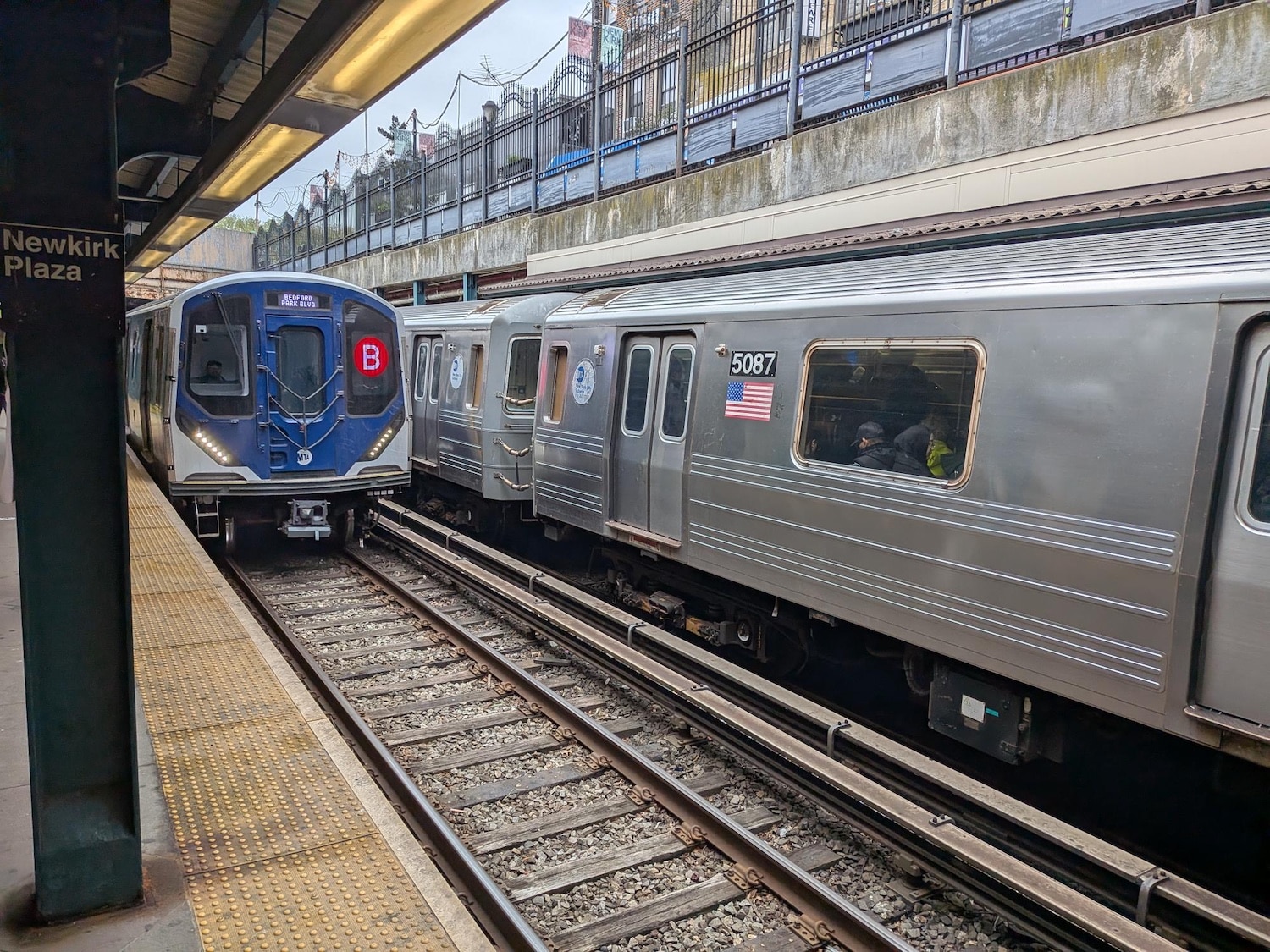
Newkirk Plaza Station. Photo Leon Samdani.
College students rely on the MTA to commute to their campuses. In January, the Metropolitan Transit Authority (MTA) raised subway and bus fare prices from $2.90 to $3.00 and express buses went up to $7.25. Many New Yorkers have complained about rising transit costs. But it hit college students particularly hard.
“I find myself jumping the turnstile wherever I can when I’m low on money because those $3 rides add up quick,” Aden Liverpool, a Long Island University (LIU) student said. Fare evasion is a grim reality for college students in New York City. They and other riders keep inventing new ways to dodge the fare.
New turnstiles aimed at preventing turnstile jumping gave students new challenges. Omar Azad, a sophomore at The City College of New York (CCNY) said, “It became a local meme to see how long it would take for New Yorkers to find a way to circumvent paying the fare, with it being comically easy on bus lines because of simple how they are.”
This Instagram reel shows people doing just that. They call it the “Fare Evasion Olympics.”
While the memes are hilarious, the reality behind the fare hike is not. At a glance, $3.00 is a trivial amount of money but it means that college students in NYC are required to pay $6.00 a day to make round trips between home and campus. At best, assuming a college student attends class five days a week, they will need to use their OMNY card 10 times a week to cover their commute. That falls short of the 12 use requirement to earn a discount and free rides. Liverpool and Azad ride the train to college three or more days a week, shelling out more than $9 a week.
Bus fares are equally expensive, costing $3.00. David Li, a Kingsborough College student, rides the B49 and B100 buses to his campus every day. He pays the fare, but like other bus commuters complains about the wait. “I really despise how annoying it is to wait for a bus for over 15 to 20+ minutes and then when it finally arrives, it’s very jammed packed with passengers. Of course I sometimes don’t make it to class on time, which is why I have to rely on calling for Uber rides sometimes to get there faster,” Li said.
The MTA offers free fares to younger students from kindergarten through 12th grade. Now PSCCUNY, the union representing faculty and staff, is pushing for free fares for college students.
Transportation advocates agree. “CUNY students are overwhelmingly low-income, first-generation, or working students. Even with financial aid or part-time jobs, the rising cost of transportation places a heavy strain on our budgets,” says Alder Dougherty, an intern with the New York City Public Interest Research Group (NYCPIRG). The group is pushing for free fares for CUNY students.
Justin Yulo, of the City College NYPIRG chapter, said, “With costs of living on the rise, paying a higher fare isn’t convenient. Oftentimes, students work multiple jobs without financial support from their families. Paying the fare is hard since they have to make a choice between paying $3.00 to make it to class, or paying for expenses like food and rent.” New York City College students want to know if the MTA or political leaders are listening.
Tags: Aden Liverpool Fare Evasion Olympics fare jumping Justin Yulo CCNYNYPIRG Leon Samdani Mta NYPIRG NYPRIG Omar Azad reduced subway fares for college students subway fares turnstyle jumpi