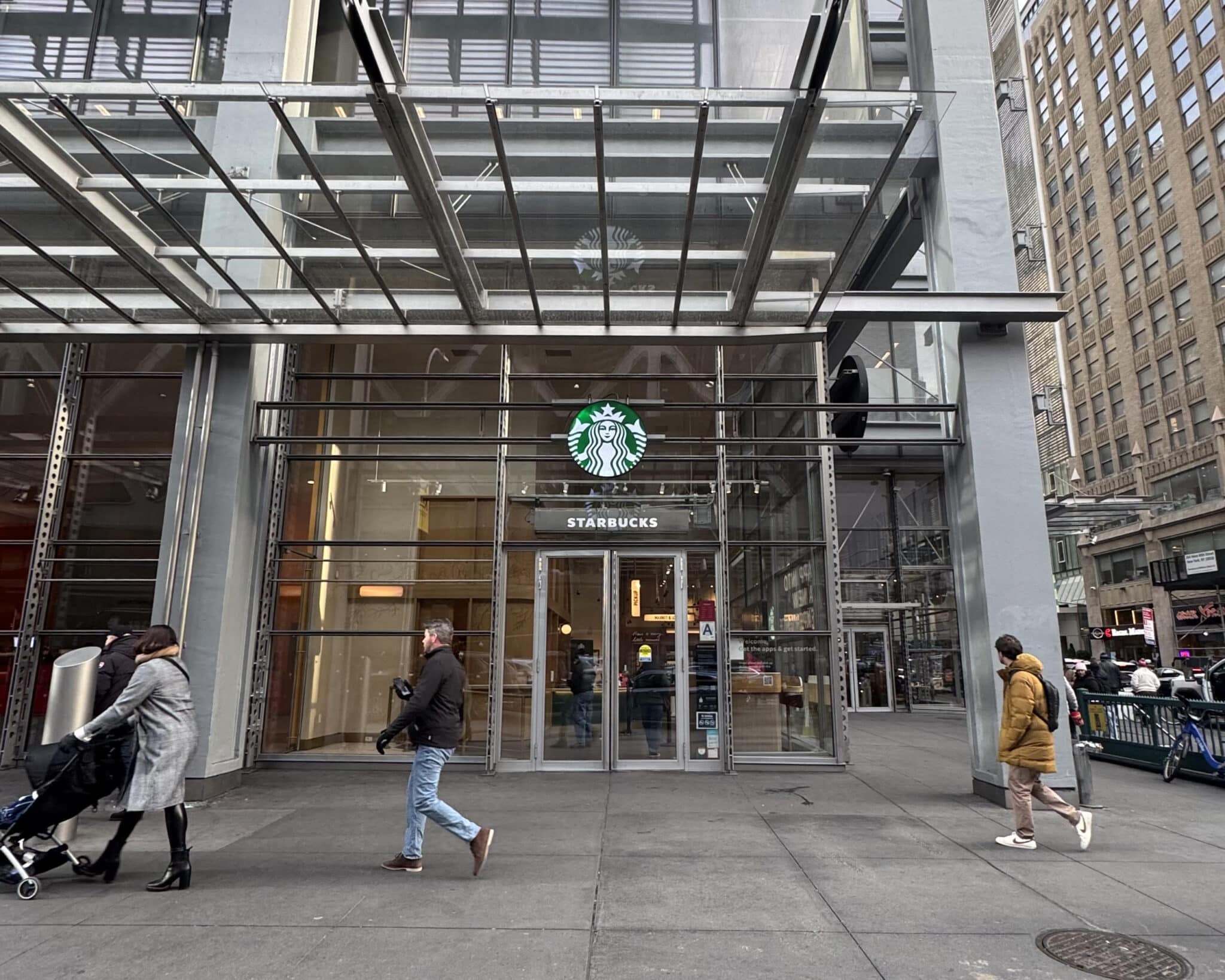
Starbucks workers in Midtown clocked in for their regularly scheduled shifts on a Thursday. One train stop away, Starbucks Works United (SWU) partners rallied outside of Starbucks’ New York City regional corporate offices. I’m one of the hundreds of Starbucks workers, the company calls partners, who continue to show up to work, even though fellow baristas are on strike.
The strike began nationally in November 2025 when SWU launched the Red Cup Rebellion. They want the company and customers to know Starbucks staffers need better working conditions, including better pay, and a guaranteed number of working hours. They also want the company to stop trying to bust the union and to back off from retaliatory firings and discipline.
Starbucks workers do have some powerful forces on their side. In early December 2025, the New York City Department of Consumer and Worker Protection (DCWP) announced a landmark $38.9 million settlement with Starbucks. The DCWP discovered more than half a million violations of NYC’s Fair Workweek Law committed by Starbucks since 2021. DCWP investigations revealed that Starbucks employees never receive regular schedules, are given reduced work hours without just cause, and without opportunities to pick up shifts. The settlement requires Starbucks to compensate eligible hourly workers $50 for each shift worked from 2021 to 2024.
Starbucks bosses seem to brush off the power of the union. In a statement before the strike, Starbucks’ chief Partner Officer Sara Kelly said,“I think it is important we remember that fewer than 4% of our green apron partners work in coffeehouses represented by Workers United.” But she doesn’t seem to understand that the 4% and the union’s demands reflect the partner-workers’ feelings towards the company as well.
Sherlyn has worked at my Midtown non-unionized Starbucks for nearly a year. She said that her work hours were abruptly cut a number of times and she was sent home early. Managers told her, she said, that “There were too many people.”
Her experience reflects the conflict of reducing workers’ hours on days when business is slow. Sherlyn said, “Staffing shouldn’t be an issue with the amount of money the company makes every year.” The haphazard scheduling often leaves inadequate staffing for later shifts, and service and cleaning suffer.
Giselly, another employee, said that when her colleagues get sent home, there is a problem. “That’s when we get bombarded with a lot of customers, and we don’t have any support.”
Not everyone at my Starbucks agrees with every union demand. Sherlyn said, “I don’t think this store has a problem with staffing, but I do believe wages can be better.” While Giselly said, “With all the changes happening and all the extra items that are dropping, I feel like we’re not getting paid enough.” Although my colleagues support the union’s strike and believe Starbucks corporate should listen to the demands, there haven’t been any talks about unionizing. I’ve been working for Starbucks for two years. I like my job. Yet I stand in solidarity with my fellow baristas, and I encourage others to take the ‘No Contract, No Coffee’ pledge to boycott Starbucks until union demands are met.
Tags: baristas CCNY Jobs Marilyn Flores Red Cub Rebellion Starbucks Starbucks Partners strike striking Starbucks employees Union
Series: Community