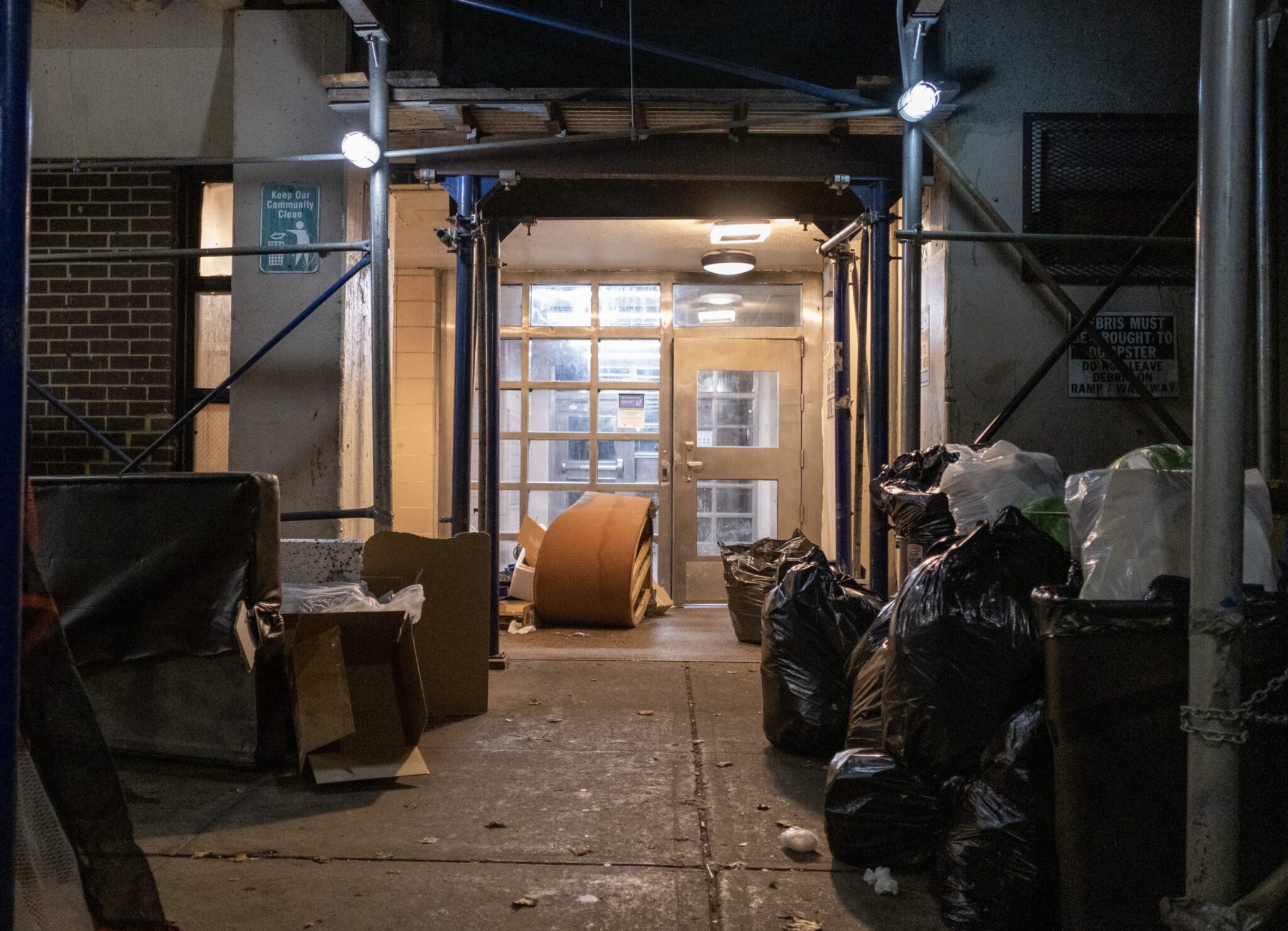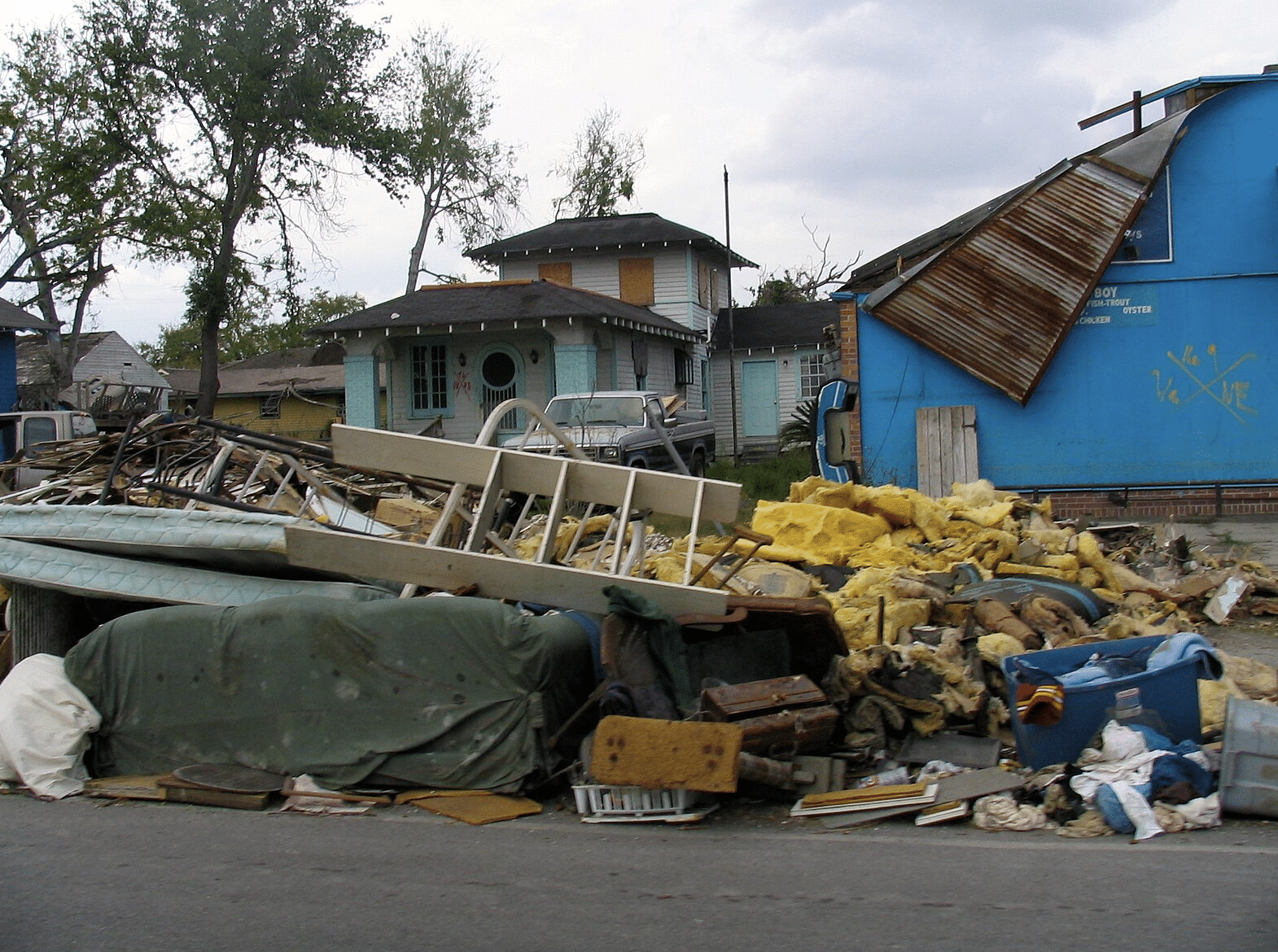
Aftermath of Hurrican Katrina in New Orleans. Photo by Gregory Varnum. Creative Commons License. Via Wikimedia.
Shelby Boamah, a documentary film producer and adjunct professor at the Newmark Graduate School of Journalism and City College, spoke to a group of journalism students recently to share insights about her role in the documentary Hope in High Water: A People’s Recovery 20 Years Later.
The film, which revisits the communities still fighting for recovery two decades after Hurricane Katrina, centers on how Black residents in New Orleans continue to organize, rebuild, and fight environmental injustice long after the cameras and headlines disappeared. Instead of focusing solely on the devastation and what was lost, it highlighted how people are coming together to create something stronger than what existed before.
She emphasized that responsible storytelling begins with listening, not arriving with assumptions. “If you’re not including their voices and their perspectives then you’re telling the story wrong,” she said.
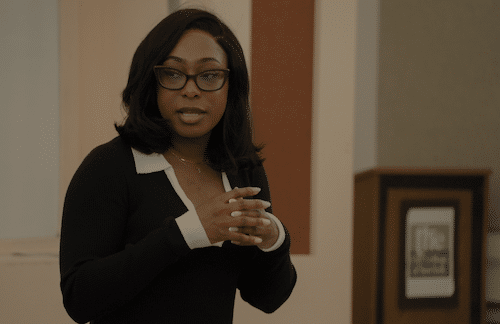
Shelby Boamah, Photo by Alison Hannigan
Boamah, 33, prefers to spend time with people before filming, listening to what they want the world to understand about their lives. Her approach prioritizes collaboration over extraction, aiming to tell stories with communities rather than about them. “Being Black helps build relationships,” she said, noting that shared identity opened some doors, but it wasn’t enough on its own. New Orleans is “a very close-knit community… they are afraid of outsiders,” she acknowledged.
Journalist Trymaine Lee provided the central character in the documentary. Boamah noted that having a reporter who was from New Orleans made a crucial difference, helping to establish credibility from the start. “With Trymaine spending years in New Orleans as a reporter also fosters trust between our sources and our characters and us and having the trust that we’re going to tell their story accurately and provide the proper context,” she said.
Boamah said she was drawn to Hope in High Water because it aligned with the kind of journalism she’s committed to. “I try to work on stories that I care about,” she said. “When I can I try to work on stories about marginalized communities.”
On this project, she wanted to highlight both the challenges and the efforts of those living in New Orleans. “These things happened,” she said, referring to the devastation of Katrina, “but… they’re fighting to make a change.”
Boamah also shared her thoughts on the unique power of documentary filmmaking. “You can have a bias and if you have an angle, you’re encouraged to lean into that, whatever it may be,” she explained.
She clarified that having a focused angle does not mean ignoring facts but rather using storytelling to illuminate the realities she found most important. The filmmaker’s role is to guide viewers toward understanding the story’s intended message while honoring and preserving the voices of the people featured.
“You’re there to persuade people to believe in your angle and whatever message and perspective you’re trying to push in your film,” she said. “With this documentary, I think it differs from others that came out because it really was like, I think it was hopeful, the tone of it was hopeful and looking at what has been done.”