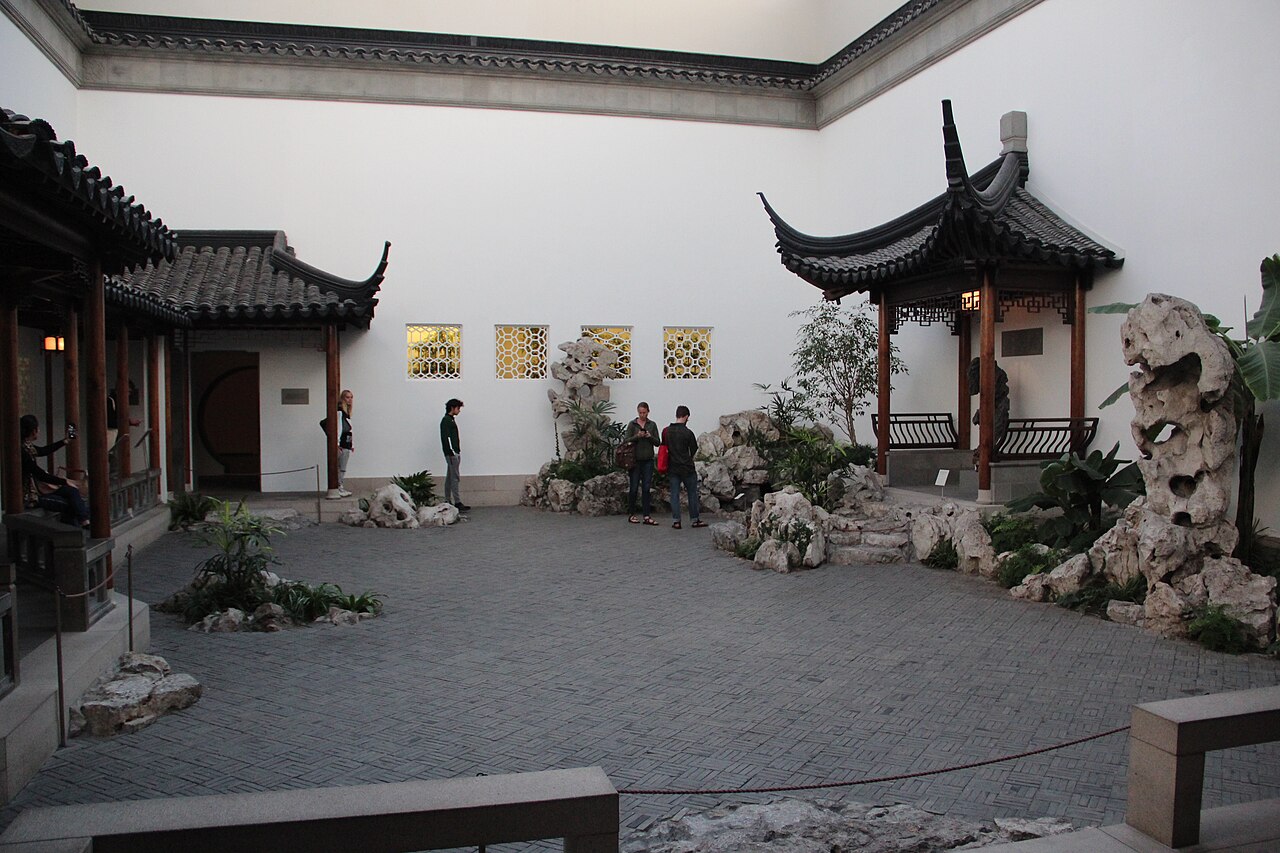
Astor Court Garden. Photo, Public Domain via Wikimedia.
Kazi Raihan sat on the front porch of The Astor Chinese Garden Court at the Metropolitan Museum of Art listening to the gentle flow of water in the fountain. Raihan, a Southeast Asian college student studying psychology at the Borough of Manhattan Community College (BMCC) visits the Met frequently.
The Astor Chinese Garden Court, in Gallery 217 at The Met takes you into a province of China in the 17th Century. Visitors enter through the moon gate that leads you to the peaceful space. Plants and rocks seem to blend effortlessly into the courtyard and make it feel like a quiet escape from the busy museum and the city. “It’s completely up to the visitor to immerse themselves in the decorative illustration with no starting point, no specified exit and no clear path to follow,” Raihan said.
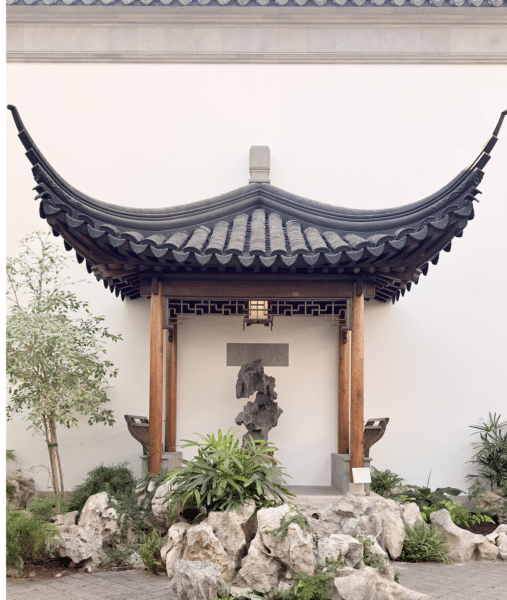
A small spot in the the Astor Chinese Garden Court. Photo by Shadia Sultana
The garden was made possible through a 1981 gift from the Vincent Astor Foundation to The Metropolitan Museum of Art. It was designed to recreate a traditional Ming dynasty (1368–1644) scholar’s courtyard inspired by the Garden of the Master of the Fishing Nets in Suzhou, China. In a YouTube video, Maxwell K. Hearn, the Met’s Douglas Dillon Chairman of Asian Art said, “It is the first ever Chinese Garden built outside of China.” The handcrafted furniture were shipped from Suzhou and assembled inside the museum using traditional mortise-and-tenon joinery, an ancient woodworking technique that connects wooden pieces without nails or screws.
Sitting in the courtyard, Raihan, a comic book reader and anime enthusiast, said the court garden gave him “serenity.” For him, visiting the museum goes beyond entertainment or aesthetics. “Museums reshape your ability to think and view art,” Raihan said. Watching historical videos is important and can be amusing, however, “The art of gaining knowledge on your own and making visits to museums and art illustrations is equally important,” Raihan added.
He thinks parents should bring their children to The Met to teach them about different cultures, ancestry, and history. Rather than visiting all the different sections in one day, he suggests that you slow down and take in each piece at a time. Understanding the history behind the pieces is much more beneficial than posing a picture next to the piece and posting it on social media.
There are many other rooms with recreations of places as they once were. They offer more than an opportunity to admire art. They allow people to connect and appreciate the histories and traditions that make each culture unique.
Tags: Astor Chinese Garden Court Kazi Raihan MET Met Museum Metropolitan Museum of Art Ming Dynasty courtyard at the MET scholar's courtyard Shadia Sultana
Series: Community