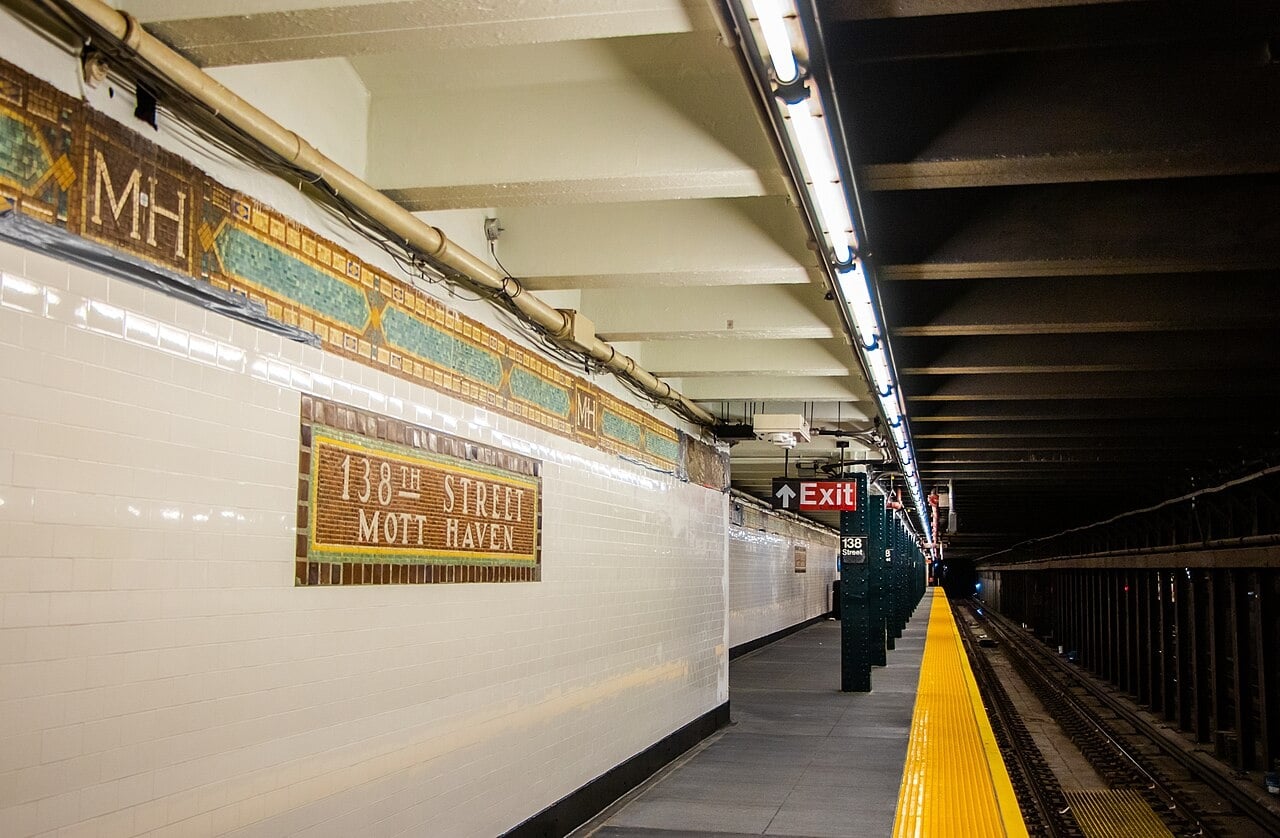
Mott Haven subway station. Photo by Bebo2good1 via Wikimedia. Creative Commons License.
Olivia Tecautl, an immigrant from Mexico living in the Mott Haven section of the South Bronx, worries about her safety.
She begins her day by waking up early to open the laundromat between Cypress Avenue and St Ann’s Avenue, where she works from 11 a.m until 9 p.m. She’s on high alert now, keeping more of an eye on her surroundings despite having lived in the area for 24 years.
The possibility of the United States Immigration and Customs Enforcement (ICE) detention concerns her most. ICE has arrested 5,567 immigrants in New York City since January 2025, according to an audit released by the mayor’s office.
“We go out with the fear of not knowing whether we’re going to make it home,” said Tecuatl, 48, a wife and mother of three. “We fear the possibility of not being able to communicate with our children ever again.”
In Mott Haven, people born outside of the United States make up 29% of the population, including a growing number of West African immigrants moving into the community. Tecuatl like many in the Bronx and thousands of other immigrants across the country has experienced stress, immense fear, and psychological trauma since President Trump’s deployment of ICE agents in sanctuary cities.
A 2025 KFF survey found that since last year, 40% of immigrant adults and 77% of likely undocumented immigrants report negative health impacts tied to immigration worries. These include stress, anxiety, sleep, eating problems, and worsening health conditions like diabetes and high blood pressure.
“I have stopped watching the news because it really affects my mood and emotional state,” said Tecuatl. “It makes me more nervous and makes me fear for my safety even more. I try to live day-to-day and pray to God to let me return home every time I leave from work.”
In March, the NYC Mayor’s Office of Immigrant Affairs (MOIA) released its annual report, Commissioner Faiza N. Ali provided a public statement about the city’s commitment to bringing peace, safety, and services, including humanitarian parole, legal assistance, immigration rights workshops, and fraud prevention, to the existing immigrant community “Mayor Mamdani, our community partners, and all stakeholders across our city want to build real pathways to stability for New York City’s diverse immigrant communities,” said Ali.
But community organizations find that immigrants avoid taking services out of fear of being detained. “Many individuals face economic instability, limited access to resources, and language barriers which can make it harder to navigate systems,” said Christine Leroy program manager for Mexican Coalition in Mott Haven. The non-profit provides resources, legal services, and workshops to 20,000 immigrant families to ensure that they understand their rights.
“We have noticed that many have stopped coming because they are scared,” says Leroy. “That’s something that concerns us.”
The Trump administration’s ad campaigns targeting the immigrant community have led many people to avoid going out completely, even if it means putting their health in danger. The KFF survey also found that 29% of immigrant adults skipped or postponed health care in 2025 due to immigration-related concerns.
“I had a medical condition that I had to live with for four years,” said Jose Felipe, 56, a Mexican immigrant living in Mott Haven who suffered from an inguinal hernia, a condition where the intestine pushes through a weak spot in the lower abdominal wall. “Getting deported really scared me and pushed me away from seeking help.”
ICE made its way to New York City in January 2025, but fear consumed Felipe. It wasn’t until this year, after his pain became unbearable and the hernia became extremely noticeable, that he went to the hospital, where doctors performed an eight-hour surgery to save his life.
In April, Community Board 1 in the Bronx announced it would hold Know Your Rights Immigration Training to help residents understand what to do if ICE detains them, even if they face language barriers.
“We want to make sure that we have all types of translations,” said Dalourny Nemorin, a lawyer at the Legal Aid Society and who serves as the Chair of the Policy and Legislation Committee of Bronx Community Board 1. “We want to be proactive, not just reactive.”
With New York City’s help and commitment to immigrants, residents like Tecuatl and Felipe, can finally start living without daily fear for their safety. “I just want them to know that we are human beings, too. Many of us have been here for so long,” said Tecuatl. “I just want to be given the chance to work and live without any worries.”
*Photo via Wikimedia. Creative Commons License.

Tags: ICE Immigrants immigrants in South Bronx worry about ICE Immigration immigration raids Mott Haven South Bronx fears ICE South Bronx residents fear ice Susanna Hernandez
Series: Community