MANHATTAN, NY
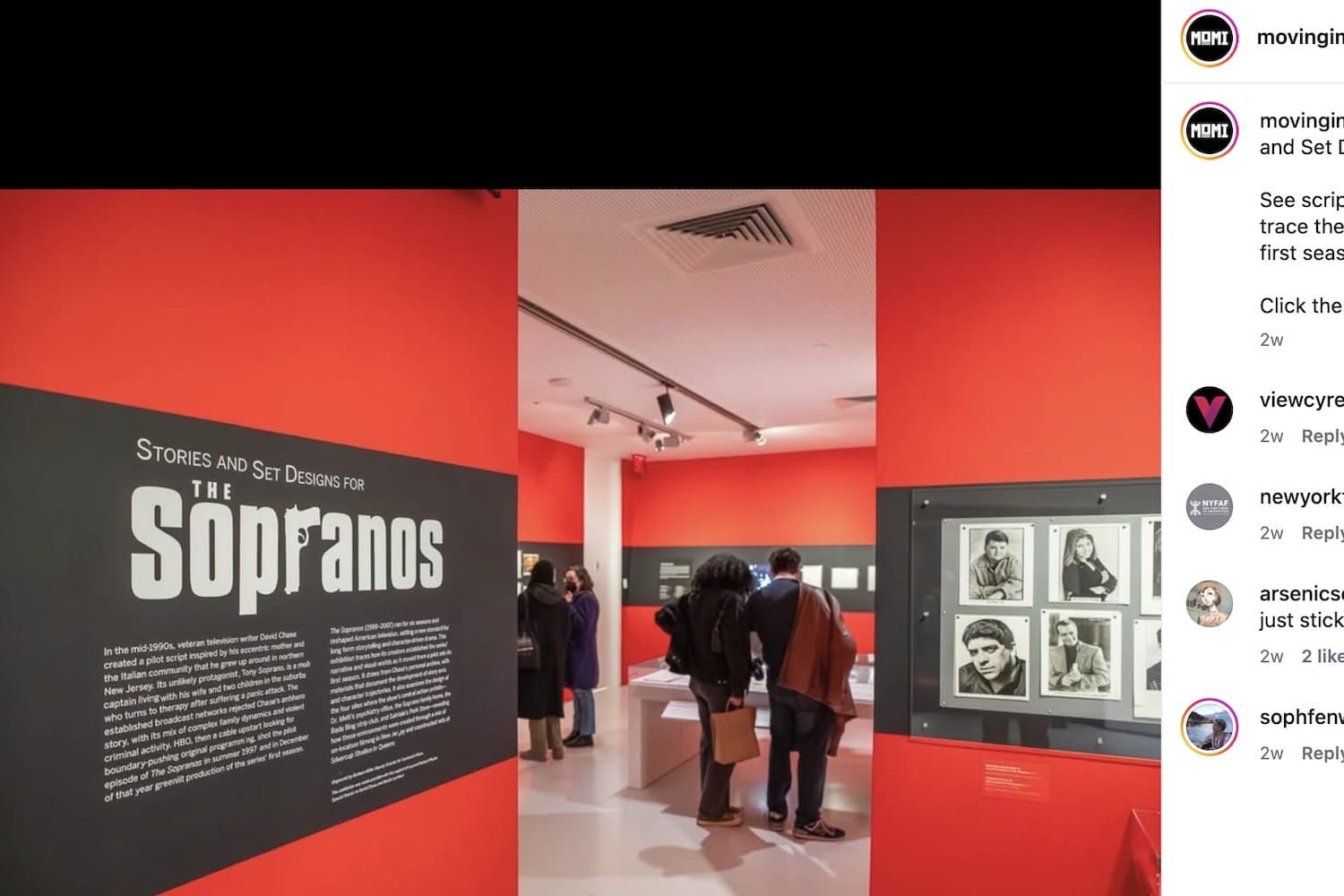
During the past few months, the Museum of the Moving Image (MOMI) drew visitors curious about “2001: The Year, Not The Movie,” its retrospective of films that premiered 25 years ago. Tributes to iconic pictures like “Mulholland Drive” and “Memento” sold out the Summer M. Redstone Theater. But for many, the “Stories and Set Designs for The Sopranos” topped them all.
Focusing on The Sopranos up to Season 3, the 2001 series, which wraps May 31, featured screenings and live discussions headlined by director David Chase and actors from the HBO series.
To visit the exhibit is to enter Chase’s world of organized crime. Stepping into the ‘Sopranos’ wine-colored room, black and white headshots of James Gandolfini, Tony Sirico and other iconic actors draw visitors in, beckoning them into the revived life of Tony Soprano (played by Gandolfini). Still compelling is the tale of the New Jersey mob boss who goes against his societal norms and visits a psychiatrist to cope with his moral quandaries.
But 25 years later, one may ask: “Why does this matter?” “Why is MOMI able to sell out its 300-seat theater for all three screenings of the television show?”
Zoe, a museum visitor who works in TV production, offered her perspective.
“It introduced the idea of the anti-hero, which became a big thing in the early 2000s,” Zoe said. “It marked the beginning of taking things that could’ve been a movie and making it a television show.
“Now we see that all the time with TVshows like “Mad Men,” “Succession” and “The Sopranos.” They are high budget television programs that bring you in.”
Set matters
In particular, the designs of four sets— Dr. Melfi’s office, the Soprano home, the Bada Bing strip club and Satriale’s Pork Store — reveal much about why the mob drama became iconic and still grips audiences today. The artwork, scripts, notes and research material come from Chase and production designer Dean Taucher, whose sets became emblematic of the show.
During one of the MOMI live talks, Taucher said he took creative liberty to encapsulate Tony Soprano’s mind and the severity of mob life, from the choice of bedroom furniture to the pork store.
“Instead of having trophies from hunting or fishing, like a giant sailfish and a ten-point deer, it’s like, ‘No, these people slaughter people,’” Taucher explained. “So, we put [up] the heads of things that don’t have a chance. The bulls, steers, pigs, that was the meaning behind that. They’re not giving anybody a chance, they’re slaughtering things. And then the temple of vice, sex, drugs and rock-and-roll was the strip club.”
For me, when I encountered The Sopranos for the first time during the pandemic, I felt like I was stepping into a new world from my quarantined existence. The show’s cinematic quality, from the writing, the cinematography and the set design, made every detail feel significant. An in-depth look into the creative process offered a new perspective on the show as a whole.
In all, it gives fans a chance to celebrate a television show they admire, and acts as a portal for new audiences to step into the world that defined the early 2000’s television zeitgeist.
For an extended audio version of this story, listen to “Revisiting HBO’s ‘The Sopranos’ Through MOMI.”
Tags: Dean Taucher Marilyn Flores MOI Museum of the Moving Image the Sopranos revisiting the Sopranos
Series: Community