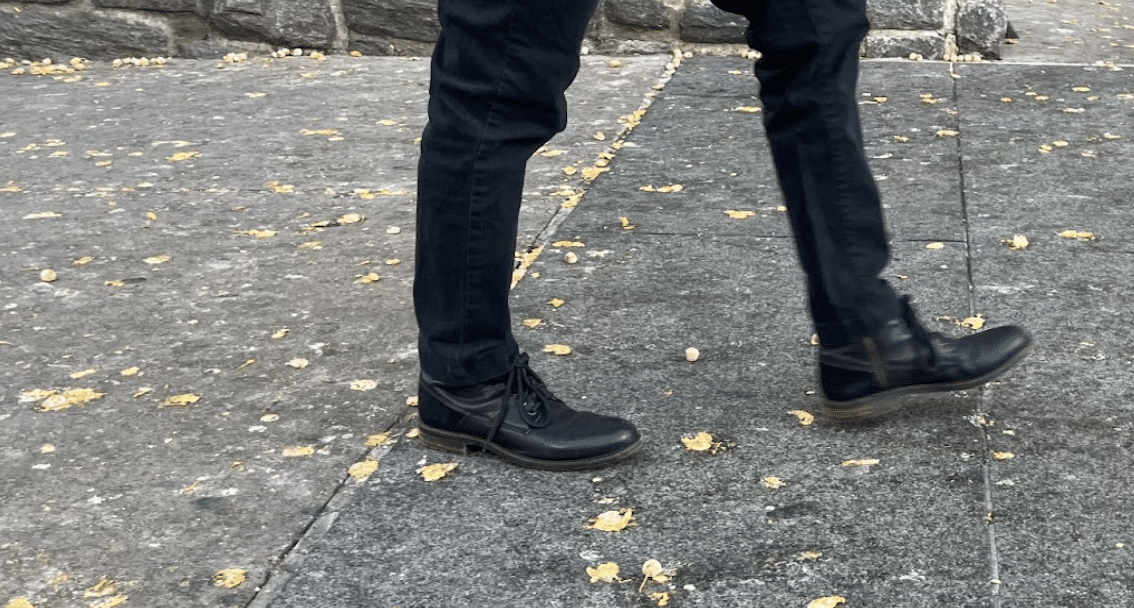
Gingko tree fruit on the sidewalk of a CCNY building. Photo credit: Veronica Klein
Euan Mihm headed to the halal cart across from Shepard Hall a few weeks before finals, when the smell stopped him in his tracks. After walking through fallen ginkgo fruit near the building, he later found little pieces of it under his Timbs. “It smelled really terrible,” says Mihm, an 18-year-old psychology major, “like s–t or something.”
Mihm’s experience reflects what many students encounter during ginkgo season, when fruit from the tree outside Shepard Hall drops, rots, and fills one of City College’s busiest walkways with an overpowering odor. As complaints from students continue, many suggest removing the ginkgo tree over its
smell, mess, and impact on daily campus life. Known for producing foul-smelling fruit in the fall, the tree sits along a heavily trafficked path near classrooms and food vendors, forcing students to navigate around rotting fruit on their way to class. For students like Mihm, the issue goes beyond inconvenience. “It is very offensive to our noses and it is harmful to our peace of mind,” he says.
Ginkgo trees thrive across New York City because of their long lifespan and tolerance for urban environments. However, female ginkgo trees produce fruit, and when it falls and begins to rot, it emits a strong odor often compared to vomit or sewage. While many cities attempt to plant male ginkgo trees to avoid this issue, female trees still exist throughout New York, particularly in older plantings, making them a recurring source of complaints in high-traffic areas.
For many students, steering clear of the ginkgo tree has become part of their daily routine. Vanessa Haddock, an 18-year-old biotechnology major, says she passes the tree about five times a week and regularly changes her route. “I usually go to the other side of the street just to avoid stepping on the fruit,” she says, noting that she often sees other students “skip steps just to not step on the fruit.”
The smell, Haddock says, becomes hard to ignore, especially during busy days between classes. “It’s very annoying. Disgusting,” she states. “It makes you lose your appetite even.”
She describes the odor as “rotting fruit, vomit, just anything bad,” adding that she sometimes covers her nose with her scarf when walking past Shepard Hall “Nobody enjoys it,” she says. “It’s ruining everyone’s days having to walk by.”
Beyond the smell, Haddock points to the mess the tree leaves behind, saying the fallen fruit dirties shoes, floors inside campus buildings, and the surrounding concrete. “People don’t clean it,” she says. “It’s a huge annoyance. It’s a huge disturbance.Nobody wants to put up with it, so they should just take it down.”
Not all students experience the ginkgo tree the same way. Michelle Chen, a freshman biomedical sciences major, has noticed the smell only once and initially did not realize it came from the tree. “I thought somebody just smelled really bad,” Chen says. Although the tree has not affected her personally, she says she understands why others
feel frustrated. “If it’s affecting other people, then I support their stance,” she says.
For Mihm, the solution feels simple. “It needs to not be there,” he says. He has one message for campus officials: “You guys have to cut it down.”
Series: Harlem