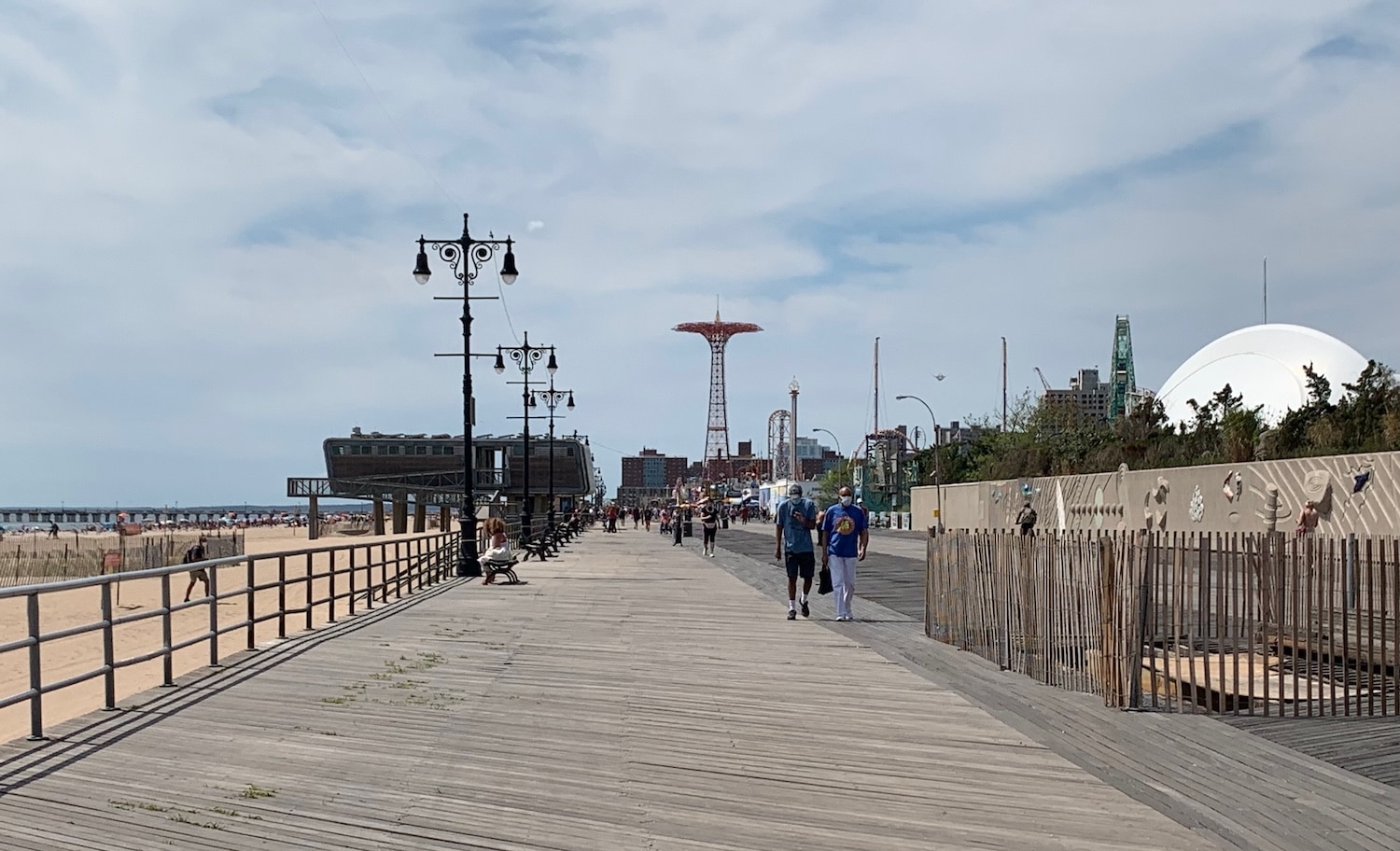
Coney Island boardwalk is a perfect place to ride a Citi Bike, to bad it won't be here.
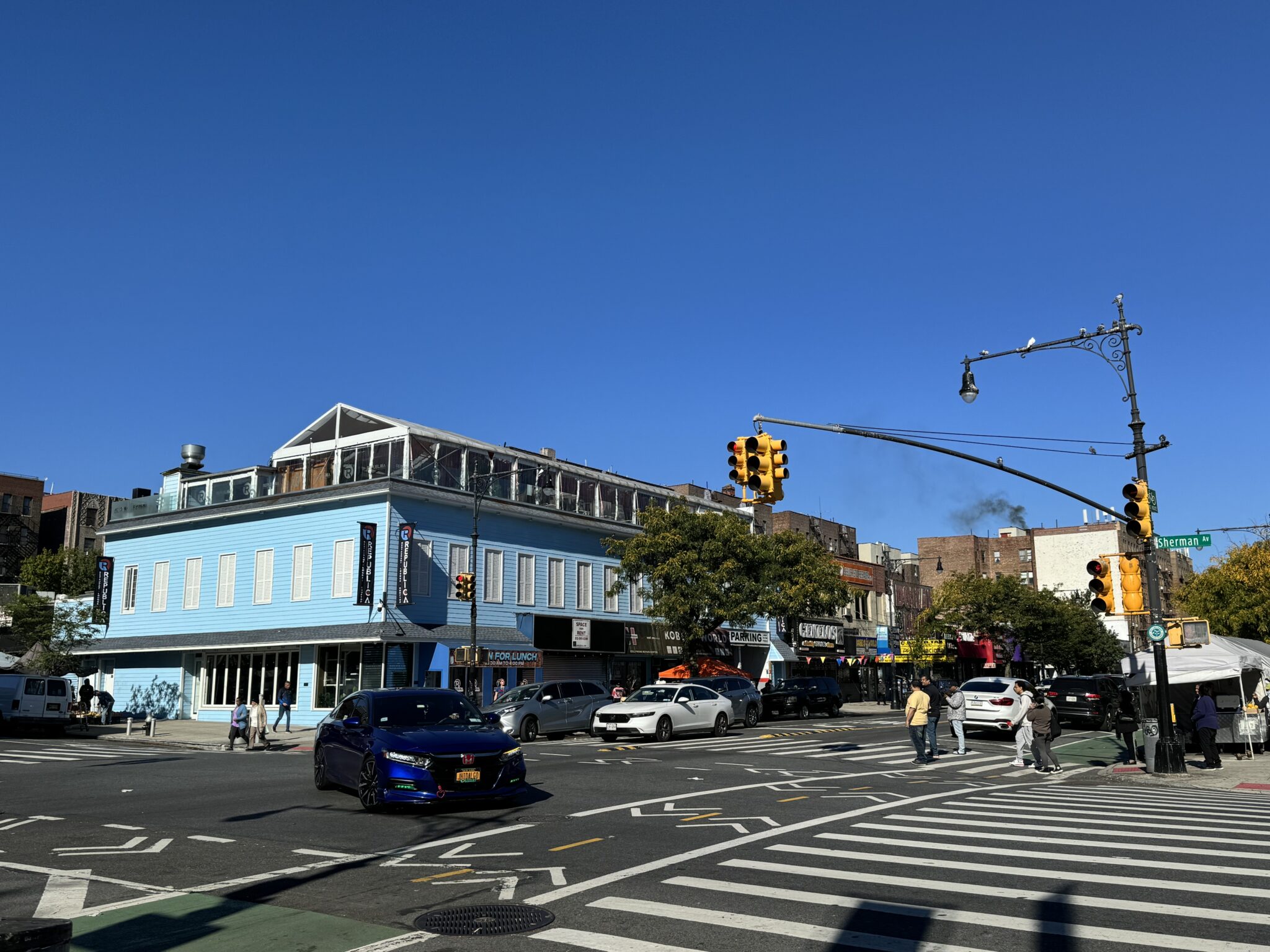
Large parts of Brooklyn and Queens still don’t have Citi Bike in their neighborhoods, and plans by the city Department of Transportation (DOT) to expand dock sites leave them out.
While they prepare the next expansion, the DOT opened feedback maps for residents to suggest new locations that cover Brooklyn Community Boards 16, 17, and 5 (Brownsville & East New York), and Queens CB 6 (Forest Hills). Still, you won’t find the Rockaways or Coney Island mentioned. The green, yellow, and red on the map show all the Citi Bike locations, and the grey indicates future dock sites. But you’ll notice that it leaves out Southeast New York City, particularly the edges of Queens and Brooklyn.
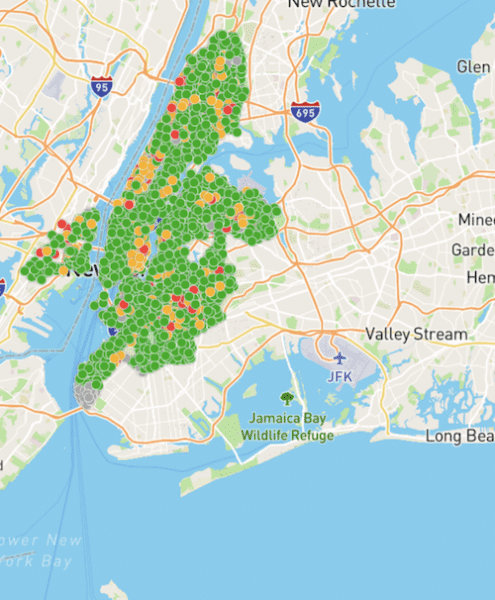
This map shows all of the existing Citi Bike Locations in green, yellow, and red and planned ones in grey.
“It’s really a problem,” said Alexa Sledge with Transit Alternatives. This non-profit operates across all five boroughs, researching and advocating for non-automotive modes of transportation.about the lack of Citi Bike facilities. Sledge also emphasized Citi Bike’s role as an “essential travel option” on par with the bus or train. “We need to see city funding so that everyone can afford this,” she said.
People who live in Coney Island and the Rockaways live at the end of subway lines and in the Rockaways some are far from easy access to the trains. That’s why Sledge and others advocate for equitable bike-sharing. Citi Bike could benefit people Sledge said, “with that last mile commute” to a subway station or bus stop.
Queens Community Board 14 District Manager Felicia Johnson remembered a 2019 bike sharing program, not Citi Bike, that didn’t work in their neighborhoods: “We had a bike share program previously and the bikes were left scattered all over the place, in people’s yards, stripped of parts.” She also noted that, “Collections weren’t done within a timely manner either.”
But those programs lacked a physical dock for the bikes, and the collection and recharging processes were managed by two private companies, Pace and Lime, under supervision but not direct assistance from DOT. In contrast, with Citi Bike, DOT has a public-private partnership with the parent company Lyft, that lets them to handle tasks like community outreach and planning, allowing the company itself to focus more on maintaining the bikes.
It seems like a missed opportunity. Both beach communities already feature boardwalks that are popular with bikers during the summer. In the Rockaways, a dedicated bike lane next to the boardwalk in summer and on it in the off-season makes biking even easier. At the same time, Coney Island has been the endpoint for an iconic bike path along Ocean Parkway for over a century.
Bikeshare could be a great draw for tourists or anyone who wants to enjoy a scenic bike ride without worrying about the hassle of locking up or carrying a bike around once they reach their destination. These neighborhoods might be missing out on the revenue generated by the additional tourism, which in Coney Island’s case, could make a major difference in what many see as a long fight to preserve its existing architecture and “vibe” while making it more profitable for the community.
But with the feedback maps now closed, and no new ones for the beaches being opened it seems like Coney Island and the Rockaways will have to wait.
Tags: Adam Vogel Alexa Sledge Beaches Citi Bike Coney Island Citi Bike Rockaways Citi Bike Transportation Alternatives
Series: Community