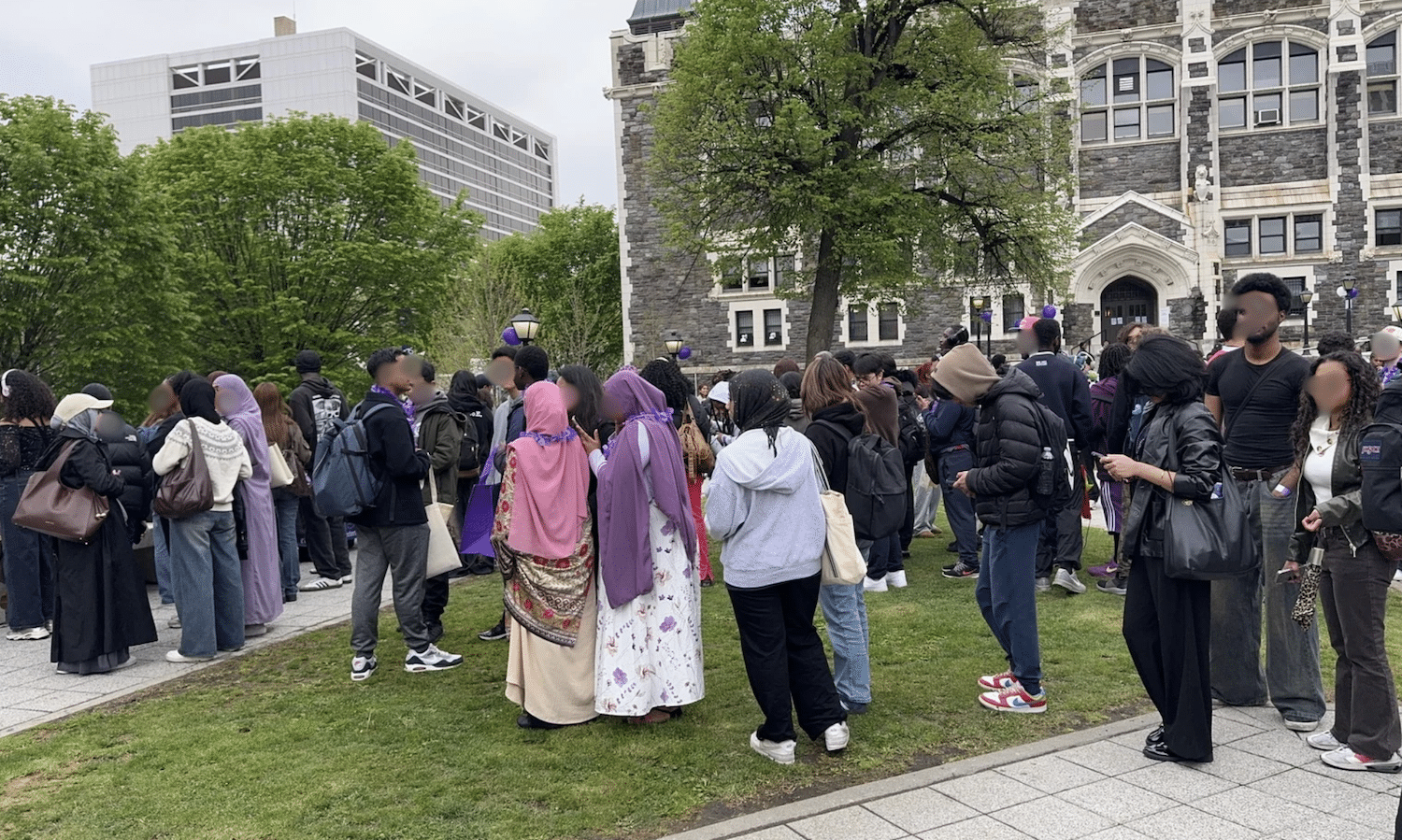
International students worry about their safety.
“I did things the way I’m supposed to, but even then I feel nervous,” said L. “It’s humbling to know your life can fit into three or four suitcases and you are dragging yourself across the world to better yourself.” L, an international student at CUNY School of Public Health (SPH), said she followed all of the rules when she decided to study in the United States. Yet, watching the detention and deportation tactics of immigration enforcement agents over the past few months has left her feeling so anxious, she now plans to leave the country after completing her degree. “Coming to the U.S. [and] having to do school is like having my hands tied behind my back in red tape,” she added.
For many like L studying across the country, routine activities such as going to class or visiting the doctor now come with a sense of dread. Fear among international students increased after immigration enforcement intensified with glaring examples of aggressive action like we saw in Minneapolis with the killings of Renee Nicole Good and Alex Pretti by agents from Immigration and Customs Enforcement (ICE). Here in New York ICE agents took Elmina “Ellie” Aghayeva, an international student from Azerbaijan, from her Columbia University apartment. She was released after intervention from Mayor Zohran Mamdani
Many interviewed said the fear and uncertainty such activities have created extends far beyond immigration policy. They worry about potential blowback and several international students, including L, requested their names, country of origin or other potentially identifying information be kept confidential.
“There are a lot of times when I’m thinking, ‘If I encounter a situation, what would I do,’” said TD, an international student from Lehman College. “Seeing how officers arrest people and how the media portrays it is harsh,” TD said. With U.S. citizens also targeted by immigration agents, the worry is constant for TD. He carries his immigration documents and is more careful about certain activities.
Feeling Vulnerable, Despite Having Legal Status
To legally study at a U.S. university, foreign-born non-immigrant students must obtain either an F-1 or J-1 visa. The former is for students enrolled in a full-time, degree-seeking program, while the latter is for those participating in short-term study, research or internships. Although less common, M-1 visas are also available for vocational studies, including flight school and technical training.
International students make up 6.1% of U.S. college enrollments, about 1.2 million people, according to the nonprofit Institute of International Education — an overall decline of 17% from years prior. At CUNY, about 6,000 international students attend classes across its campuses, the university said.
Even if students live in the U.S. legally, the recent ICE actions and xenophobic taunts have spiked fear in many.
T, an international student at Brooklyn College, says he is being as vigilant as possible, in person and on social media. He recently received a Red Card, which lists what students should know or do if stopped by immigration agents.
“A lot of the things I want to say, I still don’t because I don’t want to get into trouble,” T said. He even postponed a trip he originally planned to visit his family because of fears and uncertainty surrounding immigration enforcement.
MT, a CUNY international honors student and a mother, said she wishes for policies that didn’t touch international students. An international student club she belongs to helps provide a safe space for members, who come from countries as varied as India and the Caribbean islands. They talk about their experiences and try to build a community.
The CUNY School of Public Health also offers resources, including therapy.
Yet, the university’s institutional support has its limits and its efforts so far seem insufficient given how fearful many have become, MT said. While the individual colleges try to provide support, many students find the help is limited.
L, for one, said there’s only one person at the international students office and they don’t get a lot of funding.
“No CUNY lawyer will get you out of ICE,” MT said, frankly, voicing a top concern many echoed. “They [the schools] do what they can with limited resources.”
The CUNY International Office did not reply to a request for comment.
Tags: Eman Mubarik ICE Immigrants Immigration
Series: Immigration