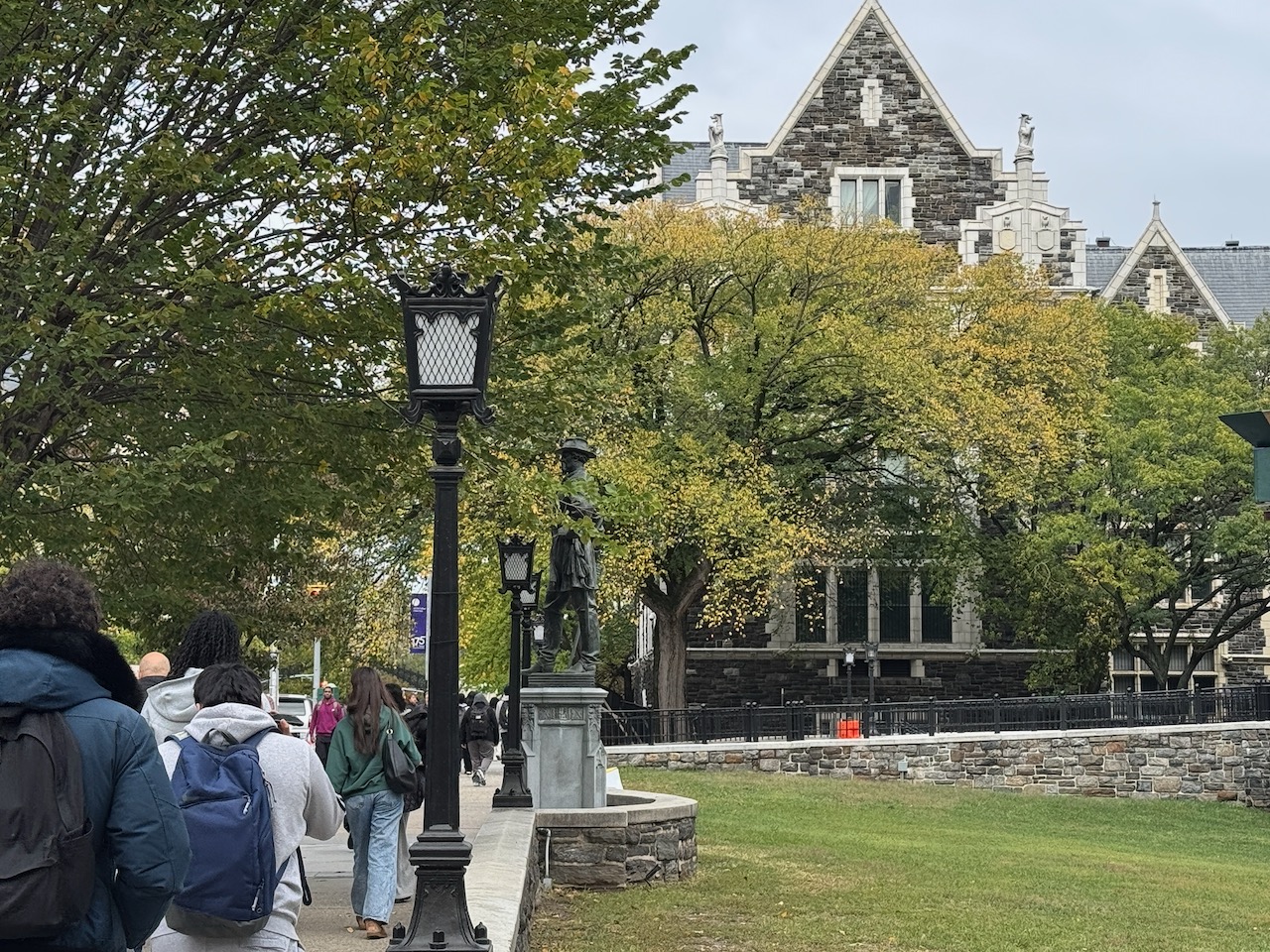
Students on the campus of The City College of New York.
At 7:30 in the morning CCNY sophomore Nina Morales has her psychology textbook on her lap while riding the PATH train into Manhattan. Around her, commuters scrolled through phones or stared out the windows. Morales highlighted notes before her first class of the day.
“For me, studying happens whenever I can do it,” she said. “On the train, during lunch, even waiting for class to start.” The National survey of student engagement found that first year college students spend about 13 hours weekly studying outside class, often spread across shorter periods throughout the day.
For many college students in New York City, studying is no longer limited to libraries or at home on their desks. Instead, students say they squeeze schoolwork into the gaps between jobs, commutes, family responsibilities and campus life.
College students spend an average of 20-25 hours studying, according to the Manhattan Institute. Students who go to college in New York City often have little extra time. Many students attend classes, work part-time jobs, and commute long distances from other boroughs and areas throughout the state.
As a result, study habits have become less about strict schedules and more about adaptability.
“I don’t really have the luxury of sitting down for four straight hours,” said Malik Johnson, a junior studying from Brooklyn. “I study in pieces.”
Johnson reviews lecture slides during subway rides and reviews class notes. He says breaking study time into smaller moments helps him keep up with assignments without falling behind.
Across campuses, students describe similar routines. Some wake up early to review notes before class. Others stay on campus between lectures to finish assignments instead of commuting home and losing time in transit.
Cafes, student lounges and even stairwells have become temporary study spaces throughout the day. Educause, which promotes the use of data and technology in education found that technology has enabled study spaces to become increasingly versatile.
During afternoon breaks at the CCNY cafeteria, students leaned over laptops while eating lunch, flipping between essays and online quizzes before going to their next lecture.
“It’s constant multitasking,” said Jasmine Lee, an English major who works 20 hours a week when not in class. “You’re always thinking about the next assignment while doing something else.”
To stay on track academically students have organized their lives around small pockets of productivity.
Some use digital calendars that schedule study blocks down to the hour. Others rely on shared study groups to stay accountable.
The city itself shapes how they study. Long commutes create reading time. Public spaces across New York turn into extensions of the classroom.
For Morales, those scattered moments in scattered places eventually add up.
“You stop waiting for the ideal setting ,” she said “You just learn to make time wherever you are.”
Tags: challenge of studying for commuter students City College of New York Marvin Jean Nina Morales student study time students study where they can students studying studying on the train