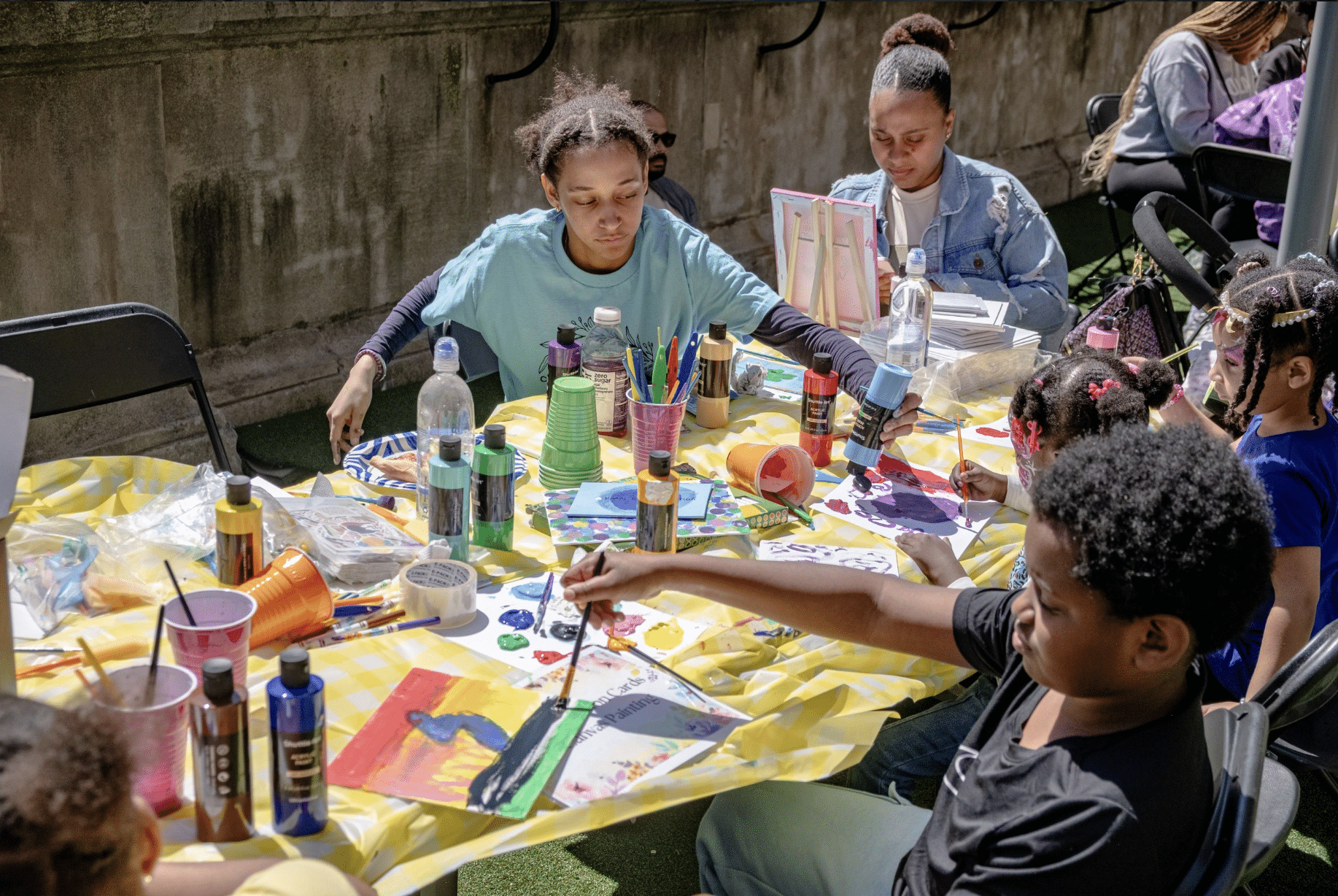
Teens painting in an after school program run by Harlem Educational Activities Fund. Photo courtesy of HEAF's website.
*Judy Afoakwa was a student in the College Now Introduction to Journalism class at CCNY.
At the Harlem Educational Activities Fund (HEAF), a nonprofit started in 1989, the mental health of the teens of today matters. HEAF has created a space where students are able to get the opportunity to build life skills and explore a wide variety of careers and focus on for their mental health. The group organizes workplace tours, wellness classes, and free one-on-one counseling sessions. It tries to prepare students for the things that traditional schools often don’t focus on. Studies show that nearly 4 in 10 US high school students report “feeling sad or hopeless.”
Ethan Ampadu, 14, joined HEAF in January of this year and thinks it’s allowed him to dive deeper into his mental health. “HEAF is a great program. You can schedule mental health check-ins depending on what you prefer,”Ampadu says. “Some people do it once a month, others every week. It’s whatever helps you most.”
The check-ins consist of staff members asking the students personal questions, like how is your home life or what goals would you like to reach personally or academically. The staff, usually referred to as social emotional learning (SEL) and wellness coaches, are trained to know the questions to ask based on a student’s comfort level. Whether it’s about school, home life, or just random things on the students’ minds, these coaches are there for these young adults whenever the student may need them. Students say that being able to talk to someone new is like a fresh start. Nikko Young, 15, who joined the program last September says it seem to give permission to “start over.”
Often, students don’t have a professional source to talk to about their feelings and can resort to talking to their friends, who might tell them what they wanted to hear and not what they needed to hear. It is important to these students to have wellness coaches to get a different point of view about what is good for them. “It wasn’t uncomfortable in any way, because I feel like the space was definitely like a safe space,” Young explained. “And it felt like I was talking to not necessarily a friend, but talking to someone who I was comfortable enough to share with.”
HEAF has a 100 percent graduation rate and college enrollment rate. That’s 16 percent higher than NYC public schools. HEAF is a nonprofit organization where students come after school and attend a series of classes. This varies from career exploration classes such as industry immersion—going to different organizations such as SHoP Architects—all the way to guided cooking classes. The program also offers a chance to go out of the state, sometimes the country, every year to do service and learn about the destination.
Programs like HEAF, that provide opportunities like wellness classes and counseling, pave the way for other after-school programs and schools to get an idea of what they could potentially provide for students. Wellness check-ins aren’t the only things that positively impact the mental health of the students in the program. The program offers SEL classes where students gain new skills to help manage their emotions. “We learned how to process your emotions and stuff like that,” Amira Campbell, 16, who joined the program two years ago, says.
Beyond the classroom, HEAF creates community events where members of HEAF’s staff and students come together and engage in a series of activities. The program’s Community Wellness Retreat in May of this year featured different sections where people could create affirmations, do meditation, dance, or engage in a new sport all to relieve stress and encourage mental health.
For students like Ampadu and Young, they can see a clear difference in the mental health resources at their schools and what’s available through HEAF. Many schools offer things like counselors or have that one teacher that everyone knows they can talk to. A lot of the time, these types of people either had a huge caseload, or were just too busy to actually be able to invest in the child’s time, inconveniencing both parties.
Resources like HEAF help to bridge the gap that their schools, their friends, or their families may not be able to help with. Having this program, Ampadu explains, can help regulate the overwhelming feelings of being a teenager in high school. “I feel like I can definitely understand when I’m getting upset or feel any negative emotion,” Ampadu notes, adding, “it helped me become more emotionally mature.”
Tags: after school program for mental health Harlem Educational Activities Fund HEAF high school students' mental health Judy Afoakwa teens' mental health
Series: High School Journalists