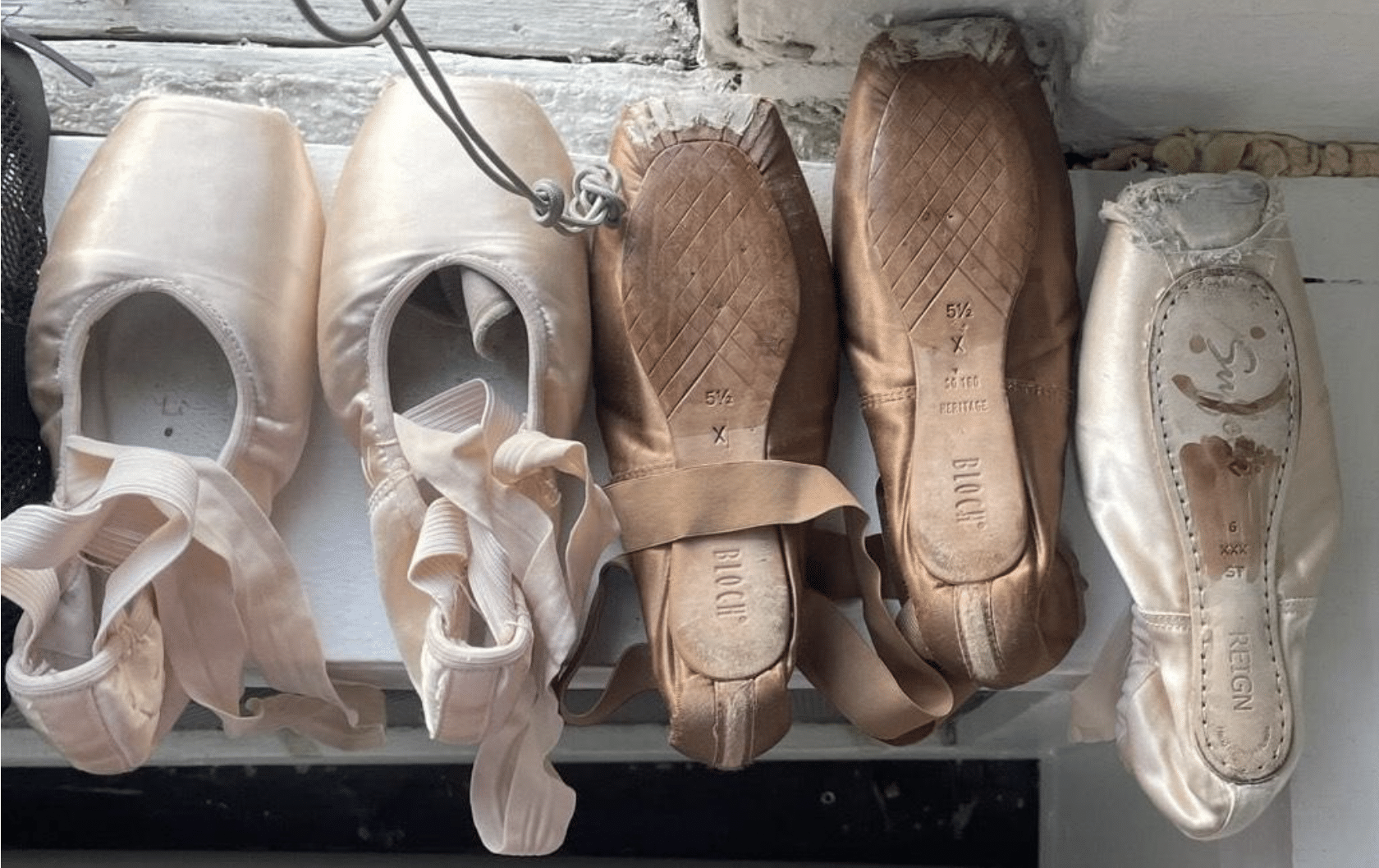
Toe shoes are part of a young dancer's life. Photo by Anastasia Vatis
*Anastasia Vatis was a student in the College Now Introduction to Journalism class at CCNY.
Chiara Acosta has been dancing since she was three years old—a common age to start for many serious ballet dancers and the youngest studios will let students join. “I started because mom was a professional dancer, and she wanted me to join, and I fell in love with it,” Acosta says. She began dancing at Long Island City School of Ballet, in Queens, before switching to the Joffrey Ballet Company’s New York City school at the start of high school.
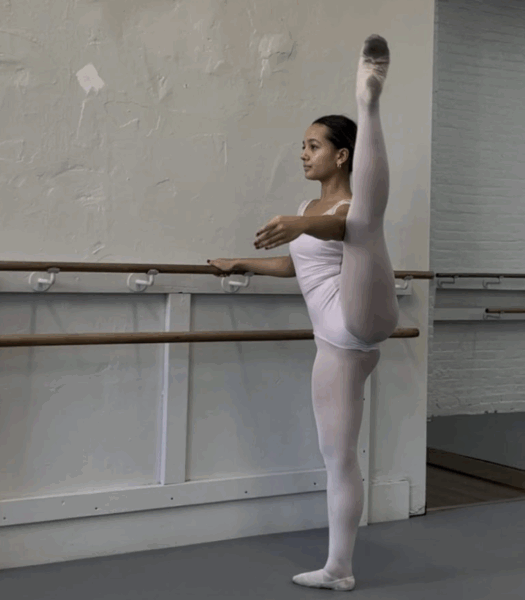
Chiara Acosta in the dance studio. Photo courtesy Chiara Acosta.
Approximately 25 percent of children in the U.S. are put into ballet classes by parents, according to the independent market research platform Gitnux. But, there is a large gap between those who dance in a few shows as kids and those who continue in these programs after childhood. The joy for dance Acosta describes is often the deciding factor in whether or not someone will pursue ballet beyond a childhood hobby.
Dancers in the pre-professional program at the Joffrey Ballet spend their childhood and adolescence in the studio shaping their craft. For many of these young dancers, a career in ballet is the goal. They are on track to assimilate into the school’s trainee program, or to seek out professional opportunities at other companies or schools. But the dancers who don’t choose this future can have a more tumultuous path forward.
Persephone Giusti, another graduating senior, also started dancing when she was three. She danced at the Forever Dancing Robert Mann dance school in Queens before moving to Joffrey at the age of ten.
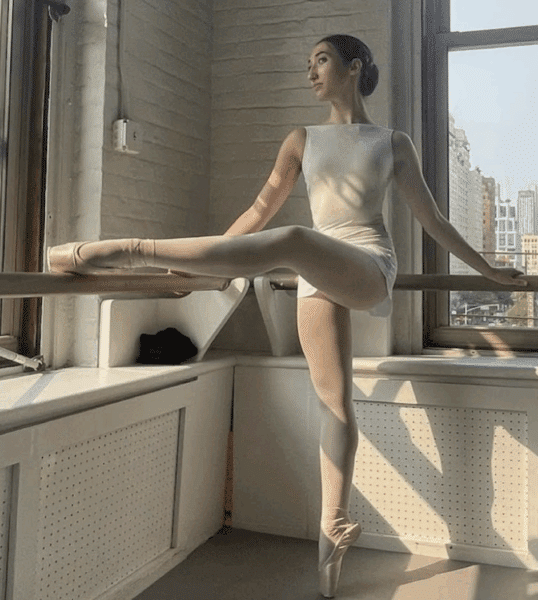
Persephone Giusti in the ballet studio. Photo courtesy Persephone Giusti
She initially started dancing “mainly to stay active” and to have a hobby in addition to gymnastics. But as she got older and the time commitments of both passions began to conflict, she had to choose one and she chose dance. “Dance was more fun for me because of the freedom I had in the movement as opposed to gymnastics, and I was good at it. I liked that,” she says.
Kielan Santos started dancing a little later than Acosta and Gisuti. He joined the Joffrey program at age seven. When he first started, he says, “I initially did not like ballet, I found it too challenging and it was very different from the yelling and striking that I did in karate, which I was also doing at that time. My mother wanted me to stay, so I did.”
Santos eventually quit karate for ballet. “So,” he laughs, “I guess I really preferred ballet.” Part of this unexpected love for ballet, he thinks, came out of the connections he made at Joffrey. “I started to enjoy ballet and going to the studio because of the friendships I made, with other dancers and my teachers,” Santos explains.
Dancers at the Joffrey School spend up to 30 hours in the studio each week, going most days after school. This number increases drastically when dancers are preparing for shows—which happen twice a year. Joffrey’s program is more rigorous than many other studios in the city because it’s a company school. Those in the youth ballet program are encouraged to join the “trainee” program after they graduate high school, where dancers can get a BFA while training year-round.
However, this path was not the choice of these three dancers.
Santos is going to New York University’s College of Arts and Sciences come fall to major in philosophy and politics. “I always knew that I didn’t want to take on dance in any professional capacity, and my interests were always more aligned with more academic subjects,” he says. “Dance was something I enjoyed doing and a place I felt secure in, but never something I wanted to devote my life to.”
For Santos, the choice to stop ballet was easy because he always knew what he wanted. For Giusti, it’s not as clear. She is going to University of Massachusetts, Amherst, to double major in dance, and something else she’s still trying to figure out.
“I’m still not sure what else I want to major in. I know I want to dance because I love it, and I don’t know how I can just not take advantage of the opportunity to dance in college,” Giusti explains. “I’m undecided on what else I want to do, though. I want to explore all of my options. I wasn’t able to do that so much in high school because of the time commitment of Joffrey, so I want to do that now.”
Acosta is going to Savannah College of Art and Design in Georgia come fall and is majoring in musical theater. She has been performing in theater since she was in elementary school and went to a specialized arts high school for it. “I think that the stress of doing Joffrey as well as musical theater during the school day taught me that I love musical theater more—and I had to choose,” she says. She doesn’t want to completely give up dancing, though, and plans to audition for SCAD’s dance program.
Acosta and Santos are in agreement: The commitments of dancing in a high level, high pressure environment held them back from pursuing their other passions and interests. But time is not the only commitment a dancer has to make. There are mental and physical ones as well—and a lot of stress that comes along with them.
“Growing up in the studio, I dealt with a lot of mental health struggles, like body issues, because you’re always staring in a mirror,” Acosta explains, “I pushed through it because I loved dancing.”
“But,” she continues, “as I got older, it got worse, and my anxiety involving dance ultimately made me quit.”
Body image issues and eating disorders are often associated with the ballet world, because of their prevalence. Over 75 percent of dancers feel pressured to lose weight, according to research from the Women in Sport and Physical Activity Journal. This can be especially dangerous when it leads to disordered eating. Over 16 percent of ballet dancers experience eating disorders, according to a 2021 study. This is almost double the national average. Eating disorders and body image issues are especially prevalent among teenage girls, and girls who grow up in an environment like this can be uniquely vulnerable to these dangers.
Trying to balance ballet with school, their social lives, their mental health, and their other interests was difficult. After spending most of their lives dancing, the shift will be big for all three teens. But it’s something they’re looking forward to experiencing.
“My biggest takeaway from ballet is discipline,” Santos says. “I never realized how much work I put into ballet while I was doing it, but looking back I realize it. Going to all the classes and staying late for so many rehearsals has definitely shaped my perspective on discipline and the importance of sticking with someone,” he continued. “I will take that with me into my future schooling and goals.”
Giusti says that, while she had her struggles with ballet, it has prepared her well for the future she wants: “Ballet is about the pursuit of perfection. Dancing for so many years taught me that I’ll never be perfect, and that’s okay. It’s about the work that you put in, and learning to take criticism.”
Acosta thinks similarly: “I think it taught me a lot about myself, a lot about hard work and performing, working with others, and taking criticism and knowing what to do with it instead of taking it personally. I learned that getting notes is actually good, and I’m applying that to my musical theater work.”
“I think when dance has been a part of someone’s life, and you love it that much, it’s hard to just stop,” Acosta says. “But I don’t think I will ever do ballet that intensely again, and that’s what’s best for me.”
Tags: Anastasia Vatis Chiara Acosta Joffrey Ballet School for children Kielan Santos life after ballet school Persephone Giusti young dancers
Series: High School Journalists